
African travelers are increasingly looking beyond the destinations that have traditionally dominated the continent’s outbound travel market, with Türkiye, Zanzibar, Mauritius, Seychelles and Rwanda emerging as destinations worth watching for different reasons.
The shift is not happening at the same speed everywhere, and the available statistics do not yet support a single continent-wide trend. But the numbers from individual destinations, combined with changes in visa access, air connections and the way destinations market themselves in African markets, point to a travel landscape that is becoming more diverse.
Türkiye is perhaps the clearest example of a destination that has moved beyond being a familiar stopover or holiday option for a relatively small group of African travelers. Istanbul has long attracted visitors from across Africa for business, shopping, medical treatment and transit, but the country’s appeal is increasingly being shaped as a leisure proposition as well.

A 2025 academic study of 254 African tourists who had already visited Türkiye found strong perceptions of the country’s image and high intentions to revisit and recommend it. The research also found that social media and Turkish television series were among the most influential sources shaping perceptions of the destination. Another study involving African visitors identified shopping, health tourism, education and religious tourism among the factors associated with Türkiye’s appeal.
That combination matters because travel decisions are rarely driven by scenery alone. For many African travelers, a destination becomes attractive when several practical and cultural factors come together. Türkiye offers major cities, history, shopping, food, coastal holidays and a highly developed tourism industry within one country. Istanbul also functions as an important aviation hub, making the destination accessible from several African markets.
The change is visible enough that specialist travel businesses are increasingly building products specifically around the African market. One Türkiye-based travel company, for example, identifies Nigeria and Ghana as key markets and says it serves travelers and business delegations from more than a dozen countries.
Zanzibar tells a different story. The island is not new to African travelers, but the pace of growth from some African markets suggests that it is becoming more important as a regional leisure destination rather than simply another international beach escape.
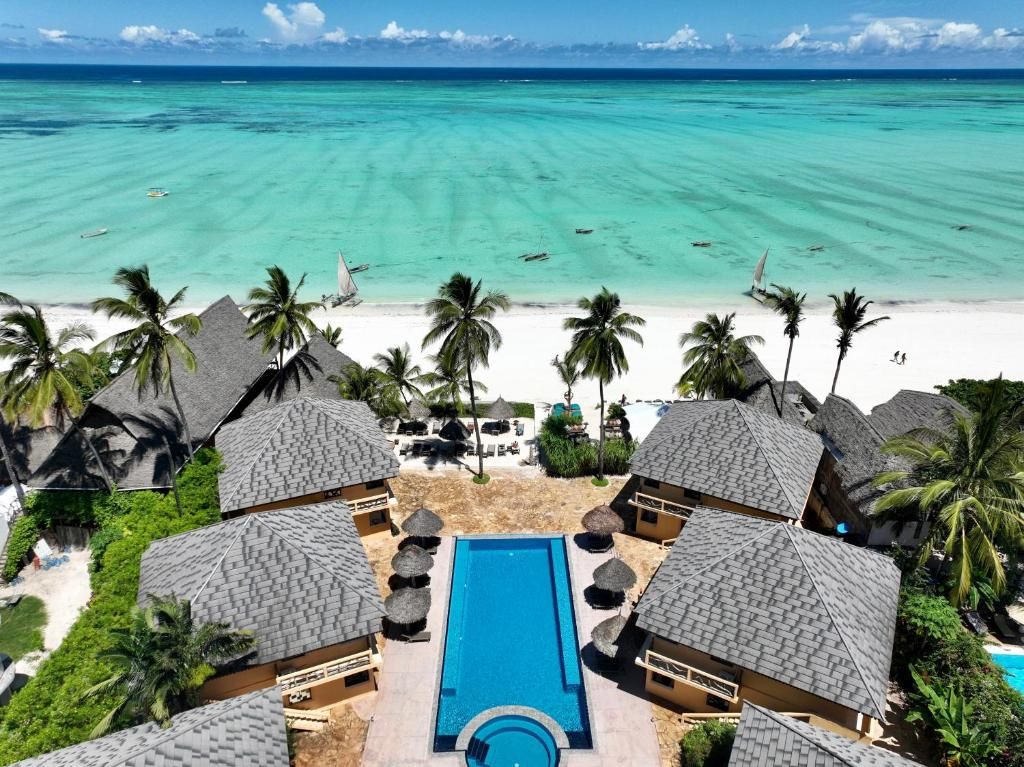
In August 2025, Zanzibar recorded 105,506 international visitors, a 45.9 percent increase from the same month a year earlier. Kenya supplied 4,515 visitors, up 78.9 percent year on year, while South Africa contributed another 2,802. Together, the two countries accounted for more than a third of arrivals from Africa that month.
The trend continued into 2026. Zanzibar recorded 100,216 tourist arrivals in January, compared with 84,069 in January 2025. African visitors represented 16.6 percent of the January total, making Africa the second-largest regional source market after Europe.
That is significant because Zanzibar has many of the characteristics that can support repeat regional travel: relatively short travel distances for East and Southern African travelers, established air connections, a strong hotel market and a combination of beach tourism, Swahili culture and historic Stone Town.
Mauritius is another destination where African demand is more established than the word “emerging” might suggest, but the scale of the South African market makes the island particularly relevant to the changing habits of African travelers.

Mauritius recorded 1.44 million tourist arrivals in 2025, an increase of 3.9 percent over 2024. South Africa was the island’s largest African source market, with 110,287 arrivals, up 3.5 percent from the previous year.
For South African travelers in particular, Mauritius has become more than a conventional luxury resort destination. Its appeal rests partly on the ability to combine beaches and resorts with food, nature, shopping and cultural experiences in a relatively compact destination. The African market is already substantial enough to influence how the island positions itself internationally, even though European markets remain much larger.
Seychelles is showing another interesting pattern. The island nation has historically depended heavily on European visitors, but African arrivals have been gaining ground. Tourism Seychelles reported that arrivals from Africa increased by 22 percent in 2025 through late November, while South Africa remained the leading African source market.

The country’s own tourism strategy also points to the importance of the African market. Tourism Seychelles said in 2025 that Africa accounted for 24,457 visitors in 2024 and described the region as having strong potential, with efforts under way to increase its share of the market.
More recent figures suggest that the momentum has not been confined to one year. Seychelles News Agency reported that Africa was the only major regional market to record growth during the first seven months of 2026, with arrivals rising 9.6 percent compared with the same period in 2025. South Africa has also been a particularly important source of repeat visitors from Africa.
The appeal of Seychelles is obvious on the surface, but its growing relevance to African travelers also reflects something more practical. For travelers who already know the Indian Ocean region, Seychelles offers an international island experience without requiring them to travel to Europe or Asia. Improved air connectivity can make a substantial difference in whether such a destination feels realistic rather than aspirational.
Rwanda represents a different kind of growth story. It is not an emerging destination in the traditional sense, particularly within Africa, but changes in access could bring more African travelers who previously regarded international travel within the continent as complicated or expensive.
Rwanda offers visa-free entry to African travelers, and the 2025 Africa Visa Openness Index recorded a broader increase in visa-free travel possibilities across the continent. The number of visa-free travel scenarios within Africa rose from 803 in 2024 to 814 in 2025.

That matters because visa policy is one of the least glamorous parts of travel but one of the most powerful. A destination can have beautiful landscapes, good hotels and strong marketing, but if getting there requires a lengthy visa process, the trip can remain out of reach for many potential visitors.
Rwanda has increasingly positioned Kigali as a gateway to a wider tourism experience that includes national parks, wildlife, landscapes and mountain gorilla tourism. Its openness to African travelers gives it an additional advantage at a time when intra-African mobility is becoming an increasingly important part of the tourism conversation.
The broader story is not simply that African travelers have suddenly discovered new places. Africans have always traveled widely, for business, education, family visits, religion, shopping and leisure. What is changing is the visibility of leisure travel within a growing and increasingly diverse consumer market.
The destinations benefiting from this change are not necessarily the ones with the biggest advertising budgets. Some are destinations that have made themselves easier to reach. Others have built stronger connections with African airlines, travel companies and tour operators. Some have benefited from television, social media and word of mouth. And in places such as Rwanda, changes to visa policy have removed one of the most obvious barriers to spontaneous regional travel.
There is also a generational element to the shift. African travelers who once viewed international holidays mainly through the lens of major global destinations now have access to a much wider stream of travel information. Instagram, TikTok, YouTube and travel communities have made it easier to discover places that may have been largely absent from traditional African travel advertising.
That does not mean every destination appearing frequently on social media is experiencing a genuine tourism boom. Viral attention and actual visitor numbers are very different things. The strongest signs of a lasting shift are found where online visibility is accompanied by flights, tour operators, hotels, visa access and measurable arrivals.
For tourism boards, that distinction is becoming increasingly important. Africa should not be treated as a single outbound market. A South African traveler considering Mauritius is making a different decision from a Ghanaian traveler considering Türkiye, just as a Kenyan traveler considering Zanzibar has different options from a Nigerian traveler looking at Seychelles.
The destinations quietly becoming popular with African travelers are therefore not following one common formula. What connects them is the growing recognition that African travelers are not simply a source of business travel or diaspora visits. They are also tourists with their own preferences, budgets, cultural interests and ideas about what makes a worthwhile holiday.
For destinations willing to understand those differences, the opportunity is becoming harder to ignore.