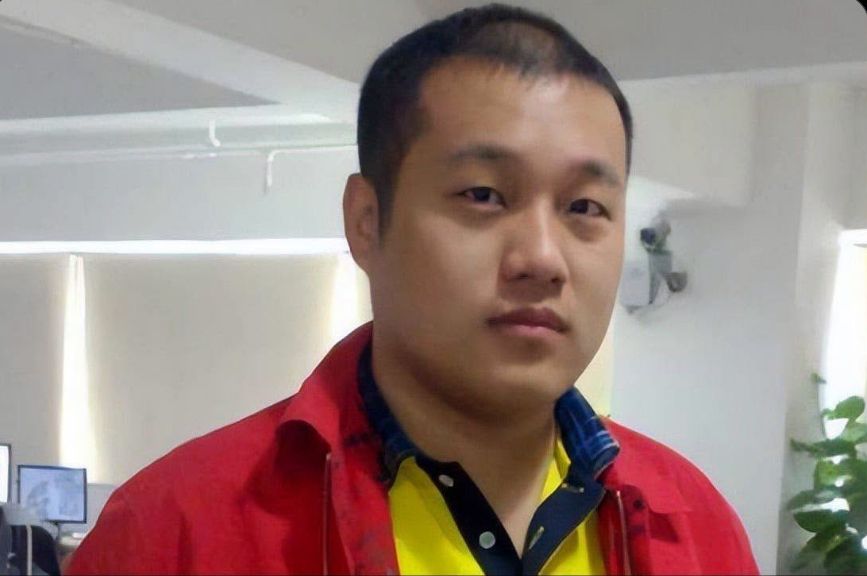
Chinese billionaire Xu Bo has reportedly fathered more than 100 children through surrogacy in the United States, a case that has drawn renewed attention to the country’s surrogacy industry and the citizenship status of children born to foreign parents on American soil.
Xu, the founder of Chinese gaming company Duoyi Network, has come under scrutiny after a California surrogate identified as Judy said she was told she was carrying a child for a single father who wanted to build a large family.
Judy reportedly agreed to the arrangement after being offered $120,000. According to the report, she repeatedly asked to meet the intended father but was not allowed to do so. She later learned through CBS News that leaked documents identified Xu as the father she had been carrying the baby for.
The reported number of children fathered by Xu has varied widely. His former partner has claimed that he has as many as 300 children, a figure Xu has disputed. Duoyi Network previously acknowledged that Xu had “a little over 100” children through surrogacy in the United States. More recently, Xu has said he has custody of 12 children born through surrogacy in the country.
The conflicting figures make it difficult to establish the precise number of children involved, but the case has nevertheless highlighted the scale at which wealthy foreign individuals can use the US surrogacy system to have children.
The issue also touches on a separate and politically sensitive question: the citizenship of children born in the United States to foreign parents. Under the long-standing interpretation of the 14th Amendment, children born on US soil generally acquire US citizenship at birth, regardless of their parents’ nationality or immigration status, subject to limited exceptions.
That has made the US an important destination for international surrogacy arrangements, particularly for people who can afford the considerable costs involved. A 2025 investigation by The Wall Street Journal found that some US surrogacy agencies had marketed American citizenship as one of the benefits available to prospective foreign parents.
The investigation also raised concerns about the relatively limited regulation surrounding parts of the US surrogacy industry. Unlike many countries, the United States does not have a single federal framework governing surrogacy. Rules can differ substantially from one state to another, leaving agencies, intended parents and surrogates to navigate a patchwork of laws and regulations.
Xu’s reported use of surrogacy has therefore become more than a story about one wealthy individual and his unusually large family. It has brought attention to questions about how the US system handles large-scale surrogacy arrangements, what protections exist for women acting as surrogates, and how citizenship considerations intersect with reproductive services.
For surrogates such as Judy, the case also raises questions about transparency. Her account suggests that she did not know the identity of the intended father when she entered the arrangement and was unable to meet him despite asking to do so.
The reported discrepancies over Xu’s number of children add another layer of uncertainty. His company’s earlier statement that he had slightly more than 100 children differs sharply from the claim of 300 made by his former partner, while Xu’s more recent statement that he has custody of 12 US-born children represents a substantially different figure again.
Without independently verified records establishing the total number of children, the exact scale of Xu’s family remains unclear. What is clearer is that the case has exposed how international wealth, reproductive technology and US citizenship law can intersect in ways that raise difficult questions for an industry operating largely under state-level rules.