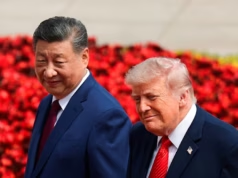
China-US dialogue takes centre stage in Washington as Chinese President Xi Jinping returns to the US for his first visit to the capital in a decade, with talks with President Donald Trump expected to focus on trade, technology and the broader management of tensions between Beijing and Washington.
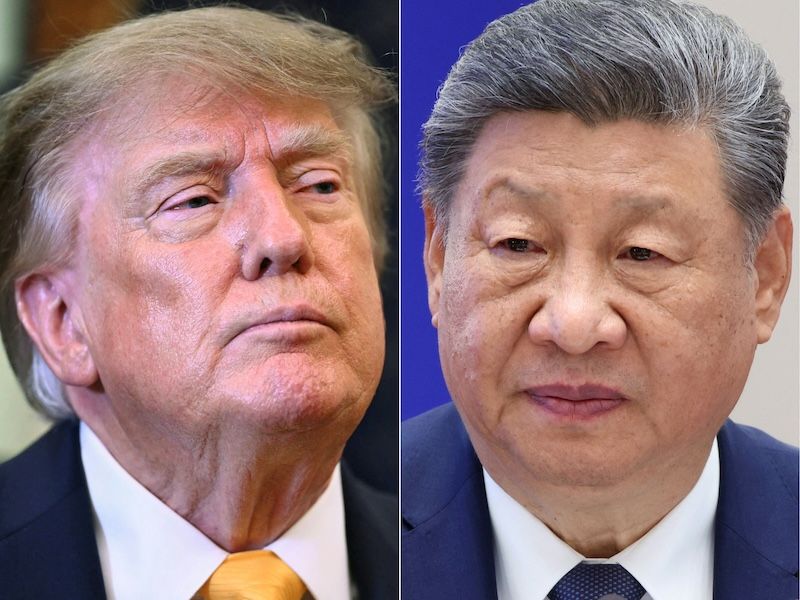
Xi’s state visit runs from 23 to 25 September at Trump’s invitation. The programme includes an arrival ceremony, formal talks and a state dinner, giving the two leaders another opportunity to build on months of direct contact between their governments.
Trump is due to receive Xi at the White House on 24 September. The meeting comes as both sides seek to establish more reliable channels for dealing with disputes that have increasingly extended beyond tariffs and trade into technology, investment and national security.
For Washington and Beijing, the immediate challenge is not simply reaching another agreement. It is finding ways to keep disagreements from turning into a broader breakdown in relations.
The two governments have described their approach in terms of “constructive strategic stability”, with cooperation where their interests overlap alongside controlled competition. Whether that framework can produce practical results will depend largely on negotiations over trade, technology and market access.
The economic stakes are substantial. US goods exports to China reached $65.2 billion between January and July 2026, while imports from China totalled $156.4 billion during the same period. Combined goods trade between the two countries was therefore about $221.6 billion in the first seven months of the year.
Those flows extend well beyond the two governments. Companies across Asia, North America and Europe rely on Chinese and American suppliers, customers, manufacturers and investment markets. Changes in tariffs, export restrictions or market access can therefore influence production decisions, shipping patterns and prices far beyond the immediate parties to the dispute.
Trade is expected to occupy a significant part of the Washington discussions. Negotiators have been considering a Board of Trade and reciprocal tariff reductions covering as much as $30 billion in goods in each direction.
The proposed product list includes consumer goods, agricultural products, energy and medical devices. Chinese officials have pushed for tariff reductions to be implemented quickly, although the final scope will depend on the negotiations.
The discussions build on earlier commitments involving agriculture, aviation and market access. China has agreed to purchase at least $17 billion a year in US agricultural products in addition to an earlier soybean commitment.
Agriculture remains one of the areas where diplomatic decisions have an immediate commercial effect. China is a major destination for US soybeans and other farm products, while American producers depend on access to large overseas markets.
Access questions remain around beef, poultry, dairy and seafood, and technical issues have continued to affect some shipments. Further progress would provide a test of whether agreements reached at the political level can translate into actual commercial activity.
Aircraft manufacturing is another unresolved part of the relationship. China agreed earlier this year to purchase 200 Boeing aircraft, although the orders had not been completed by September.
Boeing chief executive Kelly Ortberg said this month that the process was moving forward and that Chinese airlines would announce orders according to their own schedules. The issue connects the diplomatic relationship with aircraft manufacturing, airline demand and employment in both countries.
Technology is an even more complicated part of the discussions.
The United States and China remain competitors in advanced chips, artificial intelligence and global technology standards, while both governments also face risks associated with increasingly powerful AI systems. The result is a difficult balance between restricting sensitive technologies and maintaining communication over potential security incidents.
US Treasury Secretary Scott Bessent has said Washington proposed a notification mechanism for AI incidents with national security implications. Such a channel would give the two governments a direct point of contact if an AI-related event created a serious security risk.
It would not resolve the larger disagreement over semiconductor controls or technology restrictions. It could, however, provide a mechanism for managing unexpected incidents without requiring Washington and Beijing to settle their wider technology disputes first.
That distinction is important because competition over AI and advanced computing is likely to remain even if relations improve in other areas. American technology executives and policy specialists have backed greater communication between the two countries on AI safety, while Washington continues to impose controls on certain advanced technologies and Beijing objects to those restrictions.
Chinese officials have also called for greater dialogue on AI governance. A regular communication channel could therefore provide limited practical cooperation without requiring either side to abandon its broader technology policies.
The summit also reflects the importance both governments place on maintaining direct contact between their leaders. Xi and Trump have spoken by phone, exchanged letters and met face to face since late 2025. During Trump’s earlier trip to Beijing, the two discussed trade, investment, technology and security, while officials on both sides worked to restore communication channels between senior negotiators.
For businesses operating between the two economies, predictability is a central concern.
Sean Stein, president of the US-China Business Council, has said that meetings between the leaders can help build trust and make progress on other issues easier. Business representatives from both countries have similarly called for clearer signals on tariffs, investment rules and market access.
The depth of the commercial relationship remains visible despite years of political tension. Bilateral goods trade grew 13.7 per cent year on year in the second quarter of 2026, while US companies had established more than 84,000 enterprises in China by July.
Those figures illustrate why a complete separation between the two economies would be difficult and why changes in policy can have consequences for companies far outside the immediate negotiating rooms.
The relationship also extends beyond commerce and government policy.
More than 50,000 young Americans from all 50 states have travelled to China in just over two and a half years through an exchange initiative announced by Xi in San Francisco in 2023. Participants have visited factories, rural communities, schools and cultural sites.
These exchanges provide a different form of contact at a time when public discussion of the two countries is often dominated by geopolitical rivalry. Universities, tourism organisations, businesses and cultural institutions continue to maintain relationships even when official ties become strained.
The Washington programme includes a cultural dimension as well. First Lady Melania Trump and Peng Liyuan are scheduled to visit the Smithsonian National Museum of Asian Art. The two presidential couples are also expected to visit the National Archives to view records connected to the history of US-China relations.
The symbolism of the visit matters, but the more difficult work lies in the negotiations taking place around it.
Neither side is entering the meeting with all of its disputes resolved. Investment remains particularly sensitive because both governments apply national security considerations to Chinese investment in the United States and American technology exposure to China.
Trade, by contrast, offers several areas where limited progress may be possible. Tariff reductions, agricultural purchases and aircraft orders provide specific issues around which negotiators can measure movement. An AI incident channel would offer another, narrower form of cooperation in an area where the strategic competition is unlikely to disappear.
The consequences of those discussions will extend beyond Washington and Beijing. Tariffs affect trade flows and consumer prices. Export controls shape technology supply chains. Chinese demand influences American agriculture, aircraft manufacturing, energy and shipping, while decisions by the world’s two largest economies can affect businesses and governments elsewhere.
That is why the central question surrounding Xi’s visit is not whether one meeting can resolve the long list of disagreements between China and the United States. It is whether the two governments can keep enough communication open to manage those disagreements while making limited progress where their interests still overlap.
The formal programme continues through Friday, with Trump and Xi due to hold meetings during the state visit. The state dinner and scheduled cultural visits will provide the ceremonial side of the encounter, but the substance will be measured through the negotiations on trade, technology, market access and the mechanisms intended to prevent disputes from escalating.
For both governments, the visit provides an opportunity to move those negotiations forward while preserving direct channels at the highest level. The larger disagreements between Washington and Beijing remain, but the ability to manage them may depend increasingly on whether dialogue can continue when cooperation is difficult.