
Best eSIM for Morocco is an important consideration for travellers heading to the country’s historic medinas, busy city centres, coastal resorts and remote mountain destinations. From navigating the narrow streets of Marrakech to booking transport in Fes, checking hotel reservations in Casablanca or sharing photographs from the Sahara, having reliable mobile data can make travelling around Morocco considerably easier.
International visitors have several ways to get online in Morocco, but buying a local SIM card is no longer the only practical option. An eSIM allows travellers to purchase a mobile data plan before departure, install it on a compatible smartphone and connect after arriving in the country without having to find a mobile phone shop or replace their existing SIM card.
For visitors moving between different parts of Morocco, the decision is not simply about finding the cheapest data package. Network coverage, data allowances, validity periods, activation requirements and the ability to use a phone’s existing number for calls and messages can all influence which eSIM is worth buying.
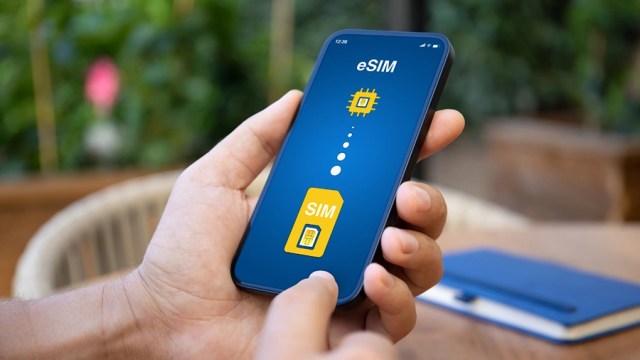
The main international eSIM providers serving Morocco include Airalo, Holafly, Nomad, Saily and Ubigi. Their plans differ considerably. Some are designed for travellers who need a modest amount of data for maps, messaging and occasional browsing, while others target people who stream videos, work remotely or regularly upload photographs and videos during their trips.
There is also an important distinction between having mobile data and having a local Moroccan telephone number. Many international travel eSIMs are data-only products. They allow users to access the internet and communicate through services such as WhatsApp, but do not necessarily provide a Moroccan number for conventional calls or text messages.
Morocco has three principal mobile network operators: Maroc Telecom, Orange Maroc and inwi. Each operates its own infrastructure, and the network available to an international eSIM customer depends on the provider’s roaming agreements. A plan advertised as suitable for Morocco does not automatically guarantee identical coverage across the country.
That distinction matters for travellers whose itineraries extend beyond the major cities. Marrakech, Fes, Casablanca, Rabat, Tangier and Agadir have established mobile infrastructure, but connectivity can become less predictable in remote parts of the Atlas Mountains, rural communities and desert destinations. A traveller spending most of the holiday in Marrakech may have different connectivity requirements from someone planning a road trip through the High Atlas and towards Merzouga.
The Moroccan telecommunications market has also been expanding its 5G infrastructure. The country’s telecommunications regulator, the Agence Nationale de Reglementation des Telecommunications (ANRT), announced the commercial launch of 5G services by the three national operators on November 7, 2025. Its June 2026 sector update reported 3.22 million 5G users and 8,400 deployed 5G sites. However, the availability of 5G on a travel eSIM depends on the provider’s agreement with local networks, the destination’s coverage and the capabilities of the traveller’s smartphone. A 5G-capable phone alone does not guarantee access to 5G through every international eSIM.
For most international visitors, Airalo is one of the more straightforward options to consider, particularly for travellers who prefer choosing a specific data allowance rather than paying for an unlimited package. Its Morocco offering includes fixed-data options as well as larger plans marketed for heavier use. The advantage of a fixed-data package is that travellers can select an allowance that reflects the length of their holiday and their expected internet consumption.
Airalo is worth considering for someone spending a week in Marrakech or combining a few days in Fes with a visit to Casablanca. It is particularly relevant to travellers who primarily use mobile internet for navigation, restaurant searches, transport arrangements, email and messaging. Those who intend to upload substantial amounts of video content should examine the larger packages and the conditions attached to any unlimited option before purchasing.
Holafly takes a different approach, focusing on unlimited-data packages for travellers who would rather not monitor a fixed allowance throughout their holiday. This can appeal to visitors who depend heavily on mobile internet, particularly content creators, remote workers and travellers who regularly make video calls or upload photographs.
However, the word “unlimited” deserves closer attention. Mobile operators can apply fair-use policies that temporarily reduce internet speeds after substantial high-speed data consumption. Hotspot allowances can also be more restrictive than the main mobile data allowance. Holafly’s own guidance explains that network operators may temporarily reduce speeds under certain fair-use conditions and that hotspot availability and limits depend on the destination plan. Travellers intending to connect laptops or share their connection with other devices should therefore examine the technical specifications rather than relying solely on the unlimited label.
Nomad is another option for visitors looking for a relatively simple travel data package. Its Morocco plans offer travellers an alternative to purchasing a local physical SIM, with options suited to different trip lengths and data requirements. It may be particularly useful for visitors who want to arrange connectivity before leaving home and avoid having to make a purchase immediately after landing.
One consideration is the underlying network. Published comparisons of Morocco travel eSIMs have identified Orange Maroc as the network used by Nomad’s Morocco offering. That does not make it unsuitable, but travellers heading into less populated areas should consider the network arrangement alongside their itinerary. A low-cost package is less attractive if its coverage does not match the places a visitor intends to explore.
Saily provides another alternative, particularly for travellers who want to choose between smaller data allowances and larger packages. Its published Morocco plans include 1GB for seven days, 3GB for 30 days, 5GB for 30 days, 10GB for 30 days and 20GB for 30 days. The prices displayed on its destination page at the time of research were US$8.99, US$15.99, US$21.99, US$33.99 and US$42.99 respectively. Prices and availability can change, and travellers should check the live checkout price before purchasing.
The range makes Saily relevant to both short-break visitors and those planning a longer stay. A traveller visiting Morocco for several weeks may find a 30-day package more convenient than buying a succession of short-validity plans. Saily also advertises connectivity in Marrakech, Fes and Casablanca, although actual service remains dependent on local network conditions.
Ubigi is also worth examining, particularly for travellers who prefer a fixed allowance with a longer validity period. Its Morocco packages provide another alternative to the unlimited-data model, and it is a name worth comparing when evaluating the amount of data available for the price. Some published comparisons have identified access to both Maroc Telecom and Orange Maroc through its Morocco plans. For visitors travelling between several cities, the possibility of access to more than one local network is a useful consideration, although the precise network selection and roaming conditions should be confirmed against the plan being purchased.
There is no universal winner among these providers. A visitor spending four days in Marrakech, using Google Maps, checking restaurant recommendations and sending messages to family will probably have little reason to pay for a large unlimited package. Someone spending three weeks in Morocco, working remotely and regularly uploading travel content may have a stronger case for a larger allowance or an unlimited plan with suitable hotspot conditions.
The choice also depends on whether Morocco is the only destination on the itinerary. Travellers combining Morocco with other North African destinations or a wider international trip should examine regional eSIM packages. A regional plan can reduce the inconvenience of purchasing a separate package for every country, but the list of supported destinations, available networks and data allowances must be checked carefully. A Morocco-only package may still offer better value for someone spending the entire holiday in the country.
For visitors who need a local telephone number, a Moroccan operator’s own prepaid SIM or eSIM may be more appropriate than an international travel package. Maroc Telecom, Orange Maroc and inwi are the three operators worth investigating. Their local products can be useful for travellers who need conventional calls, local SMS services or connectivity over a longer period. Availability, registration requirements and prepaid eSIM eligibility should be confirmed directly with the operator before arrival or at an authorised outlet.
The distinction is particularly relevant for people visiting relatives, arranging local business meetings or staying in Morocco for an extended period. A data-only travel eSIM can handle internet-based communication, but it should not be mistaken for a full local mobile subscription.
For most tourists, the practical advantage of purchasing an international eSIM before departure is the ability to organise mobile connectivity without having to search for a SIM card retailer after arriving. Travellers can install the digital SIM using a Wi-Fi connection, retain their existing number on a supported dual-SIM phone and select the travel eSIM for mobile data once they reach Morocco. Apple’s international travel guidance confirms that supported iPhones can use a travel eSIM alongside an existing line, provided the device and mobile arrangements support the configuration.
Compatibility is one detail that should never be overlooked. Not every smartphone supports eSIM technology, and a device that supports eSIM may still be locked to its original mobile operator. Apple lists the iPhone XS, iPhone XS Max, iPhone XR and later models among the compatible iPhone generations, subject to regional and model-specific restrictions. Android users should check the exact model and regional variant with their manufacturer. It is also advisable to confirm that the phone is unlocked before paying for a travel package.
Installation is generally straightforward, but travellers should read the provider’s instructions before activating their plan. Some packages begin their validity period when installed, while others start when the device first connects to a supported network in the destination country. The difference can affect how much usable time remains after arrival. Installing the eSIM before departure, while connected to reliable Wi-Fi, is usually sensible, provided the traveller understands when the validity period begins.
After landing, the phone should be configured to use the Moroccan travel eSIM for mobile data. The existing home SIM can remain active for calls and messages where supported, but travellers should check their home operator’s roaming conditions to avoid unexpected charges. Data roaming should be enabled or disabled according to the travel eSIM provider’s specific instructions, rather than changed without checking the setup requirements.
Another practical consideration is how much mobile data a trip actually requires. Navigation applications, translation tools, online bookings and messaging services generally consume less data than continuous video streaming, social media uploads and video calls. Downloading maps for offline use, saving hotel booking information and keeping important travel documents accessible without an internet connection can help reduce dependence on mobile data.
This becomes particularly useful when travelling outside the main urban centres. A journey from Marrakech into the High Atlas, for example, can involve long stretches where mobile connectivity is less dependable. The same applies to parts of the desert routes around Merzouga and other remote destinations. Even a well-rated eSIM cannot guarantee a signal where the underlying mobile network has limited coverage. Travellers should download directions in advance, share their itinerary with someone they trust and avoid relying exclusively on mobile internet for essential travel arrangements.
The most sensible approach for a typical holiday in Morocco is to compare the cost of a fixed-data package from Airalo, Nomad, Saily or Ubigi with the convenience of an unlimited option from Holafly. The comparison should include the actual high-speed data allowance, hotspot restrictions, validity period and available Moroccan networks. Looking only at the advertised price or the word “unlimited” can lead to a misleading assessment of value.
For a short city break, a modest data package may be entirely sufficient. For a longer itinerary involving Marrakech, Fes, Casablanca, the Atlantic coast and rural destinations, network access and the ability to purchase additional data become more important. Travellers who need a Moroccan number or plan to remain in the country for an extended period should also investigate local operator options.
Morocco offers plenty of reasons to spend time away from a hotel or familiar tourist district. Having mobile data makes it easier to navigate unfamiliar streets, find transport, communicate with accommodation providers and document the journey. The right eSIM is therefore not necessarily the one offering the largest allowance. It is the one that provides a suitable balance of coverage, data, price and flexibility for the journey being planned.


