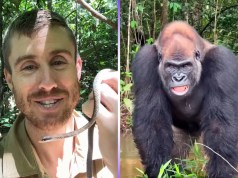
Ash Dykes’ Congo Basin expedition could become one of the most dangerous tests of his career, as the Welsh adventurer attempts to paddle more than 700 kilometres down a remote Central African river where dangerous wildlife, tropical diseases and isolation could turn a minor mistake into a life-threatening emergency.

Dykes has begun the journey along the Sangha River, travelling by inflatable kayak from Nola in the Central African Republic to Mossaka in the Republic of the Congo. The expedition, which forms the opening mission of his Project Six adventure series, is expected to take approximately three to four weeks, depending on conditions along the route.
The question of whether he can complete the journey safely is not simply about his physical endurance. The expedition will take him through a remote rainforest environment where getting into difficulty could mean much more than losing time or abandoning the planned route. Wildlife encounters, illness, injuries, equipment failures and the difficulty of reaching medical assistance all pose serious challenges. There is no confirmed indication that Dykes is unlikely to survive, but the potential consequences of an emergency are real enough to make this expedition a significant test of preparation and judgement.
The dangers began to emerge before he even reached the river. During the journey to Central Africa, Dykes and his crew experienced problems with missing luggage containing essential equipment, including kayak pumps, tents, food and water. The team also encountered visa and entry difficulties that forced them to change their original travel arrangements before eventually reaching Nola, the expedition’s starting point. The setbacks were resolved, allowing the adventure to proceed, but they demonstrated how quickly plans can be disrupted during an expedition involving several countries, remote destinations and equipment that the team cannot easily replace.
Now the greater test lies ahead on the Sangha River. The inflatable kayak offers a practical advantage because it can be deflated and carried when the river becomes difficult to navigate. That flexibility, however, does not remove the risks associated with paddling through unfamiliar waters. Strong currents, submerged obstacles, difficult landings and sudden changes in weather can complicate progress, while an accident far from a settlement may be much harder to manage than the same incident in a more accessible location.
Wildlife presents another serious concern. The wider Congo Basin supports a remarkable range of animals, including crocodiles, hippos, forest elephants and venomous snakes. Their presence does not mean an attack is inevitable, but encounters in or beside a river can become dangerous when people and animals occupy the same confined space. A capsize, an unexpected landing or a poorly chosen campsite could expose the expedition team to risks that are difficult to predict.
Disease may prove just as difficult to manage as wildlife. Dykes has identified malaria, dengue fever and parasitic infections among the hazards facing the team. In an interview with UNILAD published before the expedition, he also spoke about the possibility of venomous bites and stings, acknowledging that a mistake in the jungle could have fatal consequences. He said the team had medication, including anti-malaria tablets and antibiotics, and access to satellite communications intended to help arrange rescue if necessary.
Those precautions matter, but they cannot eliminate every danger. An illness that might be straightforward to treat in a city can become far more serious when a patient is travelling through a remote region, potentially days from the nearest doctor. The official Project Six website itself identifies infection, unsafe drinking water, heat and humidity as major challenges, alongside the distance separating the expedition from medical care.
The physical demands are also substantial. Paddling hundreds of kilometres over several weeks, carrying equipment around obstacles and establishing camps along the river will require sustained effort. Heat, humidity, poor sleep and the strain of repeated activity can gradually wear down even a well-prepared explorer. Fatigue may also affect concentration and decision-making, making it harder to respond appropriately when conditions change.
Dykes is not entering this environment without experience. His previous expeditions include crossing Mongolia on foot, travelling the length of Madagascar and becoming the first person to walk the entire length of the Yangtze River in China. Those achievements demonstrate considerable endurance and experience in remote environments, although no previous expedition can guarantee safety in a different ecosystem with its own hazards.
He has also made clear that he is thinking about worst-case scenarios rather than relying on confidence alone. In the UNILAD interview, Dykes described mentally preparing for emergencies by studying previous wildlife attacks and considering how people had responded. He said he would postpone an expedition if he did not feel fully confident in his readiness. His approach suggests an awareness that successful exploration depends not only on courage, but also on recognising when a situation has become too dangerous.
The involvement of people who know the forest is another important consideration. Dykes has said he intends to learn from local Baka people, whose knowledge of the environment may offer insights that cannot be gained from maps or online research alone. His expedition also includes a local guide and a British videographer. Their combined experience and decisions on the ground will matter throughout the journey, particularly when selecting routes, identifying suitable campsites and responding to unexpected obstacles.
There is a wider story beyond the personal danger. The Congo Basin is one of the world’s major rainforest regions, supporting diverse wildlife and communities whose lives are closely connected to the forest and its rivers. An expedition that documents this environment can bring attention to a part of Central Africa that receives less international travel coverage than many better-known destinations. Project Six is intended to tell stories about exploration, local knowledge and the pressures facing these environments, rather than simply record a physical challenge.
Yet the attention generated by a live or frequently updated expedition creates its own tension. Viewers may experience the journey as a stream of dramatic moments, close encounters and physical challenges. The team must deal with the actual consequences of every decision, whether or not those moments make compelling footage. If communications become unreliable or the crew encounters an emergency, the public may not immediately know what has happened. Following an expedition online is not the same as having a complete picture of the team’s safety.
The title question, therefore, requires a careful distinction between danger and prediction. There is no reliable basis to claim that Dykes will die or that his survival is unlikely. He has reached the starting point, begun the expedition and described preparations intended to reduce the risks. But the combination of remote terrain, disease, wildlife, physical exhaustion and limited access to medical care means the possibility of a serious emergency cannot be dismissed.
His immediate objective is to complete the Sangha River journey and reach Mossaka. Afterward, the Congo mission is meant to lead into five further expeditions across different environments as part of Project Six, a year-long series. That demanding schedule adds another question about recovery and preparation, although the outcome of the Congo journey remains uncertain.
For now, the most responsible way to follow Ash Dykes’ Congo Basin expedition is to recognise both the genuine hazards and the limits of what is known. The risks are serious, but they do not establish that disaster is inevitable. His survival will depend on preparation, sound judgement, the conditions encountered along the river and the team’s ability to respond when plans fail. In an environment where help may be far away, those decisions could matter more than any record he hopes to set.