The Archbishop of Canterbury has withdrawn an award given to Pakistani Muslim cleric Tahir Ashrafi after past remarks in which he praised Osama Bin Laden resurfaced days after the honour was presented on the 25th anniversary of the September 11 attacks.
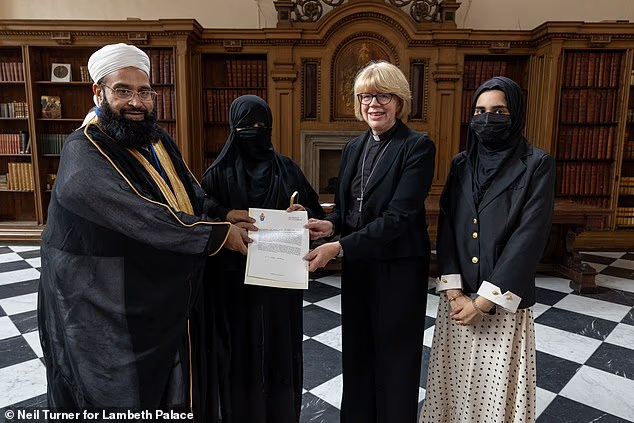
The Hubert Walter Award for Reconciliation and Interfaith Cooperation was presented to Maulana Hafiz Muhammad Tahir Mehmood Ashrafi by Archbishop Sarah Mullally at Lambeth Palace. The honour recognised Ashrafi’s work supporting religious minorities in Pakistan, particularly the Christian community.
But the decision quickly came under scrutiny after attention returned to comments Ashrafi made in 2007, when he was chairman of the Pakistan Ulema Council, a group of Islamic scholars.
At the time, Ashrafi said the council would give Bin Laden the title “Saifullah”, meaning “Sword of Allah” or “Sword of God”, in response to Britain’s decision to grant author Salman Rushdie a knighthood. Rushdie’s novel “The Satanic Verses” had provoked fierce opposition in parts of the Muslim world, with critics accusing the book of blasphemy.
Ashrafi said the proposed honour for Bin Laden was intended to match what he described as the offence caused by Britain’s decision to honour Rushdie. In remarks reported at the time, he referred to Bin Laden as a Muslim fighter who had fought against Russians, Americans and British forces.
Those comments became the central issue surrounding the Archbishop’s decision to honour him. The timing of the ceremony added to the criticism, as the award was presented on the anniversary of the attacks in the United States that killed nearly 3,000 people.
Lambeth Palace initially defended the basis for the award, pointing to Ashrafi’s longstanding support for religious minorities in Pakistan and saying that his work was valued by Christians, including members of the Anglican Church there.
The Palace also stressed that interfaith engagement requires dialogue across deeply held differences. But after the earlier remarks came to light, it reviewed the decision and announced on September 17 that the award had been withdrawn.
“Previous comments made by Imam Ashrafi have come to light that have led Lambeth Palace to reconsider this award,” the Palace said, confirming that Ashrafi had been contacted about the decision.
The Archbishop’s office said its commitment to interfaith dialogue remained unchanged and expressed support for Christians and others working for religious harmony in Pakistan and elsewhere.
Ashrafi has disputed the way his 2007 remarks have been presented. His representatives said the comments were being reported without their proper context and argued that they should not be interpreted as an endorsement of Bin Laden or terrorism. Ashrafi has also said the remarks were made during the controversy surrounding Rushdie’s knighthood and were intended to illustrate the anger felt by some Muslims over the decision.
The controversy nevertheless placed the focus on the process used to assess recipients of high-profile religious honours. The award was intended to recognise work in reconciliation and cooperation between faith communities, making Ashrafi’s earlier public comments particularly significant once they became known.
The episode also exposed the difficulty of separating a person’s current interfaith activities from statements made years earlier, particularly when those statements concern one of the most consequential terrorist attacks in modern history.
Criticism of the award came from politicians and secular campaigners. Shadow Justice Secretary Nick Timothy, who highlighted Ashrafi’s previous remarks, welcomed the withdrawal while arguing that the original decision should not have been made.
The National Secular Society also welcomed the reversal but questioned how Ashrafi had passed the vetting process in the first place. Its chief executive, Stephen Evans, said the timing of the award on the anniversary of 9/11 made the decision especially difficult to understand and raised questions about the scrutiny given to religious figures involved in interfaith initiatives.
For Lambeth Palace, the withdrawal does not appear to signal a retreat from interfaith engagement itself. Its statement made clear that dialogue across religious differences remains an established principle. The immediate issue was instead the suitability of this particular honour after historical comments by its recipient became known.
The controversy has therefore left two issues running in parallel: Ashrafi’s documented work with religious minorities and the serious questions raised by his earlier comments about Bin Laden. Lambeth Palace ultimately decided that the latter warranted withdrawing an award that had already been presented, bringing an abrupt end to what had been intended as a public recognition of interfaith cooperation.