
American cities that are easy for Europeans to navigate are often those where public transport, walkable neighbourhoods and clear connections between major attractions make it possible to explore without renting a car. Although the United States is widely associated with road trips and sprawling suburbs, several cities offer visitors a more straightforward introduction to urban American life, particularly for travellers accustomed to Europe’s trains, trams and pedestrian-friendly city centres.
The difference can be noticeable from the moment a visitor arrives. In some American cities, getting from the airport to a hotel, finding a neighbourhood restaurant and visiting a museum can involve several separate journeys by car. In others, public transport provides a practical alternative, and many of the places visitors want to see are close enough to explore on foot. The experience varies considerably from one city to another, making the choice of destination an important part of planning a first trip across the Atlantic.
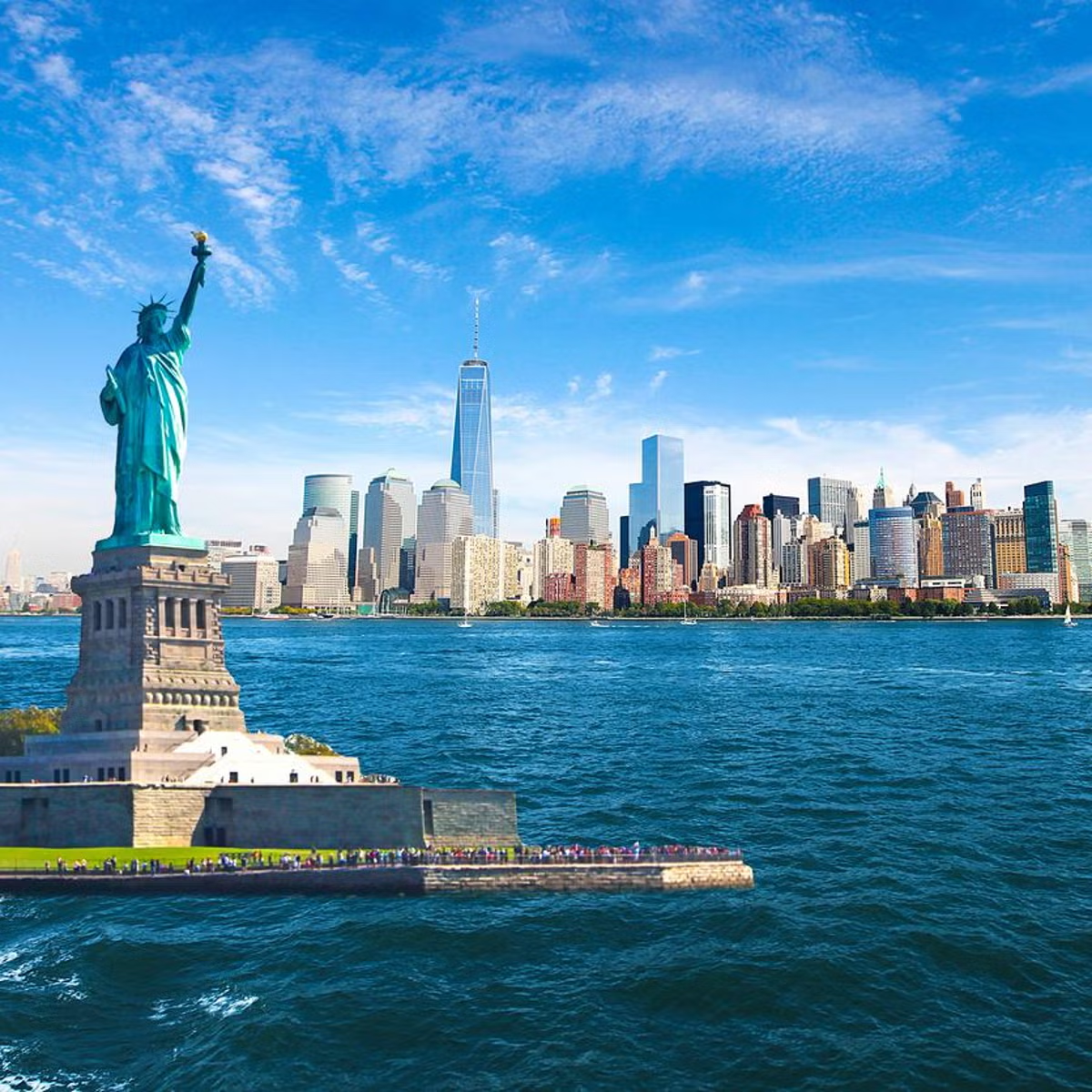
New York is perhaps the clearest starting point for Europeans who want to explore an American city without depending on a car. Its subway operates around the clock on most days, connecting Manhattan with much of Brooklyn, Queens and the Bronx, while buses serve neighbourhoods that are less convenient to reach by rail. The city also has an extensive pedestrian network, and in areas such as Midtown, Greenwich Village, the Lower East Side and parts of Brooklyn, walking is often the simplest way to move between restaurants, shops and cultural attractions.
The scale of New York can initially be intimidating, especially for visitors unfamiliar with the numbered street grid in much of Manhattan. Yet the subway offers a degree of independence that is unusual in the United States. Travellers can spend a day moving between Central Park, museums, historic neighbourhoods and waterfront districts without arranging private transport. The main challenge is not the absence of connections but understanding the difference between local and express trains, checking service changes and allowing for the distances involved.

Boston offers a different kind of introduction to the country. Compact by American standards, it has a historic core where many major sights can be reached on foot. The Freedom Trail connects important sites associated with the American Revolution, while neighbourhoods such as Beacon Hill, Back Bay and the North End reward visitors who prefer exploring streets rather than moving between attractions by car.
The Massachusetts Bay Transportation Authority, commonly known as the MBTA, operates the subway, buses and commuter rail services. Boston’s subway is often called the T, a useful local term for visitors to recognise on signs and maps. Although the system is older than many modern European networks and service disruptions can occur, it gives travellers access to a wider area than the central walking routes alone. For Europeans accustomed to combining a morning walk with an afternoon museum visit and an evening meal in another neighbourhood, Boston can feel relatively familiar.

Washington, DC, is another strong choice, particularly for visitors interested in museums, monuments and American political history. The city’s Metro system connects the airport, central districts and several important visitor areas, while the National Mall places many of the best-known monuments and Smithsonian museums along a broad, largely pedestrian-friendly corridor. Visitors can spend hours exploring the capital without needing to drive between every attraction.
Distances can be deceptive, however. The National Mall is considerably longer than it may appear on a map, and a day spent walking between museums and monuments can become tiring. Metro stations also do not sit directly beside every attraction. Planning visits by area, checking station locations and using buses when appropriate can make the experience more manageable. For international visitors, Washington’s combination of public transport and concentrated cultural attractions is one of its greatest practical advantages.
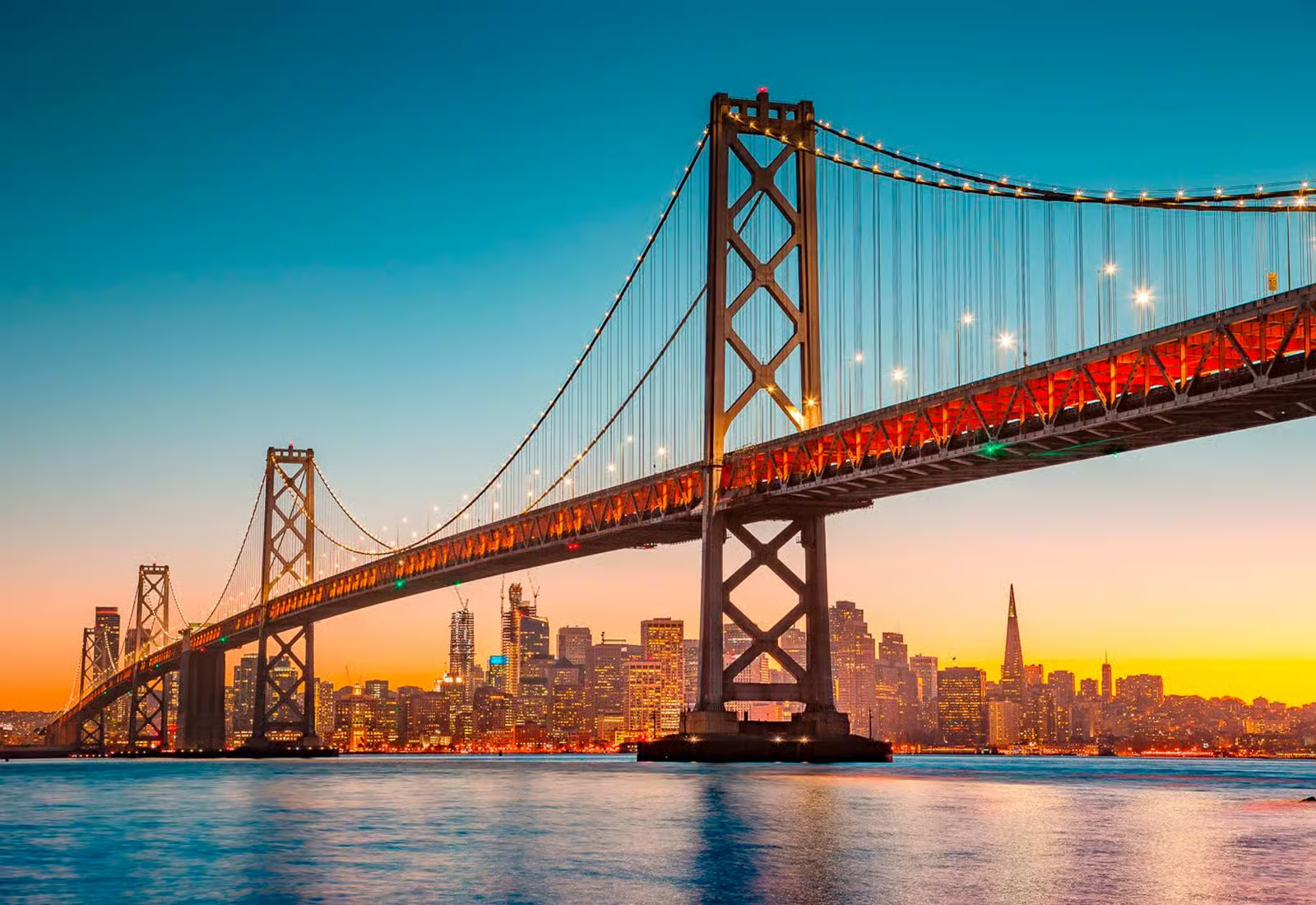
San Francisco is appealing for a different reason. Its neighbourhoods, waterfront and recognisable landmarks give visitors plenty to explore without a car, and the city’s public transport includes Muni buses, light rail, historic streetcars and cable cars. The waterfront, Fisherman’s Wharf, Chinatown and parts of downtown can be combined into a walking itinerary, while public transport helps cover longer distances.
The city’s steep hills are part of its character, but they can make walking more demanding than visitors expect. San Francisco is also geographically compact compared with many American metropolitan areas, although its transport network has limitations and connections are not equally convenient in every neighbourhood. Visitors planning to cross the wider Bay Area should distinguish between city transport and regional services, including BART, which connects San Francisco with other parts of the region and the airport. A car is unnecessary for many classic city visits, but it may become useful for excursions beyond the main urban area.

Chicago is one of the most practical options for Europeans who want the atmosphere of a large American city with a substantial public transport network. The Chicago Transit Authority operates the elevated and underground rail system known as the L, alongside an extensive bus network. Trains connect downtown with several neighbourhoods, and the central area has a street grid that makes orientation relatively straightforward.
The city’s architecture, lakefront, museums and restaurants can be explored through a combination of walking and public transport. Visitors staying in the Loop or nearby districts can reach many central attractions without a vehicle. Chicago is much larger than its downtown might suggest, however, and some neighbourhoods and attractions require longer journeys. Winter weather can also affect the comfort of walking between stops, particularly for travellers arriving from milder parts of Europe.

Philadelphia deserves attention because it combines an important historical centre with a relatively accessible urban layout. Independence Hall, the Liberty Bell area, Reading Terminal Market and much of the historic district can be explored on foot. The city also has SEPTA’s subway, trolley and bus services, providing connections beyond the central tourist areas.
For visitors interested in American history, Philadelphia allows several major sites to be combined into a single day without repeated taxi journeys. Its compact central districts can make travel planning less complicated than in more sprawling cities, although the convenience of any itinerary depends on where a visitor stays. Those travelling beyond the centre should check the most suitable rail or bus connections rather than assume every destination is within walking distance.

Portland, Oregon, is worth considering for travellers who prefer a smaller urban environment and want alternatives to driving. The city operates MAX light rail, streetcars and buses, while its central neighbourhoods offer a mix of independent shops, restaurants, parks and cultural venues. In the central city, visitors can often move between several districts on foot, using public transport for longer journeys.
Portland’s appeal lies partly in the relationship between its neighbourhoods and its public spaces. It does not have the same concentration of globally recognised attractions as New York or Washington, but it can suit travellers who want to experience everyday urban life rather than spend each day moving between major landmarks. Public transport coverage and frequency vary by location, so visitors staying far from the centre should check connections before booking accommodation.

Seattle also offers a workable combination of walking and public transport, especially for visitors staying near downtown, South Lake Union or other well-connected districts. Link light rail connects the airport with central Seattle and continues into additional urban areas, while buses provide wider coverage. The waterfront, Pike Place Market and parts of the downtown area can be explored on foot, although the city’s hills and changing weather may influence how much walking feels comfortable.
Seattle’s wider metropolitan area is more spread out than its central visitor districts. Travellers hoping to visit destinations outside the city may need regional transport, organised tours or a rental car, depending on where they intend to go. For a city-focused visit, however, a car can be more of a burden than a necessity, particularly when parking costs and traffic are taken into account.
For Europeans planning their first American holiday, the most important distinction is between a city that is easy to visit without a car and one that is easy to navigate in every respect. Public transport is only part of the equation. The location of a hotel, the distance between attractions, the availability of direct airport connections and the frequency of evening services can make a substantial difference to the experience.
A central hotel may cost more than accommodation on the outskirts, but the savings in transport time and taxi fares can partly offset the difference. Before booking, visitors should check whether the nearest rail station is genuinely convenient, whether airport transport runs at their arrival time and whether the attractions they want to visit can be grouped geographically. A transit map can be more revealing than a list of hotel amenities.
European travellers should also resist assuming that American cities work like their counterparts at home. Even in well-connected destinations, services may run less frequently at night or on weekends, and a journey that appears short on a map may involve a long walk, a transfer or a steep climb. Ride-hailing services can fill gaps, but they should not automatically be the default for every trip. Checking official transport websites and using current journey-planning information before setting out will usually save time and reduce uncertainty.
Payment systems are another consideration. Some American transit networks support contactless bank cards or mobile wallets, while others use local fare cards, apps or different payment arrangements across services. Travellers should check the current rules for their destination instead of assuming that a European contactless payment method will work everywhere. Airport connections may also be operated by different agencies from city buses and trains.
Ultimately, New York, Boston, Washington, San Francisco, Chicago, Philadelphia, Portland and Seattle provide several of the most practical starting points for Europeans who want to explore the United States without making driving central to the trip. Each offers a different balance of walkability, public transport and cultural attractions, and none is entirely free of logistical challenges. New York stands out for the reach of its subway, Boston and Philadelphia for their historic centres, Washington for its concentration of museums and monuments, and Chicago for its combination of urban scale and rail connections.
Choosing the right city can change the character of an American holiday. Rather than spending much of the trip navigating highways and searching for parking, visitors can concentrate on neighbourhoods, architecture, food and local life. In a country where many journeys still depend on a car, these cities show that a more independent, pedestrian-friendly visit is possible, provided travellers plan around the way each place actually works.


