
The Dakar 2026 Youth Olympic Games Opening Ceremony brought Senegal’s history, traditions, popular culture and scientific achievements to the international stage through a series of carefully chosen cultural references.
Beyond the performances and Olympic celebrations, the ceremony told a story about identity, heritage and the responsibility of passing knowledge from one generation to the next.
Built around the theme of “yesterday, today, tomorrow”, the production centred on The Flight of Sitoé, a story inspired by Senegalese anti-colonial resistance heroine Aline Sitoé Diatta. Through its characters, costumes, music and stage performances, the ceremony connected Senegal’s past with the ambitions of its younger generations.
The production also drew attention to cultural practices and historical figures that have shaped Senegalese society. Some references celebrated traditional wrestling and popular street performances, while others paid tribute to African cinema, scientific research, traditional craftsmanship and the country’s diverse communities.
For international audiences discovering Senegal through the Games, these details offered a closer look at the cultural identity behind the performances. Here are 10 references that helped give the Dakar 2026 Opening Ceremony its deeper meaning.
The ceremony opened with a tribute to Senegalese wrestling, locally known as “lamb” in Wolof. Four prominent wrestlers, Modou Lô, Eumeu Sène, Sa Thiès and Franc, appeared as representatives of a sport deeply rooted in the country’s cultural and sporting identity.
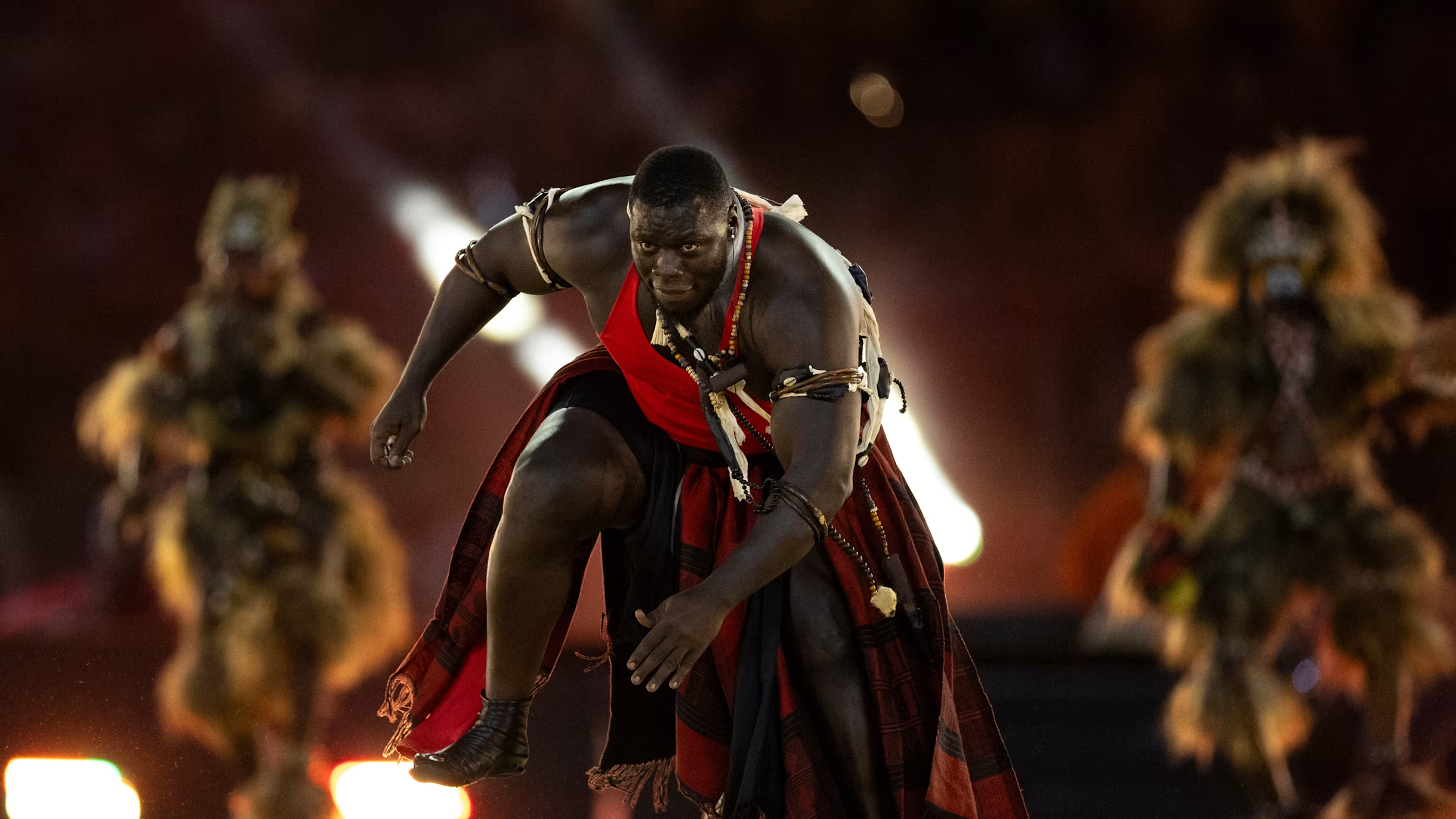
Wrestling in Senegal extends beyond the competition itself. It is closely connected to traditional music, dance, ceremonies and community life. One of its most recognisable elements is the “bakk”, a series of ritual movements, dances and gestures performed by wrestlers to display confidence, strength and readiness before a contest.
During the ceremony, the wrestlers performed their signature movements while wearing Olympic colours. Their appearance connected a familiar part of Senegalese sporting culture with the international gathering of young athletes, setting the tone for an Opening Ceremony that placed local identity at the centre of the celebration.
Another prominent cultural reference was Simb Gaïndé, widely known in French as the “faux-lion” or false lion. This traditional Senegalese performance combines dance, acrobatics, elaborate face painting and rhythmic drumming to create an energetic spectacle.
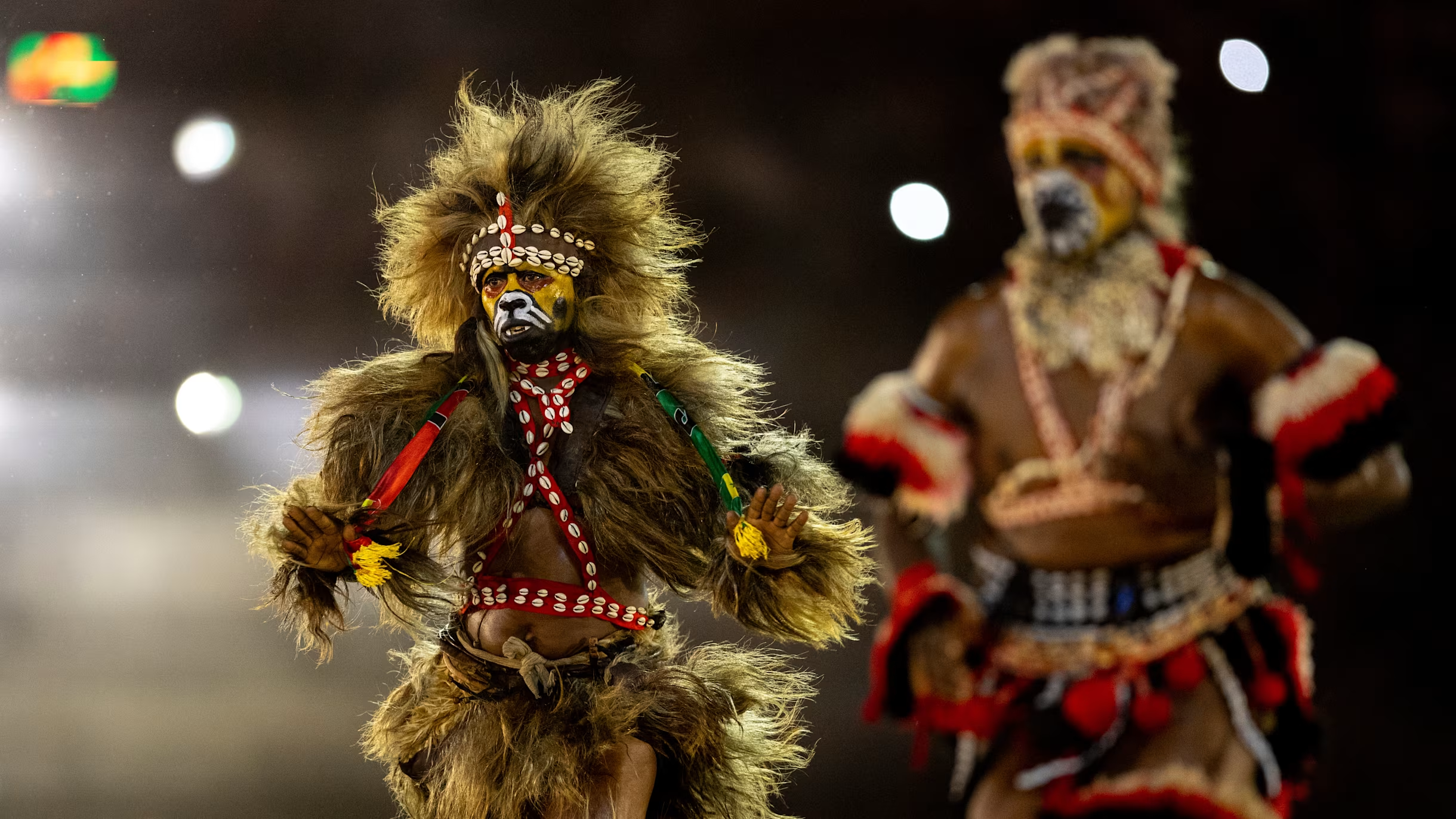
The tradition is linked to an oral legend involving hunters and lions. According to the story, a hunter who survived an encounter with a lion underwent a mystical transformation. Traditional healers and members of the community organised a ritual involving drumming to help restore him. Over generations, the practice developed into the organised performance now known as Simb Gaïndé.
Today, it remains a recognisable feature of Senegalese popular entertainment, appearing at neighbourhood celebrations, public gatherings and cultural events. Its inclusion in the Dakar 2026 ceremony brought an established street performance tradition into the Olympic spotlight.
The Fulani community’s cultural heritage also received attention through the Tingandé, a distinctive conical hat traditionally made from straw and leather. Associated with Fulani culture, particularly among herders from the Fouta region, the headwear became one of the ceremony’s memorable visual symbols.
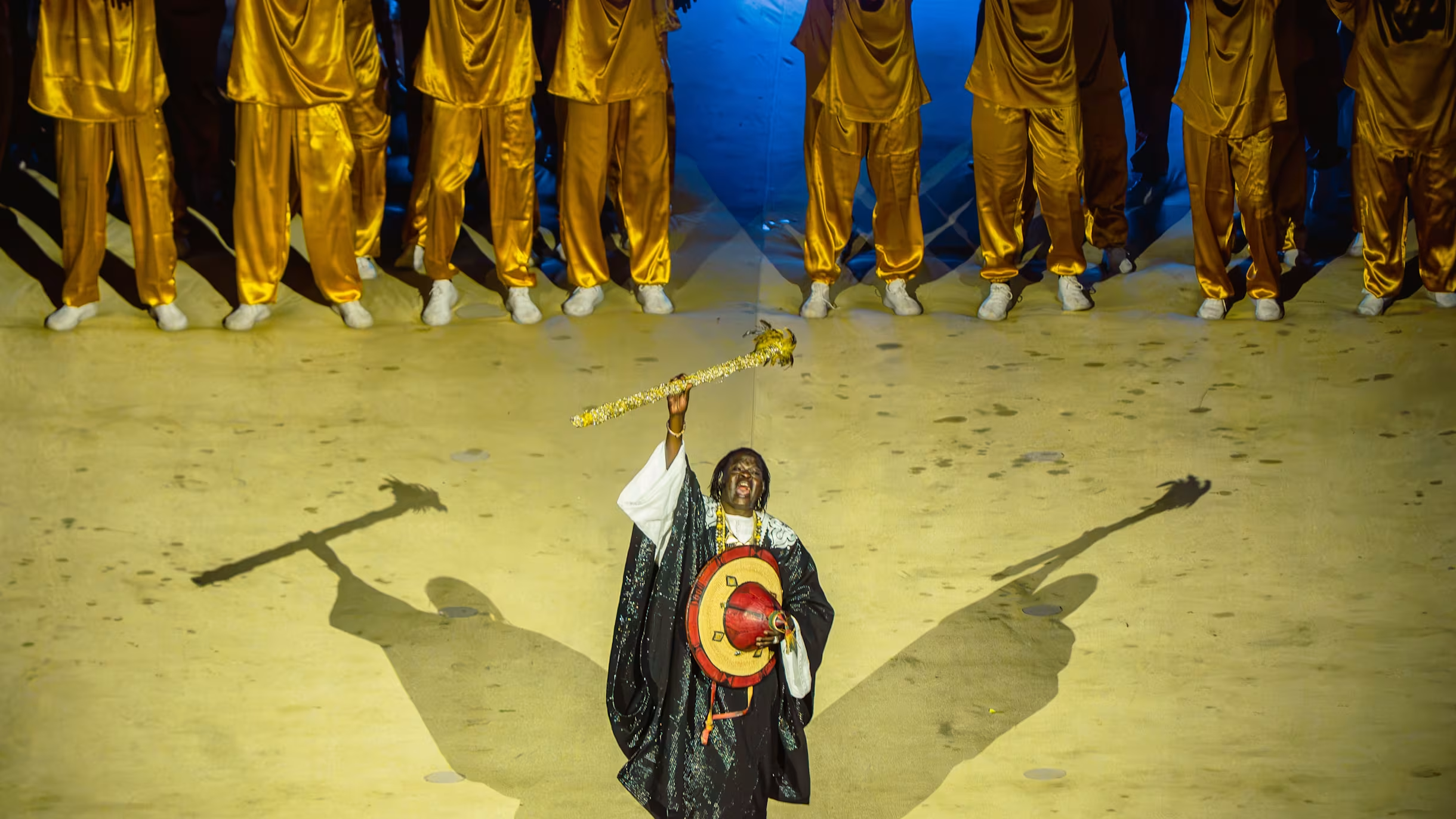
Music legend Baaba Maal wore the Tingandé when he appeared on stage. He later raised it triumphantly, turning a traditional cultural accessory into a powerful expression of identity and pride.
The hat also featured in the design of AYO, the official mascot of the Dakar 2026 Youth Olympic Games. Young designer Ndèye Mariama Diop, who won the competition to create the mascot, incorporated the accessory into the young lion’s outfit. The choice helped represent Senegal’s cultural diversity through a character designed to embody the identity of the Games.
Traditional woven cloth was another important element of the production. Known as “rabbal” in Wolof, the fabric appeared in different forms, including as part of the Senegalese delegation’s outfits during the Parade of Nations and in the costume worn by Keb, the father of Sitoé.
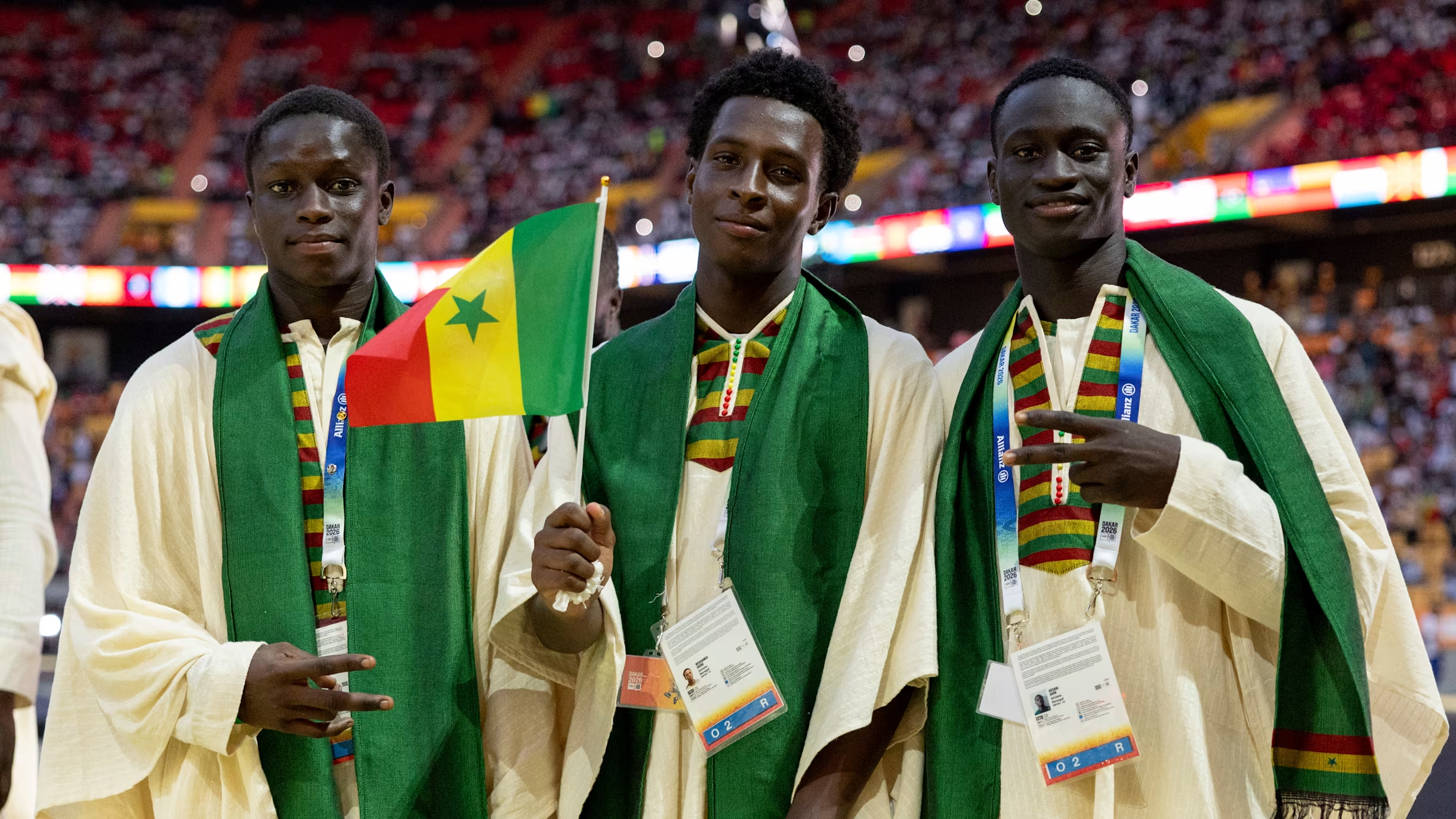
Its significance became particularly clear towards the end of the ceremony. In West African communities, woven cloth can carry social and ceremonial meaning beyond its practical use as clothing. It is associated with important occasions and may be presented as a gesture of respect during significant moments in life.
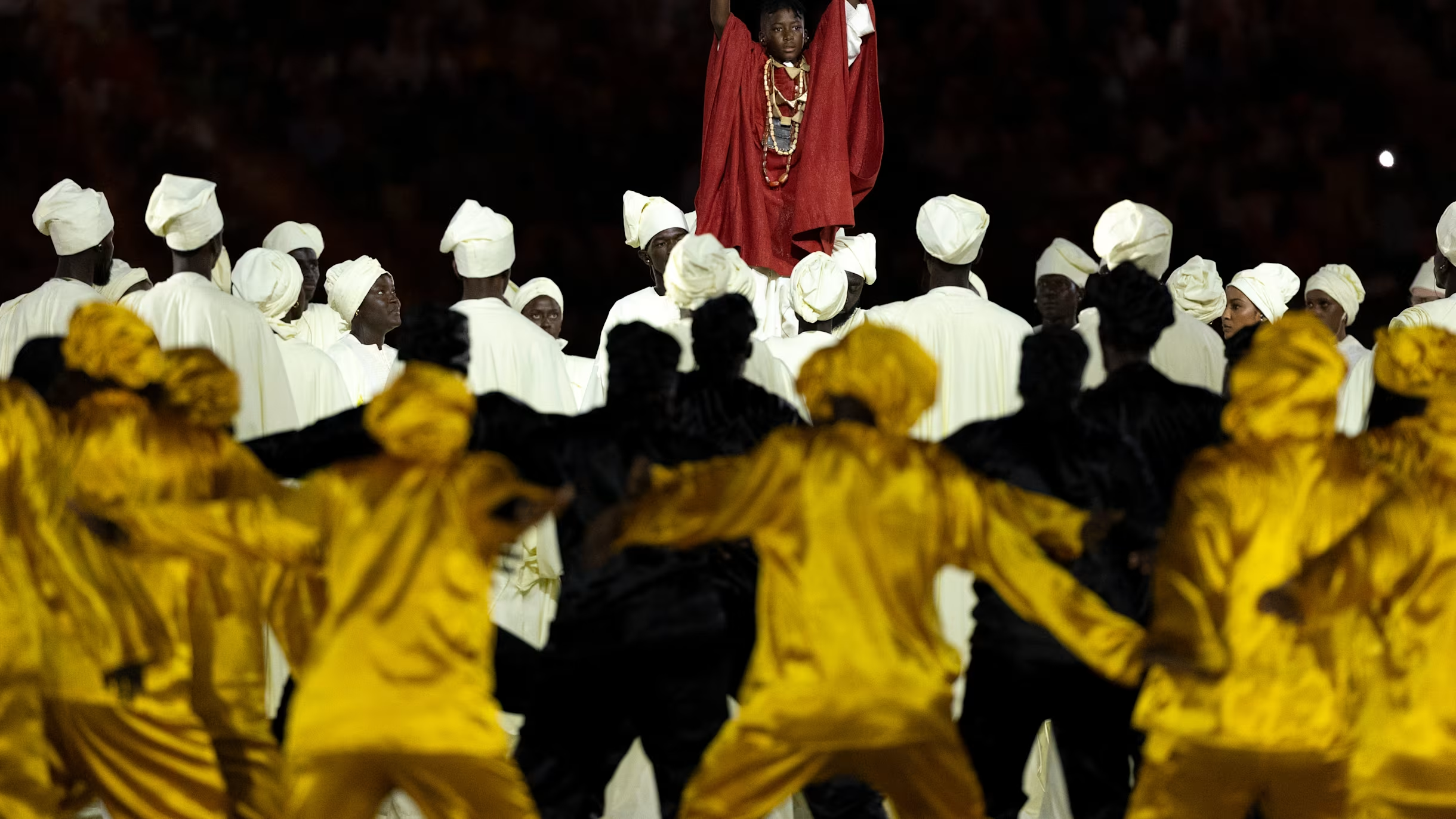
This meaning was reflected in the final procession, when 14 women laid long strips of woven fabric across the floor of the Abdoulaye Wade Stadium before passing the Olympic flame to young Aline Sitoé. The fabric created a symbolic pathway for the younger generation, reinforcing the ceremony’s central message about inheritance, continuity and the passing of responsibility.
Senegalese cinema also had a place in the production through a striking tribute to Touki Bouki, the 1973 film directed by Djibril Diop Mambety. Widely recognised as an important work in African cinema, the film follows the story of Mory and Anta, two young people who dream of leaving Senegal for a different life.
One of its most recognisable images is Mory’s motorcycle, decorated with bull horns. The unusual design became a visual symbol associated with freedom, youthful rebellion and the search for identity.
During the Dakar 2026 Opening Ceremony, a motorcycle bearing the distinctive horns entered the centre of the stadium. Its appearance created a direct connection with the film’s legacy and brought a celebrated piece of Senegalese cinematic history to a new international audience.
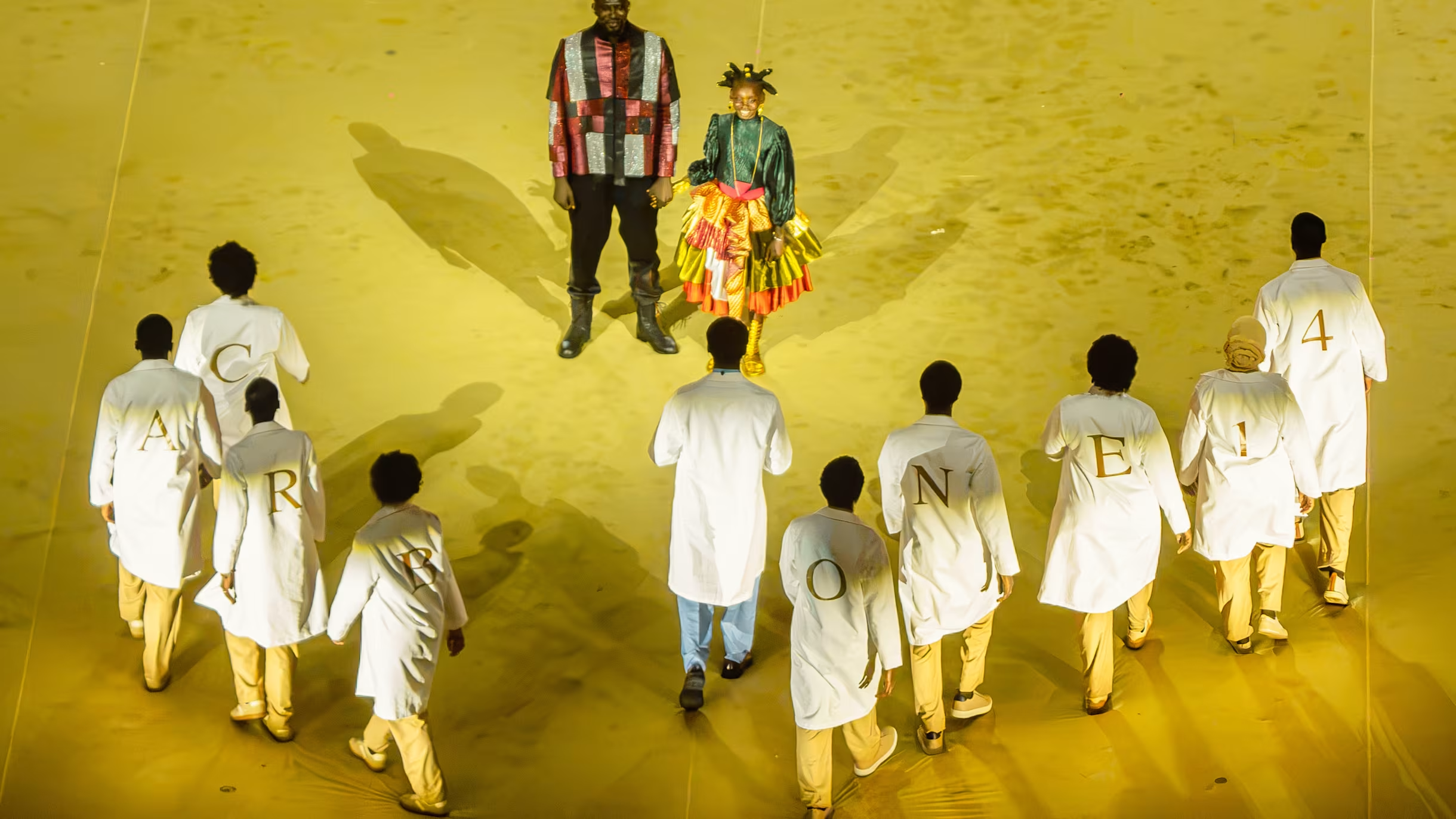
The ceremony also honoured the work of Cheikh Anta Diop, one of Africa’s most influential historians, anthropologists and intellectuals. His contribution to the study of African history and his work in scientific research were represented through a sequence involving performers dressed in white laboratory coats.
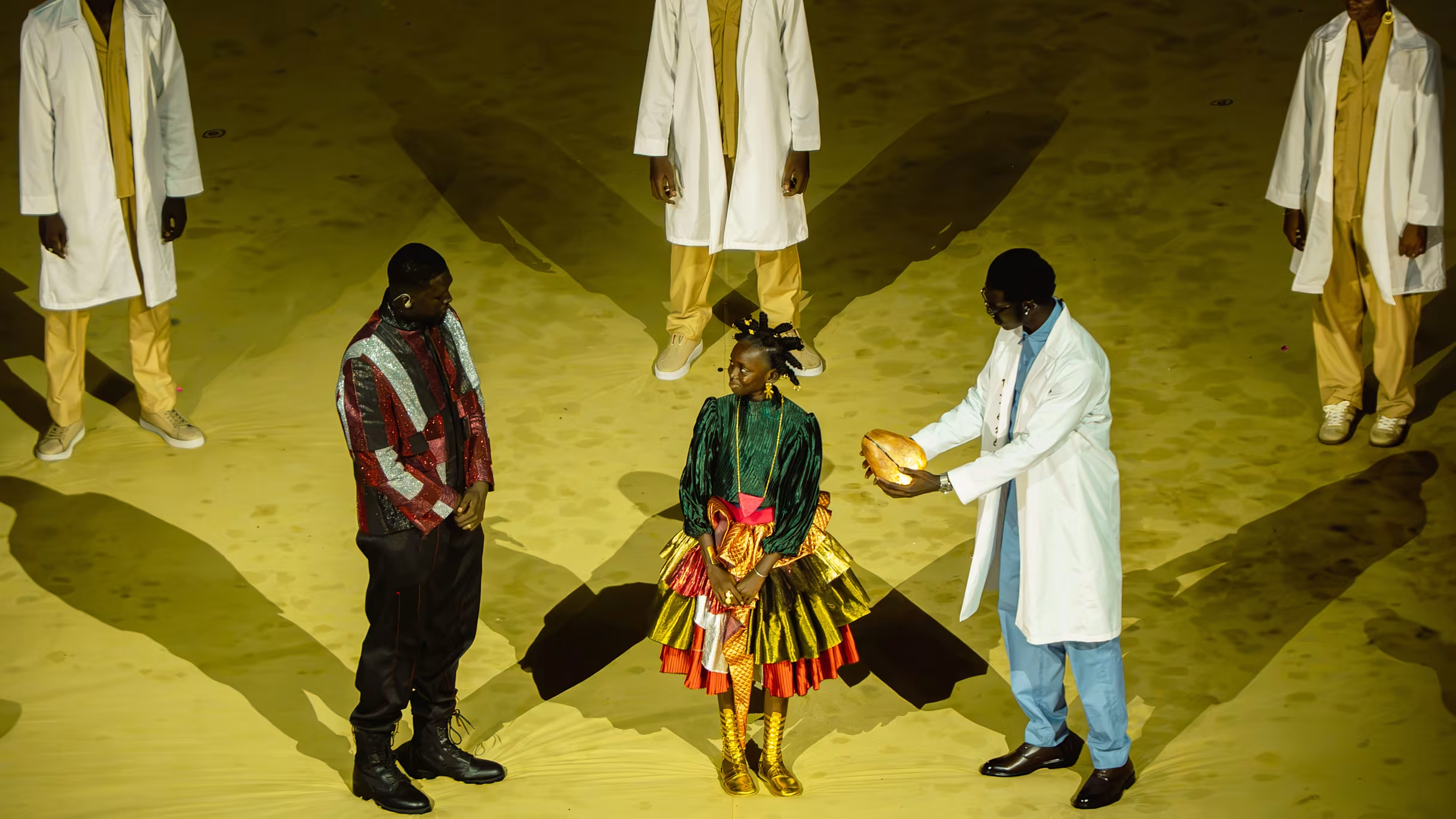
In 1966, Diop established Africa’s first carbon-14 dating laboratory at the Institut Fondamental d’Afrique Noire (IFAN) in Dakar. Radiocarbon dating is a scientific method used to determine the age of organic materials, making it an important tool in archaeological and historical research.
By referencing carbon-14 and Diop’s scientific achievements, the ceremony highlighted an often overlooked part of Africa’s intellectual heritage. The sequence also featured quotations from the Senegalese scholar, connecting his work to the production’s broader message about understanding the past as a foundation for shaping the future.
The number of women involved in the final procession carried another important meaning. Fourteen women accompanied Sitoé and presented her with the Olympic flame, representing Senegal’s 14 administrative regions.
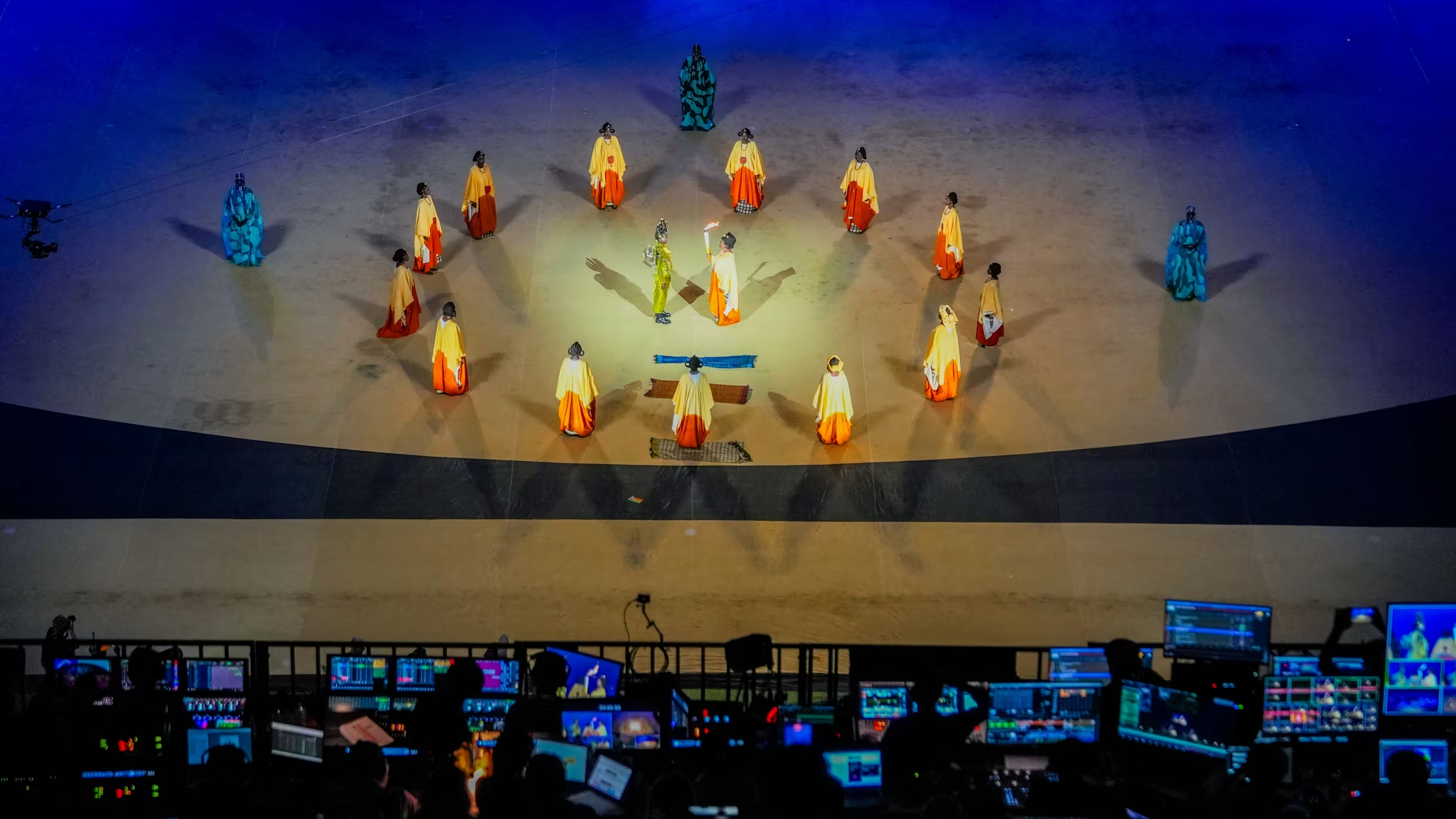
Each region has its own geographical, cultural and linguistic characteristics. Their representation during the ceremony reflected the diversity of the country and echoed the journey of the Olympic flame, which had travelled through all 14 regions during the official Dakar 2026 Youth Olympic Torch Relay.
The women formed a circle around Sitoé, creating an image of national unity. Their role also highlighted the contribution of women in preserving cultural traditions and connecting generations. Rather than presenting the flame as something belonging to a single community, the procession portrayed it as a shared national inheritance.
Traditional African hairstyles provided another layer of cultural expression throughout The Flight of Sitoé. The elaborate braids worn by young actresses and dancers demonstrated how hairstyling can function as an art form, carrying cultural meaning while allowing room for individual creativity.
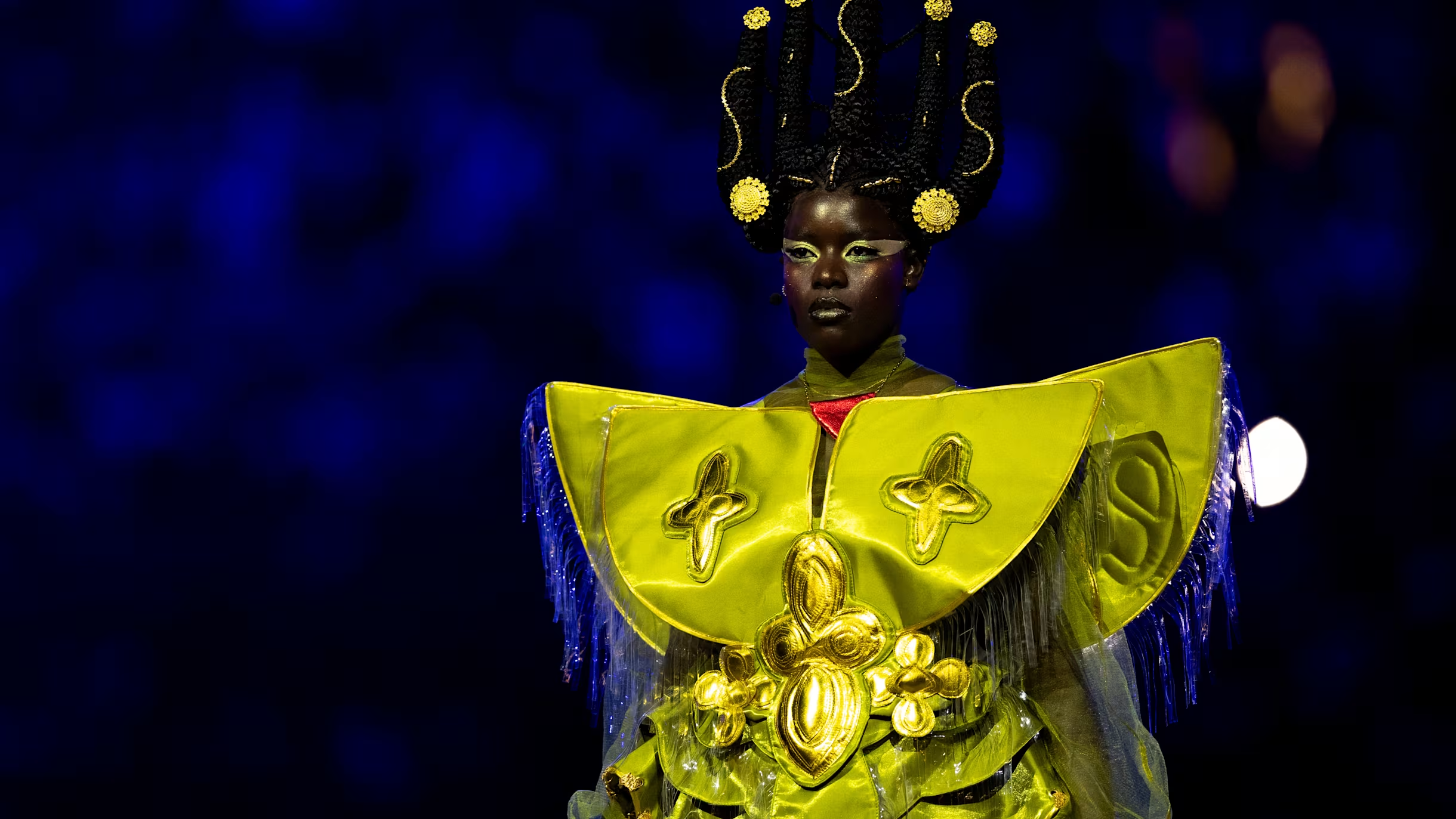
Some of the hairstyles featured cowrie shells, which hold symbolic associations with wealth, protection and the spiritual world in various African cultures. Their presence added another reference to the continent’s artistic traditions.
Sitoé’s hairstyle was particularly distinctive, featuring raised braids decorated with beads. Inspired by the historical figure Aline Sitoé Diatta, the character’s appearance connected traditional forms of African hairstyling with the confidence and creativity of a younger generation. The sequence presented braiding as a cultural practice passed down through families and communities, while showing how young people continue to reinterpret it.
The everyday streets of Dakar also influenced the ceremony’s visual storytelling. Wheelbarrows appeared in a performance that paid tribute to the city’s traders, street vendors and informal workers. The reference also recalled Madame Brouette, the 2002 Senegalese film directed by Moussa Sène Absa.
Wheelbarrows are a familiar sight in Dakar, where they serve as practical tools for transporting and selling goods across busy neighbourhoods and markets, including Sandaga and Colobane. Their presence reflects the resourcefulness of people who depend on small-scale trading and other forms of informal economic activity.
During the ceremony, dancers and acrobats incorporated colourful wheelbarrows into an energetic performance. An ordinary object associated with daily work became part of the stage choreography, bringing the rhythm and character of urban Senegal into the stadium.
The final cultural reference was closely connected to the Olympic flame and the message “Pass The Energy”, the theme of the Dakar 2026 Youth Olympic Torch Tour. The campaign focused on sharing the Olympic spirit across generations and communities through sport and cultural participation.
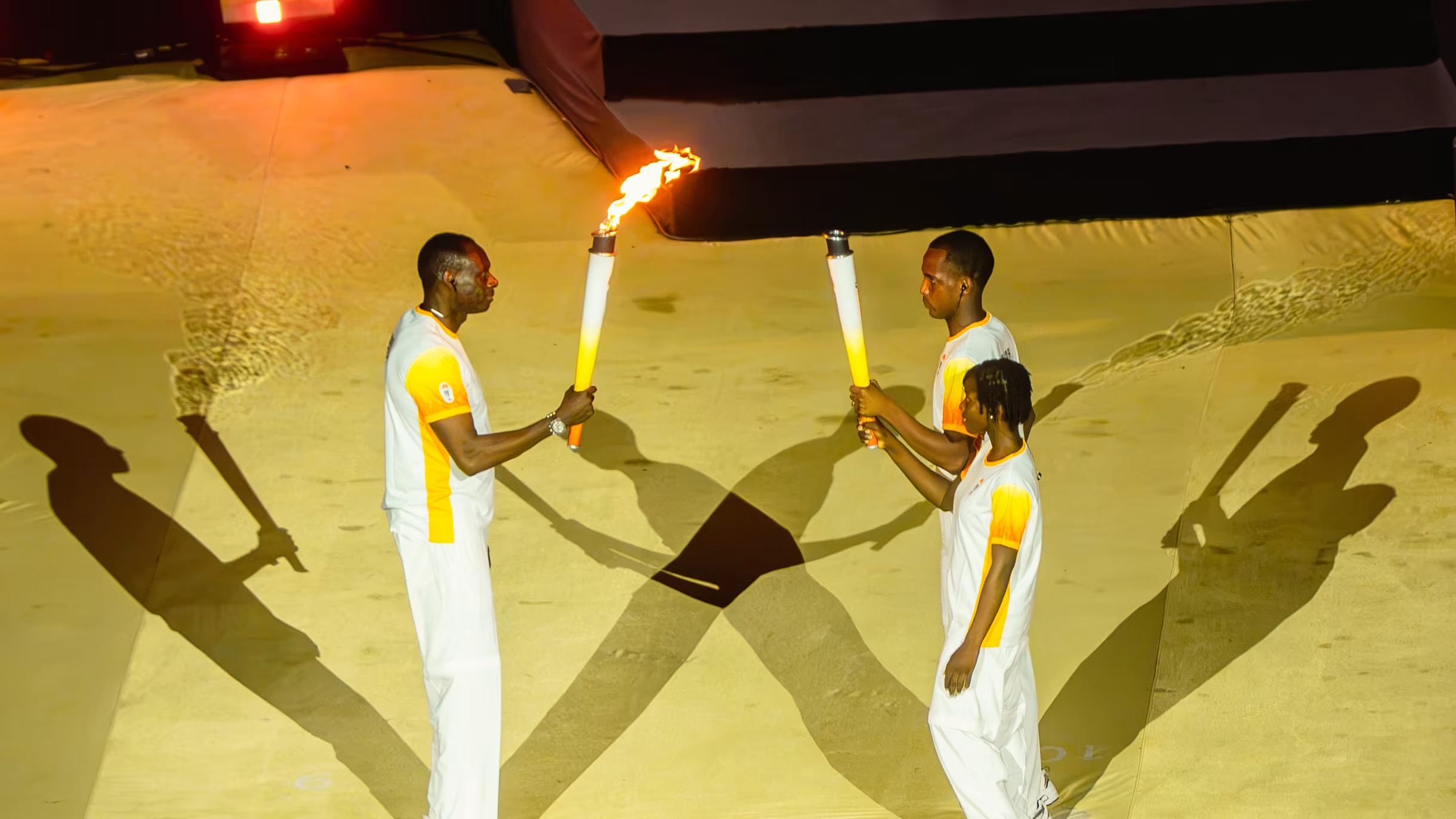
The flame, which had been lit in Athens, was first carried in Dakar by the Linguères on 12 September during the official welcome ceremony. Its journey across Senegal began on 14 September, with personalities from different generations taking part in the relay.
That message of shared responsibility returned during the Opening Ceremony. After spending the story searching for the flame, Sitoé finally received it from women representing the generations before her. The final torchbearers, athletes Yves Bourhis, Saly Sarr and Amadou Dia Ba, Senegal’s only Olympic medallist, then passed the flame to two young athletes competing at the Games, Abdourahmane Marième Sy in fencing and Aïcha Diop in judo.
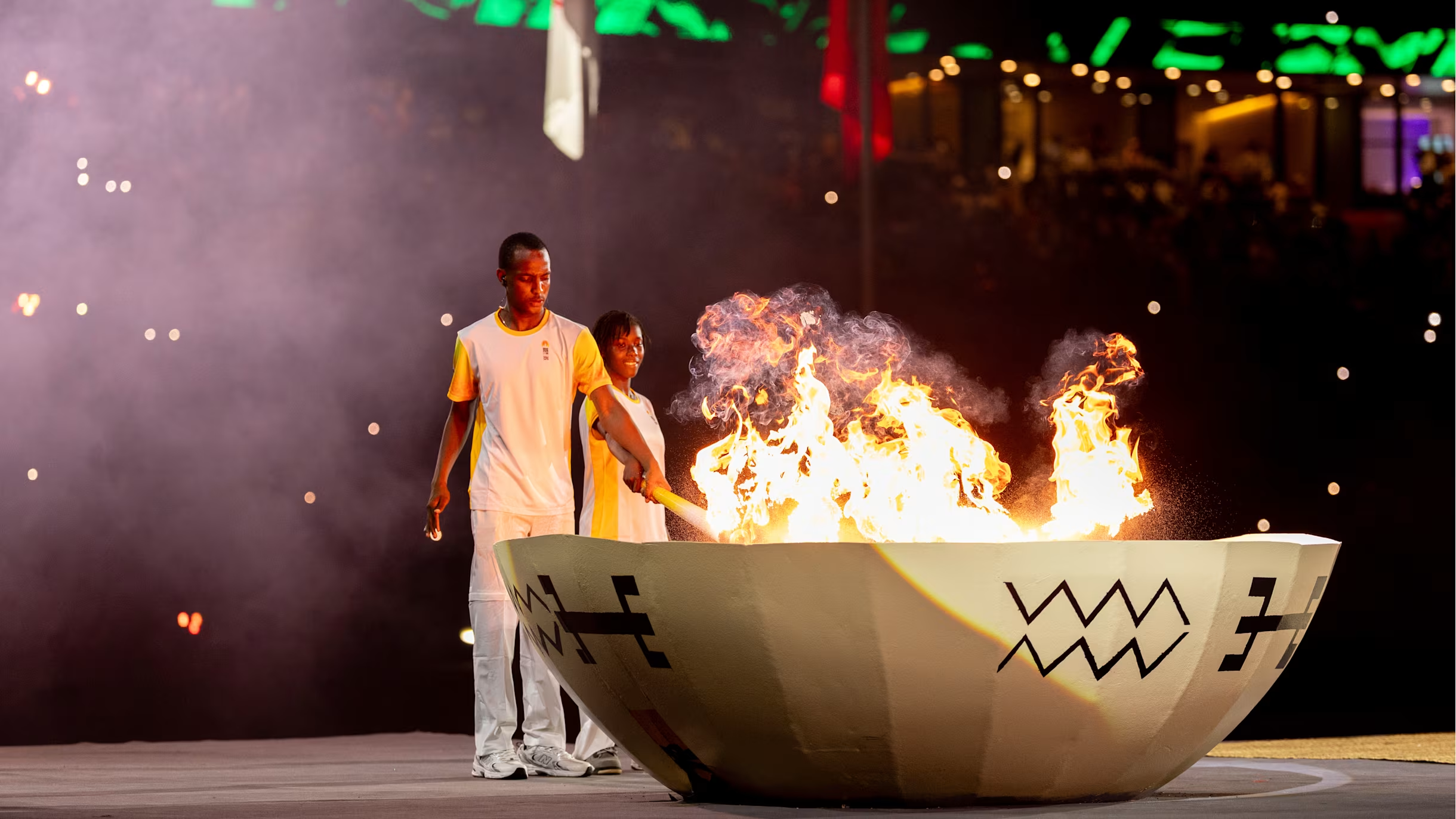
The two young athletes lit the Olympic cauldron, marking the beginning of the Games and completing a sequence built around the transfer of knowledge, experience and responsibility from older generations to younger ones.
Through these 10 cultural references, the Dakar 2026 Opening Ceremony presented Senegal as a country whose identity is shaped by traditional practices, artistic expression, scientific achievements, sporting history and everyday community life. The production did more than introduce the host nation to an international audience. It placed its cultural heritage at the centre of an Olympic celebration and gave younger generations a prominent role in carrying that heritage forward.


