
Museums in Finland offer a fascinating way to understand how the country became what it is today, from its prehistoric settlements and medieval trading towns to its indigenous Sámi heritage, wartime experiences and modern society. Across the country, important collections, historic buildings and archaeological discoveries preserve stories that go far beyond the familiar image of Finland as a destination of forests, lakes and contemporary design.
For visitors interested in Finnish history and culture, these museums provide an opportunity to encounter the people, traditions, conflicts, industries and everyday experiences that have shaped the nation. Some are housed in medieval castles, others occupy historic neighbourhoods or purpose-built cultural institutions, while a number preserve ways of life that have gradually disappeared from modern Finnish society.
The country’s history is also more complex than a single national narrative might suggest. Finland spent centuries under Swedish rule before becoming an autonomous Grand Duchy within the Russian Empire in 1809 and declaring independence in 1917. Its cultural identity has been shaped by regional traditions, its relationship with neighbouring countries, the experiences of different communities and the changing conditions of life in the Nordic region.
A visit to the following 12 museums offers a more detailed understanding of that history, with each institution approaching Finnish heritage from a different perspective.
The Sámi Museum Siida in Inari is one of the most important places to begin. Located in Finnish Lapland, it is dedicated to the history, culture and contemporary experiences of the Sámi, the Indigenous people of the northern parts of Finland, Sweden, Norway and Russia. Its importance extends beyond preserving historical objects. The museum gives visitors an opportunity to understand a people whose cultural identity, livelihoods and relationship with the land have existed long before the establishment of modern Nordic national borders.

Founded in 1959 by the Sámi association Sámi Litto, the museum opened to the public in 1963 as the first independent Sámi museum in the Nordic countries. Its collections document the spiritual and material culture of the Finnish Sámi, while its exhibitions explore the connections between traditional knowledge, northern nature and cultural identity. The open-air museum adds another dimension, with approximately 50 historic buildings and structures representing different Sámi cultural areas and traditional livelihoods. Visitors can also learn about the distinct heritage of the Skolt Sámi through the museum’s Skolt Sámi Heritage House in Sevettijärvi.
In Helsinki, the National Museum of Finland, known in Finnish as Kansallismuseo, offers one of the country’s most comprehensive perspectives on its cultural history. Its collections cover the history and cultures of the geographical area that is now Finland, alongside material from other parts of the world. Archaeological discoveries, historical objects and cultural artefacts help explain how communities developed, how people lived and how the region’s identity changed over thousands of years.

The museum’s story is particularly relevant to understanding Finland’s transition from a collection of historical regions under foreign rule into an independent nation. Its planned exhibitions cover Finnish prehistory, the centuries between the medieval period and the end of the 19th century, and the country’s modern era. However, visitors planning a trip should be aware that the National Museum is currently closed for renovation and expansion. It is expected to reopen in spring 2027, when its updated permanent exhibitions will introduce the country’s history to a new generation of visitors.
A different perspective on Finnish history can be found at the Suomenlinna Museum in Helsinki, situated within the historic Suomenlinna Sea Fortress. The fortress, a UNESCO World Heritage Site, was constructed from 1748 under Swedish rule to strengthen the kingdom’s eastern defences and establish a naval base. Its subsequent history reflects the changing political control of Finland, passing from Sweden to Russia before becoming part of independent Finland in 1918.

The museum helps visitors understand the development of the fortress and the people who lived and worked within its walls. Suomenlinna is particularly interesting because its history cannot be separated from the wider story of Finland’s position between Sweden and Russia. Military strategy, maritime trade, political power and everyday island life all contributed to its development. The wider fortress also contains other museums, including the Military Museum, Ehrensvärd Museum and Customs Museum, although their opening arrangements vary by season.
For an understanding of how ordinary Finns lived before modern urban life became widespread, the Seurasaari Open-Air Museum provides a particularly revealing experience. Located on an island in Helsinki, the museum brings together 89 historic buildings relocated from different parts of Finland. The collection includes farmhouses, cottages, outbuildings and other structures that illustrate regional differences in traditional Finnish architecture and domestic life.

Established in 1909, Seurasaari allows visitors to explore buildings dating from different periods, with some of the oldest log structures originating in the late 17th century. The interiors and surrounding yards offer glimpses into how Finnish families organised their homes, worked, celebrated important occasions and adapted to the conditions of rural life. Rather than concentrating solely on political events or prominent historical figures, the museum makes everyday experiences central to its presentation of the past. It is also a useful place to understand the regional character of Finnish building traditions, which developed in response to local materials, climate and ways of earning a living.
In Turku, Aboa Vetus offers an unusual opportunity to explore the country’s medieval urban history through an archaeological site preserved beneath the modern city. Part of the Aboa Vetus Ars Nova museum, it contains the remains of medieval buildings and streets discovered during archaeological investigations. Visitors can walk among the ruins of an old town quarter and encounter physical evidence of how people lived in one of Finland’s historically important urban centres.

Turku has played a significant role in the country’s development, particularly during the period when Finland was part of the Swedish kingdom. Its location along important maritime routes helped establish it as a centre of trade, administration and religious life. Aboa Vetus makes these connections easier to understand by presenting archaeological discoveries within the actual urban environment where they were found. The remains of medieval houses and the historic Convent Riverfront provide a tangible link to a period when the city was already an important centre of activity. The museum’s archaeological focus also makes it different from institutions that rely primarily on objects displayed in conventional exhibition rooms.
Häme Castle in Hämeenlinna is another important destination for anyone interested in the medieval foundations of Finnish history. Construction of the castle began in the late 13th century, when the region formed part of the eastern frontier of the Swedish kingdom. Its original purpose was both military and administrative, helping to strengthen royal authority and control an important area of Finland.

The castle’s thick walls, historic rooms and architectural features reveal how defensive structures were developed during a period when territorial control and military security were major concerns. Its history also extends beyond the medieval period. Over the centuries, the building experienced changes in ownership, function and condition, including a later period when it was used as a prison. Today, it operates as a museum where visitors can explore its historic spaces and learn about the different stages of its existence. Its long history makes it an especially useful place to understand how political authority, military organisation and everyday life intersected in medieval and early modern Finland.
Further east, Olavinlinna Castle in Savonlinna provides another perspective on Finland’s history as a contested borderland. Founded in 1475 by Danish knight Erik Axelsson Tott, the castle was constructed on a rocky island at the meeting point of waterways in the Lake Saimaa region. Its location was deliberately selected for defensive purposes, particularly to protect Sweden’s eastern frontier against threats from the east.

The castle’s development reflects the changing military and political circumstances of the region. Its structure was modified over different periods as defensive needs and military technology evolved. The castle’s history is also connected to the wider story of the Swedish and Russian empires and their competing interests in the region. Today, Olavinlinna is a museum and one of Finland’s best-known historic landmarks. It is also internationally recognised as the setting for the Savonlinna Opera Festival, which began in its modern form in 1967. For visitors, the combination of preserved medieval architecture and the castle’s continuing cultural role makes it an especially distinctive historical destination.
Finland’s relationship with the sea is explored at the Maritime Museum of Finland, located at Maritime Centre Vellamo in Kotka. The country’s coastal geography, thousands of lakes and long history of maritime connections have made boats, shipping and seafaring important parts of its economic and cultural development. The museum preserves this heritage through collections of vessels, photographs, documents, artefacts and archival material.

Its collections include more than 20,000 artefacts and approximately 257,000 photographs, providing an extensive record of Finnish maritime activity. The museum’s subject is particularly relevant to understanding how coastal communities developed, how people earned their livelihoods and how Finland maintained connections with other countries through shipping and trade. Maritime history also provides a way to examine the movement of people, goods and ideas across the Baltic Sea and beyond.
There is an important visitor consideration, however. The museum’s former main exhibition, North Star, Southern Cross, closed in March 2025 as part of a major renovation of its exhibition programme. New exhibitions about the sea and seafaring are being developed, while other displays at Maritime Centre Vellamo continue to explore regional history, naval battles, coastal protection and maritime culture.
In Tampere, Museum Centre Vapriikki presents a broad picture of Finnish history through several museums and exhibitions under one roof. Its location is significant in itself. The museum occupies a former industrial building in the old Tampella factory area, where manufacturing played an important role in the development of the city.
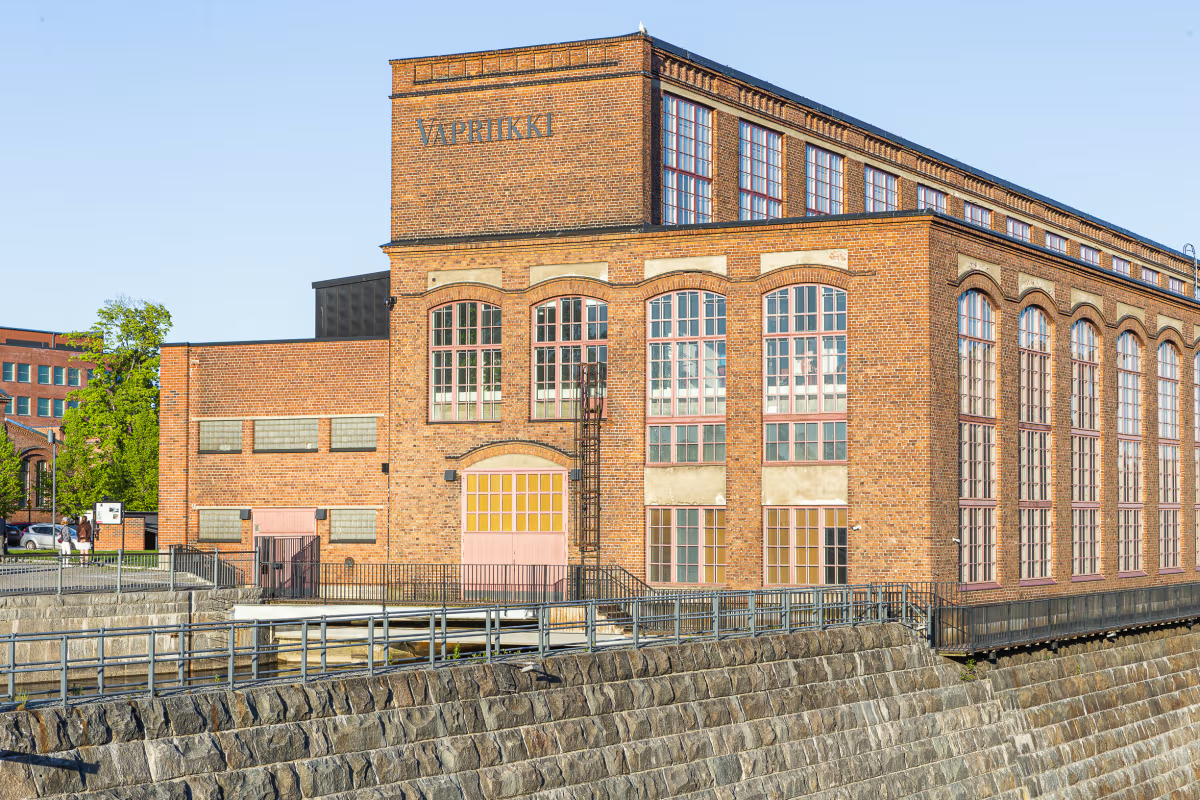
The building’s industrial past connects directly with Tampere’s reputation as one of Finland’s most important manufacturing centres. Textile production, engineering and other industries attracted workers, encouraged urban growth and helped shape the social conditions of the region. Vapriikki’s exhibitions explore different aspects of history, science, culture and everyday life, allowing visitors to examine subjects ranging from local industrial development to wider historical and social changes. Its former factory setting adds an important layer to the experience, showing how buildings associated with working life can acquire a new cultural purpose. For those interested in the relationship between industrialisation and Finnish society, Vapriikki offers a particularly valuable stop.
Another Tampere institution worth visiting is the Finnish Labour Museum Werstas, located in the historic Finlayson industrial district. Its exhibitions focus on working life, industrialisation, workers’ experiences and the development of Finnish civil society. Rather than presenting national history exclusively through political leaders and major historical events, Werstas places ordinary people at the centre of the narrative.

The Finlayson area was one of the most significant industrial environments in Finland, and its factories played a major role in the growth of Tampere. The museum uses this setting to examine the social changes associated with industrial work, including the experiences of employees, the development of workers’ culture and the evolution of political and social movements. Its Steam Engine Museum and changing exhibitions provide additional context for understanding how industrial technology transformed production and everyday life. Werstas has also been designated a national special museum with responsibilities relating to working life and social history in Finland. Its approach is valuable for anyone seeking to understand the experiences of the people who helped build modern Finnish society.
In Jyväskylä, the Museum of Central Finland offers a regional account of the country’s history through the experiences of communities in the country’s central lake district. Its permanent exhibition, Exploring Central Finland, traces the area’s development from prehistoric settlements to the beginning of the 21st century.

The exhibition provides an opportunity to understand how settlement patterns, economic activities, technology and social life changed across different historical periods. Regional museums such as this are particularly valuable because they reveal details that can be overlooked in broader national accounts. They show how historical developments affected individual communities and how local traditions contributed to Finland’s wider cultural identity. The museum is part of the Aalto2 Museum Centre, located in a building designed by renowned Finnish architect Alvar Aalto. This also creates an interesting connection between the region’s historical heritage and Finland’s internationally recognised architectural tradition.
The final destination on this list is the Satakunta Museum in Pori, one of Finland’s established cultural history museums. Founded in 1888, it documents the history of the Satakunta region and the communities that have lived along the Kokemäenjoki River and the surrounding areas for centuries.
Its exhibitions explore life in the region from prehistoric times to the present, bringing together objects, photographs and stories that explain how people built homes, worked, traded, dressed and organised their communities. Visitors can learn about changes in Pori’s urban landscape, regional industries and the everyday experiences of different generations. The museum also examines local personalities and historical developments that have influenced the identity of Satakunta.

Its wider responsibilities extend beyond the main museum building, with several other heritage sites and collections connected to the museum’s work. This regional approach makes Satakunta Museum an important destination for understanding how Finnish history developed outside the country’s largest urban centres. It also demonstrates why local museums remain essential to preserving the diversity of Finnish cultural heritage.
Together, these museums present a Finland that cannot be fully understood through its modern cities, celebrated architecture or natural landscapes alone. The country’s history is also preserved in medieval fortifications, archaeological remains, traditional farmhouses, industrial buildings, maritime collections and the cultural heritage of its Indigenous population.
For international visitors, these institutions offer valuable context before exploring different parts of the country. For residents, they provide opportunities to revisit familiar places through the experiences of earlier generations and discover regional histories that may not always receive national attention. Whether the interest is in medieval Finland, Sámi traditions, industrialisation, maritime trade or the development of everyday Finnish life, the country’s museums provide an accessible starting point for understanding the history and cultural identity of Finland.


