
Jet2 has introduced a business class-only Boeing 737-800NG for charter flights, marking a new development for the British low-cost airline as demand grows for premium air travel. The aircraft, based at Liverpool John Lennon Airport in the UK, has 76 business class seats, replacing the 189-seat configuration found on standard Jet2 aircraft of the same type.
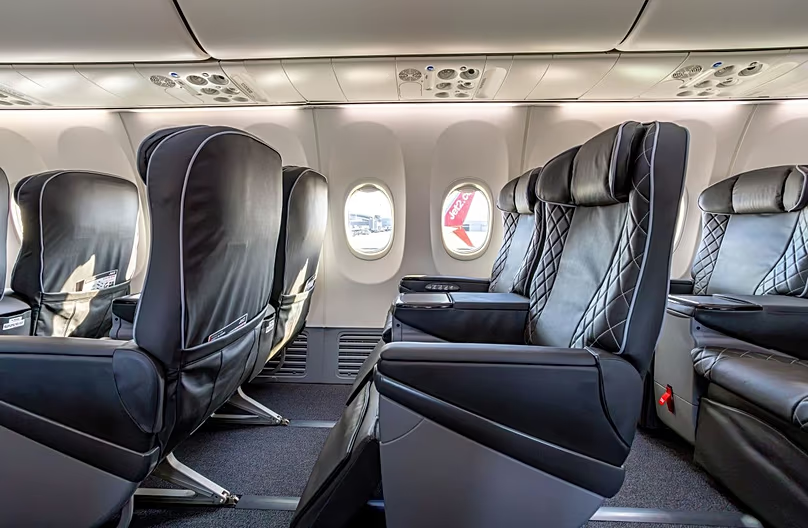
The new aircraft is operated by Jet2 Charter, the airline’s charter business, which caters to groups seeking private or specially arranged flights. The company said the aircraft was introduced in response to demand from the sports, music, entertainment and specialist group sectors.
Unlike Jet2’s regular scheduled services, which do not offer a dedicated business class cabin, the charter aircraft has been configured entirely around premium seating. Each seat provides at least 43 inches of legroom, giving passengers considerably more personal space than a typical economy-class arrangement.
Trevor Caplis, Jet2’s head of charter and airline sales, described the aircraft as a significant development for the company’s charter customers.
“This is the first time that we have featured a dedicated business class specification on our aircraft, so this is an incredibly exciting development for charter customers,” Caplis said.
He added that feedback from customers who had already flown on the aircraft had been positive, with the cabin’s space, comfort and premium feel receiving particular attention. Jet2 expects the aircraft to appeal to charter clients during the winter season, supported by the airline’s customer service offering.
The introduction reflects a broader shift in the aviation industry, where airlines are investing in higher-end cabins and premium seating to meet demand from travellers and organisations willing to pay more for comfort and privacy. While business class has traditionally occupied only part of an aircraft, some operators are now building entire aircraft around premium passengers.
Several airlines have already established business models based on this approach. BeOnd and La Compagnie, for example, operate all-business-class services, targeting passengers seeking a more exclusive flying experience than conventional economy-focused airlines provide.
Larger international carriers are also expanding their premium offerings. British Airways recently unveiled a new Airbus A380 cabin design featuring 106 business class seats across the aircraft’s entire upper deck, alongside 12 first-class suites. The configuration represents a major commitment to premium travel on one of the airline’s largest aircraft.
Emirates has also been investing in cabin upgrades. In September, the airline presented what it described as the world’s first electric premium economy seat with a full-height privacy screen, highlighting the growing focus on passenger comfort and personal space beyond business and first class.

Other carriers are exploring ways to attract passengers seeking an upgrade from standard economy. TAP Air Portugal introduced its Economy Prime product in June, while Qatar Airways chief executive Hamad Ali Al-Khater said the airline was seriously considering adding a premium economy option.
These developments point to a market in which airlines are seeking to offer more choice across different price levels, from improved economy seating to dedicated premium cabins. For charter operators, a business class-only aircraft also offers a specialised option for groups travelling together, particularly in sectors where comfort, scheduling and the needs of travelling parties can be important considerations.
Jet2’s new Boeing 737-800NG is not a change to the airline’s standard scheduled services. Instead, it gives the charter division a distinct product for customers who require a more spacious cabin and a premium onboard environment. Its introduction also illustrates how an airline best known for low-cost leisure travel can pursue a different market through its charter operations.


