Giraffe Manor is one of Nairobi’s most distinctive hotels, offering guests the rare opportunity to share breakfast with giraffes while staying in a historic manor surrounded by indigenous forest. Yet the property’s appeal extends beyond its unusual wildlife encounters. Its history is closely tied to efforts to protect an endangered giraffe population, making it an example of how luxury hospitality can intersect with conservation.
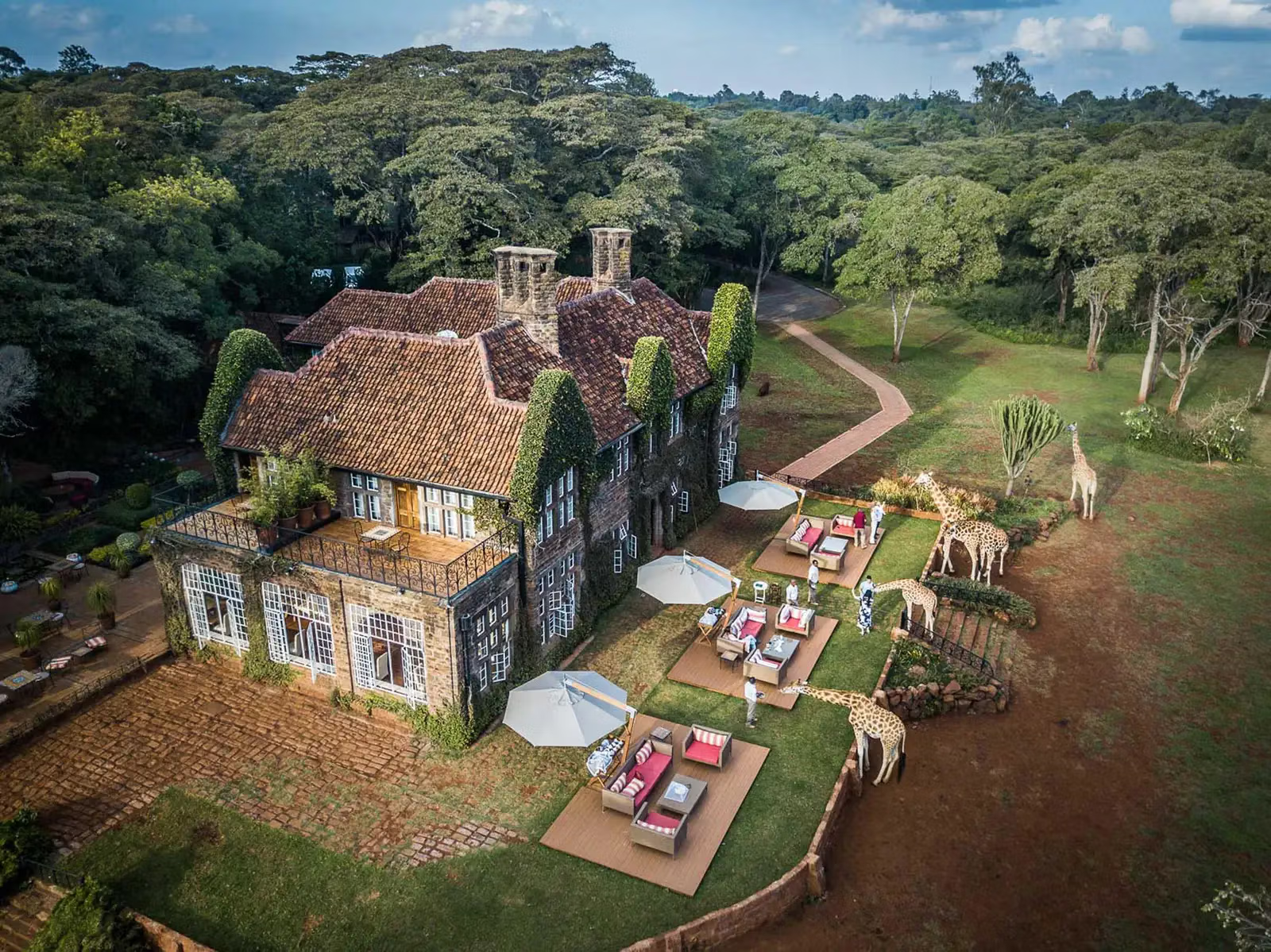
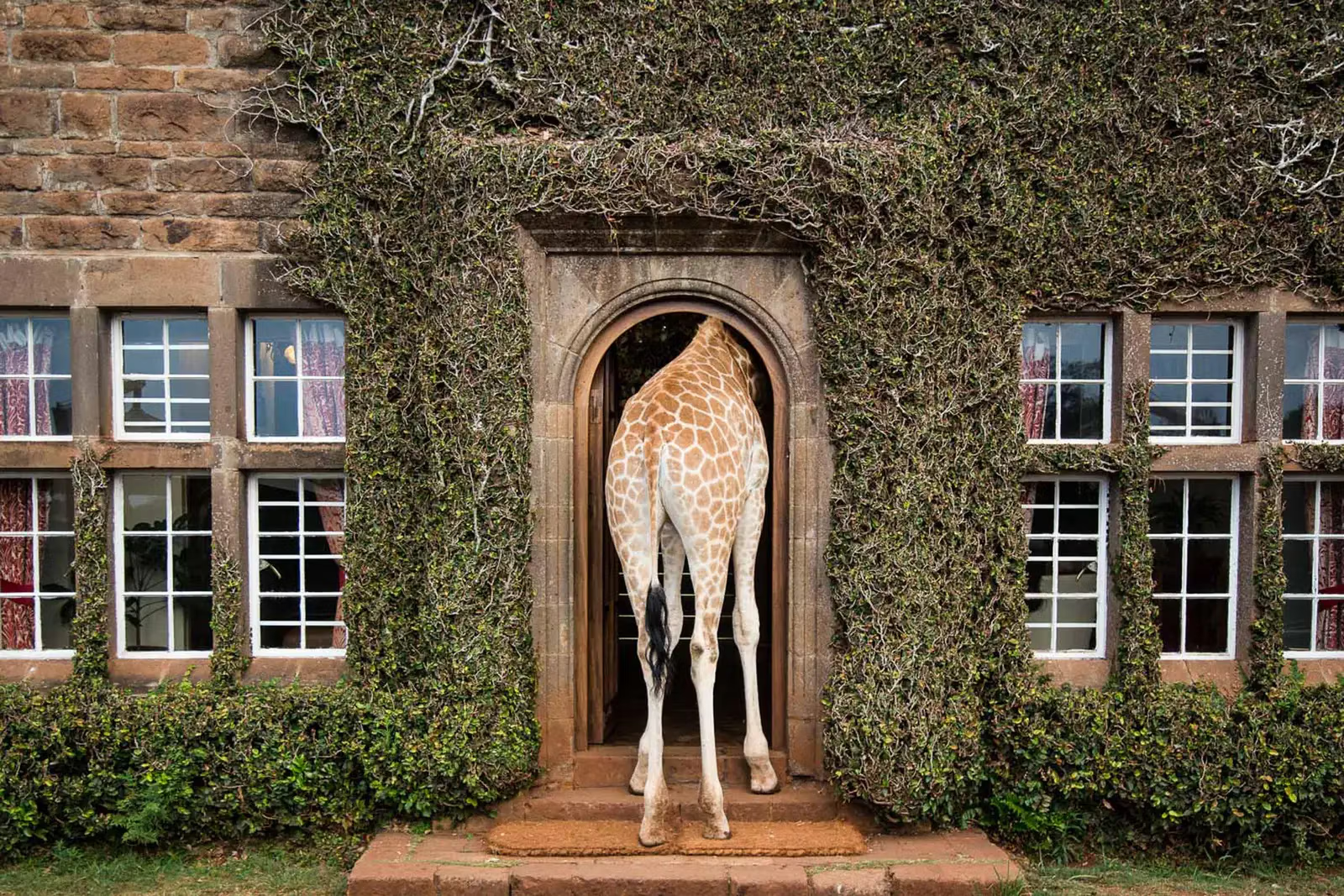
Located in the Lang’ata suburb of Kenya’s capital, Giraffe Manor combines the atmosphere of an old country house with an experience that few hotels anywhere in the world can replicate. Giraffes sometimes stretch their long necks through the windows or approach the dining area, creating the extraordinary scenes that have made the property internationally recognisable. Their visits, however, are only one part of a much longer story involving wildlife protection, breeding programmes and environmental education.
The manor was built in 1932 and modelled on a Scottish hunting lodge. Its conservation history began decades later, when Jock and Betty Leslie-Melville acquired the property in 1974 and became involved in efforts to save the Rothschild’s giraffe, a name historically used for the giraffe population now generally classified as the Nubian giraffe. The population had suffered from habitat loss and other pressures, raising concerns about its long-term survival.

The couple established the African Fund for Endangered Wildlife in Kenya, known as AFEW, and began a breeding programme that helped develop the property into more than a private residence. The initiative became the foundation for a wider conservation and education effort, with the neighbouring Giraffe Centre opening to the public and school groups in 1983. The centre continues to promote awareness of Kenya’s wildlife and the importance of protecting natural habitats.
That connection distinguishes Giraffe Manor from hotels that simply offer wildlife viewing as an added attraction. Here, the animals are central to the property’s identity, while the conservation programme provides historical context for their presence. According to The Safari Collection, which owns and operates the hotel, giraffes born through the programme have been released into protected areas to help restore populations in places where the animals had disappeared.

The setting plays an important role in the experience. The Safari Collection describes the property as occupying 12 acres of private land within a wider area of indigenous forest in Lang’ata. The historic manor’s architecture, gardens and terraces create a distinctly residential atmosphere, setting it apart from conventional safari lodges built around open savannah landscapes. Although Nairobi is a busy capital, the property’s wooded surroundings give guests a sense of being removed from the city’s pace without leaving it behind.
The giraffes are not domesticated hotel attractions, and their appearances are not guaranteed on demand. According to the hotel, they move freely through the surrounding forest and can choose when to approach the manor. Guests may encounter them around the grounds or near designated feeding areas, but the animals retain their own routines. This distinction matters because a wildlife experience should be understood as an opportunity to observe animals in a managed conservation setting, rather than a performance staged for visitors.

Feeding is also controlled. The Safari Collection says the giraffes receive measured quantities of specially provided pellets to supplement their natural diet of leaves, with access to the supplementary food restricted to certain hours. The limits are intended to protect the animals’ health and reproductive wellbeing. These measures offer an important reminder that close contact with wildlife comes with responsibilities, even when the setting feels intimate and relaxed.
For guests, the experience can unfold in small, memorable moments rather than through a conventional excursion. A giraffe may appear beside a breakfast table, peer through an open window or wander across the lawn. Its size and proximity make an encounter difficult to compare with watching animals from a safari vehicle. Yet the appeal is not simply the chance to take a photograph. Observing the giraffes at close range can also prompt questions about their behaviour, feeding habits, habitat and the conservation work behind the experience.
The wider work associated with the property is closely linked to the Giraffe Centre next door. Established by AFEW, the centre provides environmental education and gives visitors an opportunity to learn about giraffes and conservation. Its programmes also serve Kenyan schoolchildren, making education a significant part of its mission. AFEW says it has helped establish populations of Rothschild’s giraffes in protected areas across Kenya, with young giraffes raised through its programme released into suitable habitats when they are sufficiently independent.
The conservation context is especially relevant because giraffe populations face different threats across Africa, including habitat loss and fragmentation. The Giraffe Conservation Foundation’s 2025 assessment identifies three of the four recognised giraffe species as highly threatened. Although Giraffe Manor’s programme focuses on a particular giraffe population, the broader challenge is maintaining viable wild populations and the habitats on which they depend.
A hotel alone cannot resolve those challenges. Conservation depends on protected habitats, scientific monitoring, responsible land management, local participation and sustained funding. Nevertheless, a property with a long-standing breeding and education connection can give visitors a tangible entry point into a subject that might otherwise seem distant. The relationship between tourism and conservation is strongest when visitor experiences support credible work beyond the immediate attraction and when the welfare of the animals remains more important than guest expectations.
That relationship also shapes how a stay at Giraffe Manor should be understood. It is an exclusive hotel, not a public wildlife park, and access is organised around accommodation and the property’s guest experience. Its appeal comes from combining hospitality with an unusual natural encounter, rather than offering a substitute for a full wildlife safari. Travellers interested in Kenya’s wider wildlife heritage may find that pairing a stay with a visit to the Giraffe Centre adds useful educational context to the experience.
The manor’s international visibility has made it a familiar image in travel photography, but its defining feature is not merely its photogenic setting. The property’s history links a private home, a breeding programme and a conservation organisation in a way that continues to influence how visitors experience it. The giraffes draw attention; the work behind their protection gives that attention a deeper purpose.
Giraffe Manor ultimately offers a distinctive model of wildlife-focused hospitality in an urban setting. Its combination of historic architecture, intimate animal encounters and a conservation legacy sets it apart from hotels that rely on scenery alone. For visitors, the experience can be both a memorable luxury stay and an introduction to the practical effort required to protect threatened wildlife. The lasting value of that encounter depends not only on how close guests get to the giraffes, but also on whether the experience strengthens understanding of the animals and the need to preserve their place in the wild.