
Rotterdam offers a different Netherlands experience from Amsterdam, trading the capital’s famous canal-lined streets and historic architecture for bold contemporary design, a working port, multicultural neighbourhoods and a cityscape shaped by reconstruction. For travellers looking beyond the Netherlands’ most familiar tourist destination, Rotterdam presents a more complex picture of Dutch urban life, where modern architecture, international influences and maritime history come together.

The contrast between the two cities begins with their physical appearance. Amsterdam’s historic centre is defined by its 17th-century canal belt, narrow townhouses, cobbled streets and centuries-old buildings. Rotterdam, by comparison, is known for its modern skyline, experimental architecture and wider streets, much of its central area having been rebuilt after extensive destruction during the Second World War. The difference is not simply architectural. It has shaped how each city presents itself, how visitors move through its streets and what they encounter beyond the main tourist attractions.
Rotterdam’s modern identity is closely tied to the bombing of its city centre in May 1940. Much of the historic heart was destroyed, leaving post-war planners and architects with the task of rebuilding a major Dutch city. The result was a centre that developed along a different path from Amsterdam’s largely preserved historic core. Rather than reproducing the old city in its entirety, Rotterdam embraced new forms, ambitious public spaces and buildings that reflected changing ideas about urban design.
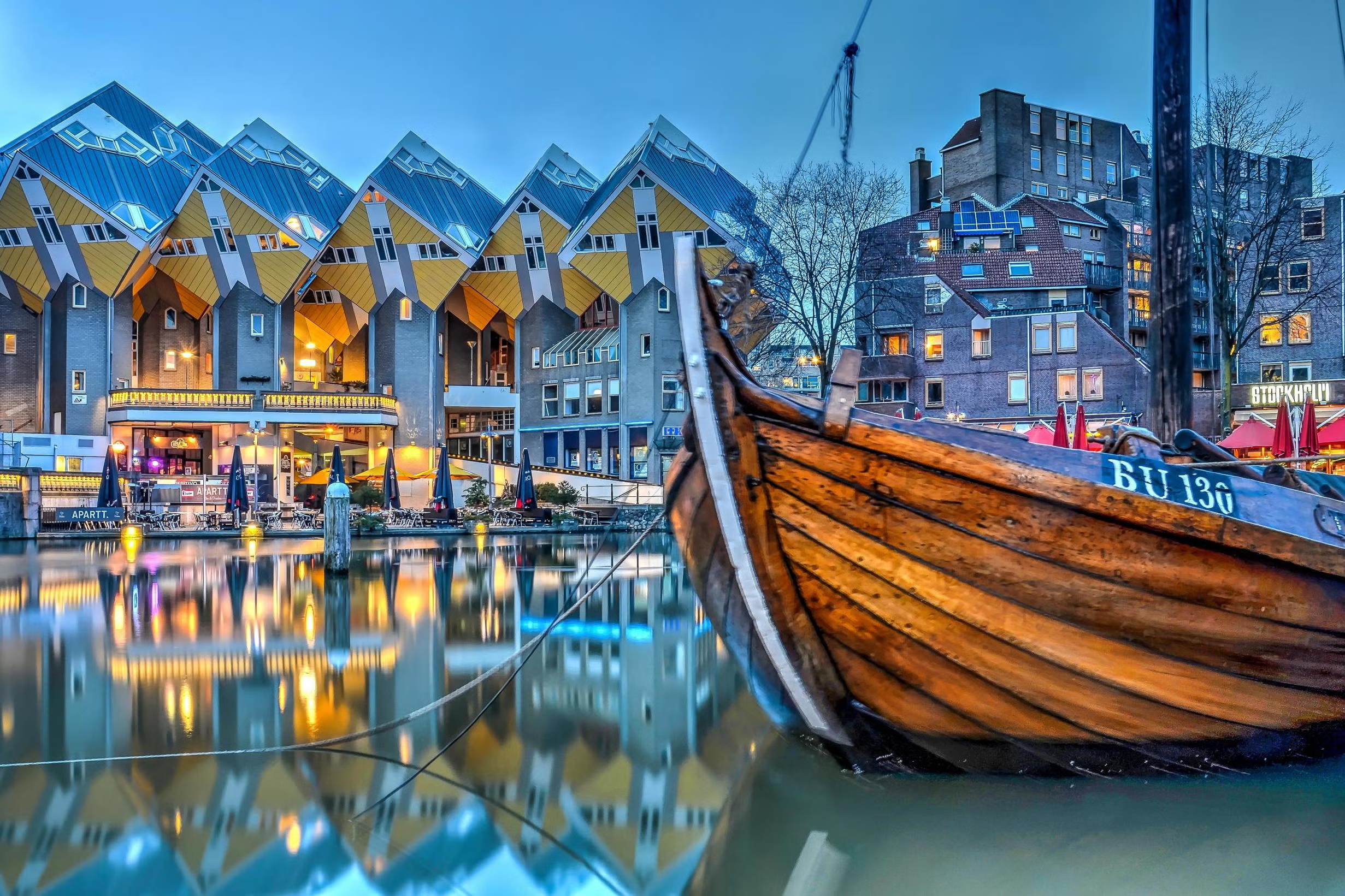
That history is visible in the city’s architecture today. The angular Cube Houses, the striking Erasmus Bridge and the Market Hall, with its large arched structure and colourful interior artwork, have become defining features of Rotterdam’s contemporary image. They are not merely photographic backdrops. Together, they illustrate a city that has made architectural experimentation part of its identity. Visitors interested in how cities rebuild, evolve and express themselves through design will find Rotterdam particularly rewarding.
Amsterdam remains an essential destination for its own architectural and cultural heritage, but its international reputation can make the visitor experience feel familiar before a traveller even arrives. Rotterdam offers a different set of expectations. Its skyline is more prominent, its built environment less uniform and its central districts often feel more spacious. The city does not attempt to compete with Amsterdam by reproducing its historic charm. Instead, it offers a distinct perspective on what the Netherlands looks like when modernity, trade and post-war reconstruction take centre stage.
The port is another major part of that story. The Port of Rotterdam is one of Europe’s most important maritime gateways, connecting the Netherlands with international shipping routes and supply chains. Its scale and economic significance have helped shape the city’s character, bringing global business, migration and cultural exchange into its daily life. Although much of the port’s industrial activity lies beyond the ordinary sightseeing areas, its influence is apparent in Rotterdam’s waterfront districts, maritime attractions and relationship with the river.
For visitors, the waterfront provides an opportunity to understand the city beyond its buildings. The Maas River divides and connects different parts of Rotterdam, while bridges, quays and redeveloped harbour areas reveal how the city has adapted to its position as a major port. Historic vessels, harbour views and modern waterfront developments offer different ways to explore that relationship. The Kop van Zuid district, for example, combines contemporary architecture with a history linked to maritime trade and migration, showing how former port areas have been incorporated into the modern city.
Rotterdam’s multicultural character also distinguishes it from the image of the Netherlands often presented through Amsterdam’s best-known attractions. The city has long been shaped by international trade and migration, and its population reflects a wide range of cultural backgrounds. That diversity is evident in neighbourhood businesses, restaurants, markets and the languages visitors may hear while walking through the city. It contributes to a more varied picture of Dutch society than one centred primarily on historic canals, museums and traditional streetscapes.
Food is one of the most accessible ways to experience this side of Rotterdam. The city’s dining scene extends well beyond traditional Dutch fare, with international cuisines reflecting its diverse population. At the Markthal, visitors can explore food stalls and shops beneath the building’s distinctive arched roof, while the nearby outdoor market offers another view of everyday commercial life. Around the city, independent restaurants, bakeries and neighbourhood eateries provide opportunities to encounter culinary traditions from different parts of the world.
These experiences make Rotterdam appealing to travellers who want more than a checklist of famous sights. A visit can combine architecture, food, waterfront walks and neighbourhood exploration without requiring every day to revolve around a major landmark. The city also rewards visitors who take time to move beyond the immediate centre. Different districts reveal different aspects of Rotterdam, from its creative industries and contemporary cultural spaces to its residential streets and historic connections with shipping.
Rotterdam’s cultural life adds another dimension. Museums, galleries, performance spaces and public art sit alongside its commercial and residential districts, while the city’s architectural identity often makes the journey between attractions part of the experience. The Van Nelle Factory, a landmark of modern industrial architecture recognised as a UNESCO World Heritage Site, offers a reminder that Rotterdam’s design history extends beyond its post-war skyline. Its older buildings and surviving historic areas complicate any impression that the city is exclusively modern.
There is also a different pace to discovering Rotterdam. Amsterdam’s best-known attractions draw large numbers of visitors to a relatively concentrated historic centre, particularly around its canals and major museums. Rotterdam’s appeal is spread across a broader urban landscape, making it worthwhile to plan time for different districts rather than limiting a visit to a single cluster of landmarks. The central area is walkable around key sights, while public transport and water-based connections help visitors explore further afield.
The city is not without its own busy tourist spots, and its most photographed buildings have become destinations in their own right. The difference is that Rotterdam’s visitor experience often combines sightseeing with an encounter with a functioning modern city. Office towers, residential buildings, markets, transport infrastructure and working waterfronts share the same urban landscape. That mix can be particularly appealing to travellers interested in architecture, urban development, contemporary culture and the ways international trade influences a city’s identity.
Rotterdam is also a useful reminder that Dutch travel does not have to follow a single familiar image. The Netherlands is often marketed internationally through canal houses, bicycles, historic town centres and picturesque villages. Those experiences are part of the country’s appeal, but they do not tell its whole story. Rotterdam reveals another side: a city shaped by industrial ambition, international connections, post-war reinvention and a willingness to experiment with how urban space is used.
For travellers planning a first visit to the Netherlands, Amsterdam may remain the natural starting point, especially for those drawn to its museums, historic streets and internationally recognised cultural institutions. Rotterdam, however, deserves consideration in its own right rather than being treated merely as an alternative day trip. Staying longer allows visitors to experience its food scene, explore the waterfront, understand the history behind its architecture and see how its different neighbourhoods fit together.
The two cities are not competing versions of the same destination. Amsterdam offers a remarkable encounter with Dutch history and a preserved canal-city landscape. Rotterdam provides a contrasting view of the country through modern architecture, maritime commerce and cultural diversity. Travellers with time for both can gain a broader understanding of the Netherlands, while those who choose Rotterdam alone will find a destination whose character cannot be reduced to its skyline or its reputation as a port city.
Ultimately, Rotterdam offers a different Netherlands experience because its identity has been formed by a different set of circumstances and ambitions. Its appeal lies not in resembling Amsterdam less successfully, but in showing visitors another way to understand Dutch urban life. For anyone seeking a city where architectural experimentation, international influences and a powerful maritime past meet in the everyday streetscape, Rotterdam makes a compelling case for a place on the itinerary.


