Hotels with exceptional views in Asia range from towering city retreats overlooking some of the world’s busiest skylines to secluded hideaways surrounded by forests, rivers and mountains. For travellers choosing accommodation as carefully as their destination, the view can become a defining part of the experience, whether that means watching Hong Kong’s harbour after dark, looking across Singapore’s Marina Bay or waking up to the green landscapes of Bali.
Some properties make their surroundings a central feature of their identity. The challenge for travellers is knowing which hotel offers the experience they want, what the view actually looks like from the room they intend to book, and whether the price reflects more than an attractive photograph.
In Hong Kong, The Ritz-Carlton, Hong Kong offers a striking introduction to the city’s vertical landscape. Occupying the upper floors of the International Commerce Centre in Kowloon, the hotel provides elevated views across Victoria Harbour and the surrounding urban skyline. The city’s illuminated buildings, busy waterways and distant hills create a panorama that changes throughout the day, from the movement of vessels across the harbour to the lights that define the city after sunset.

The hotel’s height is central to its appeal, but travellers should pay attention to room orientation when reserving accommodation. Not every room necessarily provides the same outlook, and a harbour-facing room may offer a substantially different experience from one overlooking another part of the city. Guests who consider the view an essential part of their stay should check the precise room category and confirm what is included before paying a premium. Haze and low cloud can also affect visibility, particularly when travellers hope to photograph the skyline from their rooms.
Singapore offers a different kind of spectacle at Marina Bay Sands, the landmark hotel complex overlooking Marina Bay. Its distinctive architecture has become part of the city’s modern identity, while the rooftop SkyPark provides an elevated perspective across the surrounding waterfront and city centre. The infinity pool, in particular, has helped establish the property as one of Singapore’s best-known luxury hotel experiences.
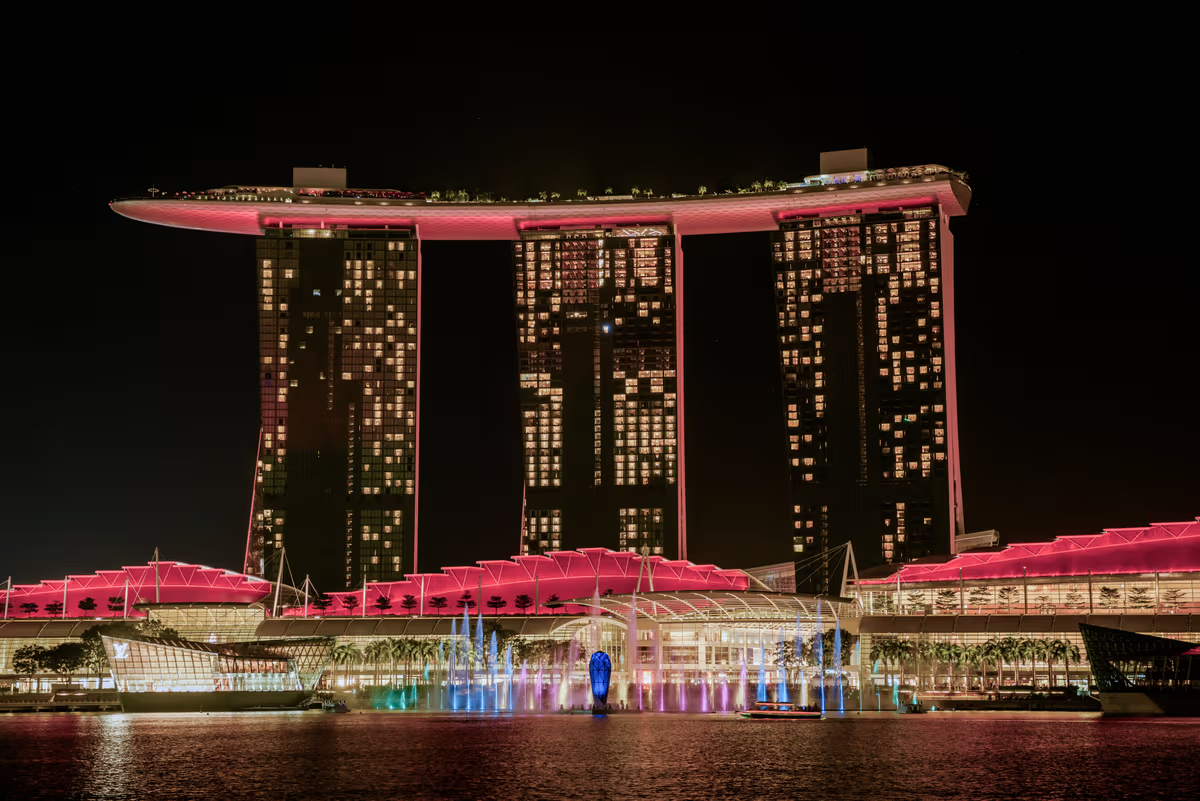
For guests, however, the distinction between the view from a room and the experience offered by the rooftop facilities matters. Room orientation, floor level and accommodation category can influence what is visible from the window. Travellers should also confirm which facilities their reservation includes rather than assuming that every feature shown in promotional photographs is automatically available to every guest. Those primarily interested in the skyline may want to compare the cost of a premium room with the views available from the hotel’s shared spaces before deciding whether an upgrade is worthwhile.
In Bangkok, Capella Bangkok places the Chao Phraya River at the centre of the hotel experience. Rather than looking down over a dense collection of skyscrapers, guests encounter a landscape shaped by the river, its surrounding neighbourhoods and the steady movement of boats along the water. The setting offers a different perspective on the Thai capital, where historic communities, temples, contemporary developments and everyday river transport exist alongside one another.

The property’s riverside position makes it an option for travellers who want a quieter accommodation experience without losing their connection to the city. Capella Bangkok promotes its river-facing setting as a defining feature, although guests should verify whether their chosen room or suite provides a direct river view. A hotel may sit beside the water without every room offering an unobstructed outlook, and the difference can matter when the scenery is one of the main reasons for booking.
Bali offers another interpretation of a scenic hotel stay at Capella Ubud, a luxury tented camp set amid the island’s forested interior. Here, the appeal is not a high-rise panorama or an expansive beachfront, but the relationship between the accommodation and its natural surroundings. Green vegetation, the landscape around Ubud and the property’s tented design create an experience aimed at travellers who want to spend time away from the island’s busier coastal districts.

The distinction between this type of property and a conventional resort is important. Guests are choosing an atmosphere shaped by nature as much as the accommodation itself. Before booking, travellers should examine the available tent categories, their facilities and the setting of the specific accommodation. Vegetation and terrain influence what can be seen from different locations, while the tropical climate means that rain and cloud can alter the appearance of the landscape. Capella Ubud is therefore best suited to travellers seeking a nature-focused stay rather than those expecting an uninterrupted ocean view.
In Kyoto, Suiran, a Luxury Collection Hotel, offers a scenic setting beside the Hozugawa River in the Arashiyama district. Western Kyoto is known for its temples, bamboo groves and seasonal landscapes, giving the hotel an atmosphere distinct from accommodation in the city’s busiest commercial areas. The river and surrounding greenery provide a quieter backdrop, particularly for travellers who want to combine sightseeing with time spent at their hotel.

Some accommodation options at Suiran include private onsen baths, adding another dimension to the stay. Guests should check the precise room description, since features and views can vary between categories. The hotel’s location also deserves consideration when planning a wider Kyoto itinerary. It is well placed for exploring Arashiyama, but travellers intending to visit attractions across the city should factor in transport time rather than assuming every major sight is nearby.
Tokyo offers a more elevated experience at Aman Tokyo, situated in the Otemachi district. The hotel combines a contemporary interior with expansive windows overlooking the Japanese capital, placing the surrounding skyline within the experience of the building. On clear days, Mount Fuji may be visible from certain vantage points, offering a striking contrast between Tokyo’s dense urban landscape and the distant mountain.

That possibility should be treated as a bonus rather than a booking guarantee. Weather and atmospheric conditions affect long-distance visibility, and a view from a public area may differ from what can be seen through an individual guest room’s windows. Travellers who want a particular skyline perspective should confirm the outlook associated with their room category and consider the season when planning their visit. Aman Tokyo is appealing in its own right as a high-rise urban retreat, even when Mount Fuji remains hidden.
These six properties demonstrate how much the meaning of a scenic hotel can change from one Asian destination to another. The Ritz-Carlton, Hong Kong and Aman Tokyo appeal to travellers drawn to elevated city views, while Marina Bay Sands combines a recognisable architectural landmark with a waterfront panorama. Capella Bangkok offers a river-centred experience, Capella Ubud brings guests closer to Bali’s forested interior, and Suiran connects its setting to the natural and cultural landscape of Kyoto.
Choosing between them begins with identifying the kind of view that matters most. Travellers who enjoy city lights and dramatic skylines may prefer a high-rise property, while those seeking a slower pace may find a riverside hotel or forest retreat more suitable. A hotel’s location should also be considered alongside its scenery. An accommodation option that offers impressive views but requires lengthy journeys to restaurants, transport links or planned attractions may not be the most practical choice for every itinerary.
Room descriptions deserve close attention before a reservation is made. Hotel galleries often combine photographs of guest rooms, suites, restaurants, terraces and other shared facilities. The most impressive image may not represent the room available at the advertised starting price. Reading the room-category details, checking recent guest photographs and contacting the property directly can help establish what to expect. Where a particular outlook is essential, travellers should ask whether it is guaranteed for the room category they are booking rather than relying on a general preference request.
The season can also influence the experience. Rain, cloud and haze may obscure mountain scenery or soften a city skyline, while the direction of sunlight changes how a room looks throughout the day. Travellers planning a special occasion or a photography-focused trip should consider these factors when choosing travel dates, while recognising that hotels cannot control the weather.
Finally, the cost of a view should be weighed against how much time guests expect to spend enjoying it. A premium room may be worthwhile for a romantic break or a holiday built around relaxation, but travellers who plan to spend most of their time exploring may prefer a more affordable category and use the hotel’s restaurant, lounge or terrace to enjoy the surroundings. Checking access conditions and included facilities before booking can prevent unnecessary expense.
The most memorable hotel is not always the one with the highest room rate or the most dramatic promotional photograph. It is the one that delivers the right combination of setting, comfort, location and value. Across Asia, exceptional views can be found above major cities, beside historic rivers and within landscapes shaped by forests and mountains. Knowing exactly what a hotel offers, and what the chosen room allows guests to see, makes it easier to turn that promise into a rewarding stay.