A Finnish residence permit does not automatically give its holder the right to work in other Schengen countries. Although the permit allows eligible non-EU nationals to travel to other countries in the Schengen Area for short visits, taking up employment or moving abroad for work generally requires permission from the destination country’s immigration authorities, according to the Finnish Immigration Service.
The distinction matters for people who live in Finland but are considering a job in Sweden, Germany, France, Spain or another European country. A valid Finnish residence permit can make short-term travel across much of Europe easier, but it is not a Europe-wide work permit. The right to enter another country, the right to stay there and the right to earn a living there are separate legal questions.
For many non-EU nationals, the confusion begins with the Schengen Area itself. The zone allows participating countries to operate without routine internal border checks, making it possible to travel between them without the same border procedures encountered when entering from outside the area. That freedom of movement for short visits does not create a common employment authorisation for every foreign resident. Immigration and work-permit rules continue to apply at national level, subject to specific EU-wide arrangements and exceptions.
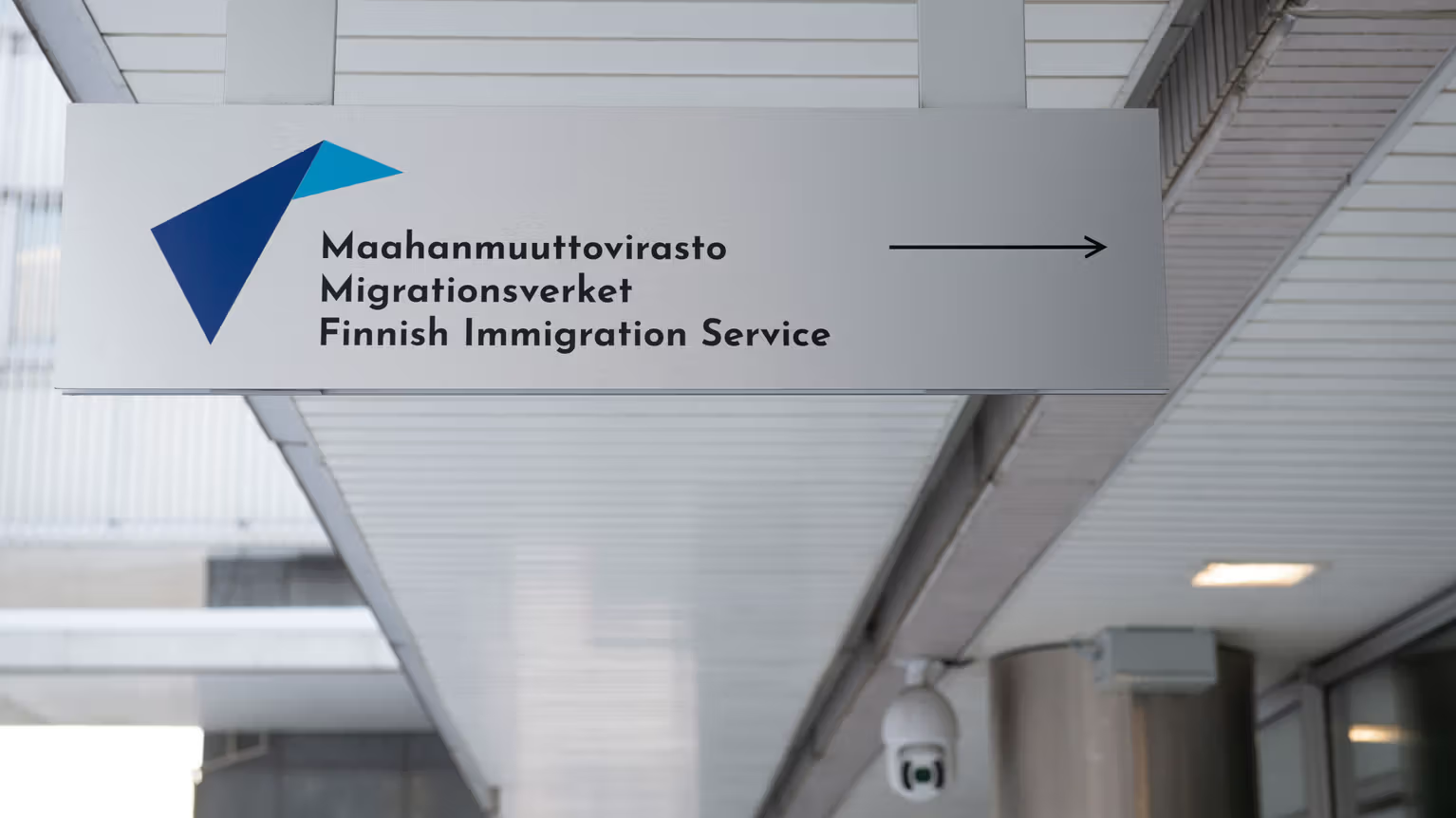
The Finnish Immigration Service, known as Migri, addresses the issue directly in its employment guidance. A person holding a Finnish residence permit may visit other Schengen countries for up to 90 days at a time, but cannot simply take paid employment there on the strength of that permit. Anyone intending to live or work in another Schengen country should contact that country’s authorities to establish which residence or work authorisation is required.
For example, someone who holds a Finnish residence permit based on employment and receives a job offer from a company in Germany will normally need to satisfy German immigration requirements before starting work there. The same principle applies to a person planning to relocate to Sweden or France. The fact that the individual is already legally resident in Finland does not, by itself, remove the destination country’s requirements.
The type of Finnish residence permit does not usually change this basic rule. Migri states that the short-visit allowance applies regardless of whether the Finnish permit is an A, B or P permit or the reason it was granted. Those categories concern the person’s residence status in Finland; they should not be mistaken for authorisation to work in another Schengen country.
This also affects people who hold Finnish residence permits through family ties or studies. A permit that grants extensive or unrestricted work rights in Finland does not automatically extend those rights across Europe. The destination country must still determine whether the person qualifies to work under its national rules or an applicable EU mobility arrangement.
There are, however, important exceptions. Some immigration statuses provide additional mobility rights under EU law, and the rules are not identical for every category of resident. Non-EU nationals holding an EU Blue Card, for example, may qualify for specific mobility arrangements when moving to another participating EU country for highly qualified employment. The conditions depend on the applicable rules, the person’s circumstances and the destination country. An ordinary Finnish residence permit should not be assumed to carry the same privileges.

Another status worth distinguishing is the EU long-term resident permit. In Finland, this is known as the P-EU permit and is intended for qualifying third-country nationals who meet the relevant requirements. It can provide a route to longer-term mobility within the EU, but it does not mean its holder can automatically start working anywhere in the Schengen Area without further formalities. A person moving to another member state must follow the rules that apply there, including any residence and employment application requirements.
The difference between an ordinary Finnish residence permit and a status designed to facilitate EU mobility is therefore significant. Someone planning a permanent move should identify the exact permit they hold, confirm whether it qualifies for a mobility scheme and check the destination country’s requirements before making commitments to an employer or ending their accommodation in Finland.
Temporary work assignments can involve a different set of rules. An employee whose employer sends them to another European country for a limited assignment may fall under arrangements for posted workers or other specific exemptions, depending on the circumstances. Such cases should not be confused with independently accepting a local job in another country. The applicable immigration rules, employment conditions and notification requirements must be checked for the particular assignment.
Remote work also requires care. A person may be permitted to work online for a foreign employer while physically living in Finland, depending on their status and circumstances. Migri confirms that people with a valid Finnish residence permit can work remotely for a foreign company while staying in Finland, even if the company has no business operations in the country. That guidance does not establish a general right to move to another Schengen country and continue working there under the Finnish permit. Where the employee physically performs the work can affect which immigration, tax and social security rules apply.
The practical consequences are important for anyone who wants to keep a Finnish residence permit while exploring opportunities elsewhere in Europe. Travelling to attend an interview, visit a prospective employer or explore a city is not the same as taking up a job. A person may be able to enter another Schengen country for a short visit but still lack permission to begin paid work there. Starting employment before confirming the relevant authorisation can create immigration problems and jeopardise plans to settle in the destination country.
How to Apply for Your First Finnish Residence Permit: A Practical Guide for Newcomers
Before accepting an offer, prospective employees should consult the official immigration website of the country where the job is based. They should establish whether they need a national residence permit, a work authorisation or a specific mobility application, and whether they must obtain approval before travelling or beginning employment. Employers may be able to explain their recruitment procedures, but the final requirements should be verified with the competent authorities.
Anyone considering a longer move should also examine the effect on their status in Finland. The conditions for maintaining a Finnish residence permit can depend on its basis, validity and the person’s circumstances. Leaving Finland for an extended period or changing the arrangements that originally supported the permit may have consequences that should be checked with Migri before the move.
The central point is straightforward: a Finnish residence permit can make short visits to other Schengen countries possible, but it does not normally authorise its holder to work throughout the zone. For most non-EU nationals, the right to take a job abroad depends on the rules of the country where the work will be performed. Special EU mobility arrangements may provide additional options for eligible residents, but those rights must be established rather than assumed.