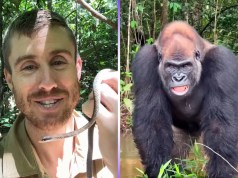
Ash Dykes is preparing to kayak more than 700 kilometres down the Sangha River through the Congo Basin, beginning a new series of expeditions that will take the Welsh adventurer across six extreme environments over 12 months. The first mission, scheduled to depart in October 2026, will take him from Nola in the Central African Republic to Mossaka in the Republic of the Congo, according to his official Project 6 website.

The expedition will place Ash Dykes in one of the world’s largest tropical forest regions, where long stretches of river and dense vegetation present a different set of challenges from the mountains, deserts and other landscapes that have defined his previous adventures. His plan is to make the journey by inflatable kayak while documenting the natural environment, meeting communities along the route and supporting a grassroots non-governmental organisation.
Dykes is no stranger to physically demanding journeys. His previous expeditions include a solo, unsupported crossing of Mongolia, a traverse of Madagascar and a journey along China’s Yangtze River. His official biography credits him with five world records, four of them world firsts. Project 6 represents a new phase of that career, linking six expeditions into a single international adventure series rather than treating each journey as a separate undertaking.
What Is the Congo Basin? A Guide to Its Location, Geography and Global Importance
The Congo mission is the first of the six announced environments. The remaining five have not yet been publicly disclosed on the project’s website, leaving the opening expedition to establish the tone for the wider series.
The Sangha River is central to the challenge. Rather than crossing the forest on foot, Dykes intends to travel downstream through a landscape where the river connects remote communities, forest habitats and wetlands. The route will demand more than physical endurance. Planning, navigation, equipment management and decisions about when to continue or stop can become critical during a long journey through a remote environment.
Health risks are another concern identified in the expedition plans. Dykes’ official project page specifically mentions malaria, infection and unsafe drinking water among the challenges he will have to manage. These are not incidental details in a journey of this length. Access to medical assistance may be limited in remote areas, making prevention, preparation and sound decisions important parts of the expedition.
The Congo Basin itself is much more than a dramatic setting for an adventure. According to the World Wide Fund for Nature, the region’s tropical forests extend across six countries: Cameroon, the Central African Republic, the Democratic Republic of the Congo, the Republic of the Congo, Equatorial Guinea and Gabon. Its forests support exceptional biodiversity, including forest elephants, great apes and thousands of other animal and plant species.
The region also has an important role in the global climate system. Its forests store carbon, while its wetlands include extensive tropical peatlands. At the same time, the basin faces pressure from deforestation, logging, mining, agricultural expansion and wildlife poaching. The effects are felt not only by animals and plants but also by people whose food, livelihoods, shelter and cultural traditions are closely connected to the forest.
These realities give Dykes’ expedition a broader dimension. His team says the journey will include time with communities before the river departure and documentation of the people and environments encountered along the route. The quality of that reporting will matter as much as the distance covered. The Congo Basin is home to communities with generations of knowledge about the forest, and their experiences cannot be reduced to scenery in an adventurer’s documentary.
A journey filmed for an international audience can bring attention to a region that receives less mainstream travel coverage than some other major rainforest destinations. However, the value of that attention will depend on how the story is told, whether local voices are represented accurately and whether conservation issues are explained without simplifying the social and economic realities facing the people who live there.

For audiences following the expedition online, the most compelling developments may not always be spectacular wildlife encounters or milestones on a map. Changes in weather, river conditions, equipment problems, interactions with local communities and decisions about the route could provide a more revealing picture of what a long-distance expedition involves. Any reports of emergencies, major discoveries or significant setbacks should be checked against reliable updates before being published as fact.
Dykes’ official website identifies October 2026 as the departure period for the Congo mission and outlines a journey of more than 700 kilometres along the Sangha. Readers looking for confirmed expedition developments can follow his official channels and project updates. Specific claims about live-stream schedules, daily locations or events during the journey should be verified against the latest announcements rather than assumed from the expedition plan.
The Congo mission is intended to be the opening chapter of a year-long undertaking across six environments. Its immediate test will be whether Dykes can complete the river journey while managing the physical demands of the route and documenting the people and places along the way. Its wider significance will depend on what audiences learn about the Congo Basin beyond the adventure itself.