Hollola’s swimming pool is recovering heat from shower water as part of a wider effort to reduce energy use, helping the municipality cut its electricity and heating costs by thousands of euros each month.

The results are part of a broader trend among Finnish municipalities that have participated in the municipal energy efficiency agreement. Between 2017 and 2025, 152 municipalities and 12 joint municipal authorities joined the agreement and introduced measures to reduce energy consumption. Together, these municipalities cover more than 80 percent of Finland’s population.
According to statistics collected from the participating municipalities, energy renovations have generated savings worth more than 200 million euros in less than a decade. The biggest savings have generally come from larger renovation projects, where buildings and their technical systems are upgraded at the same time.
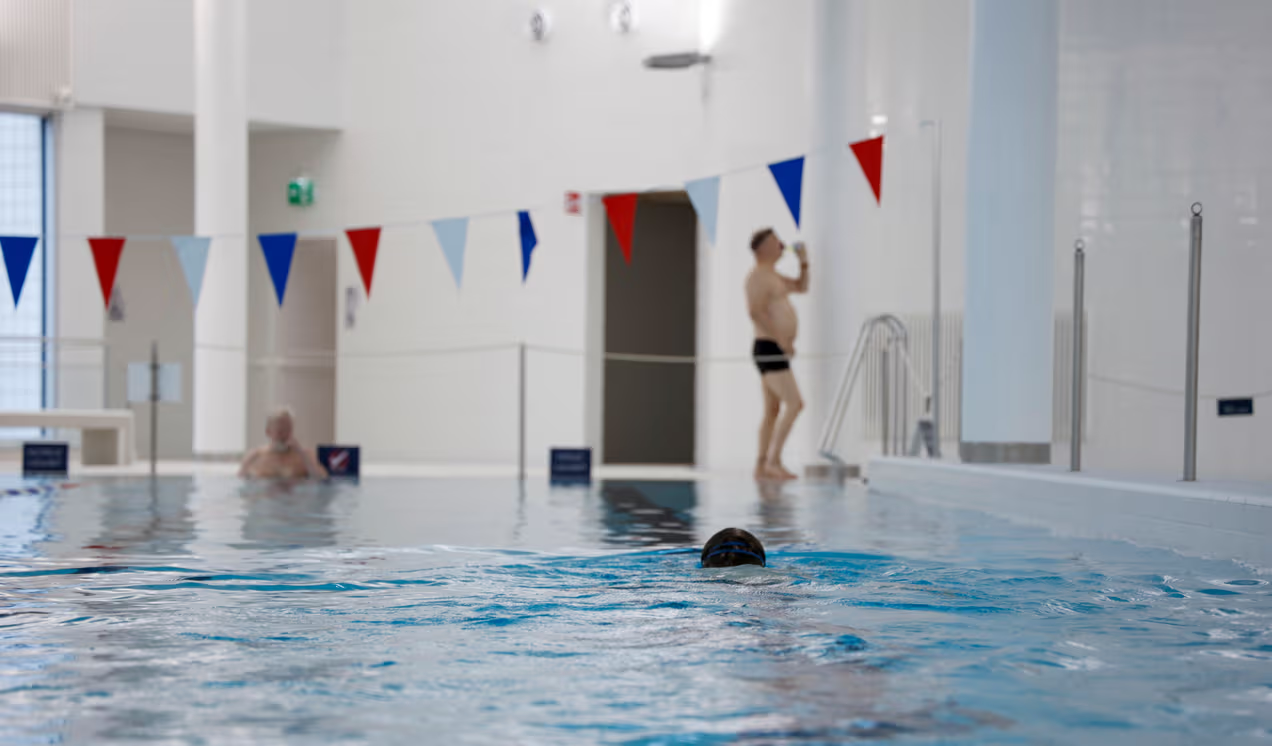
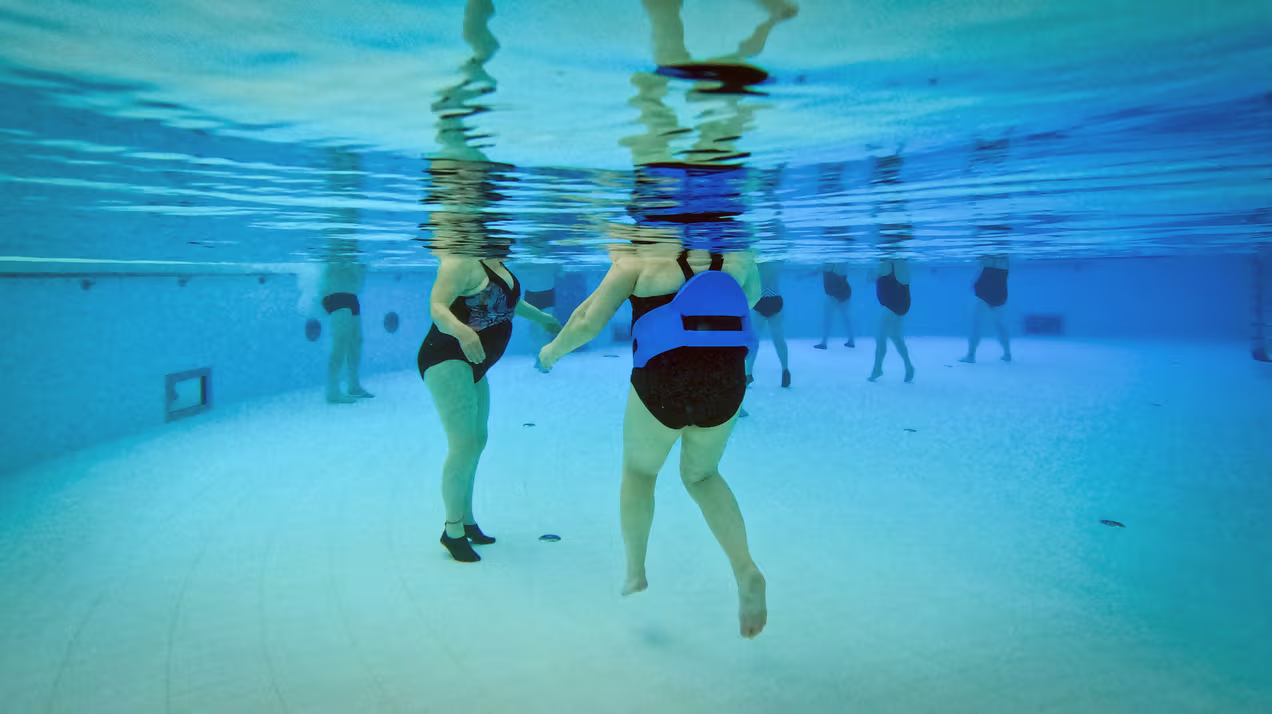
Hollola, a municipality of about 23,000 people next to Lahti, is one example of what these investments can achieve. The municipality has made a series of changes to reduce energy use, including a major renovation of the swimming pool’s energy technology.

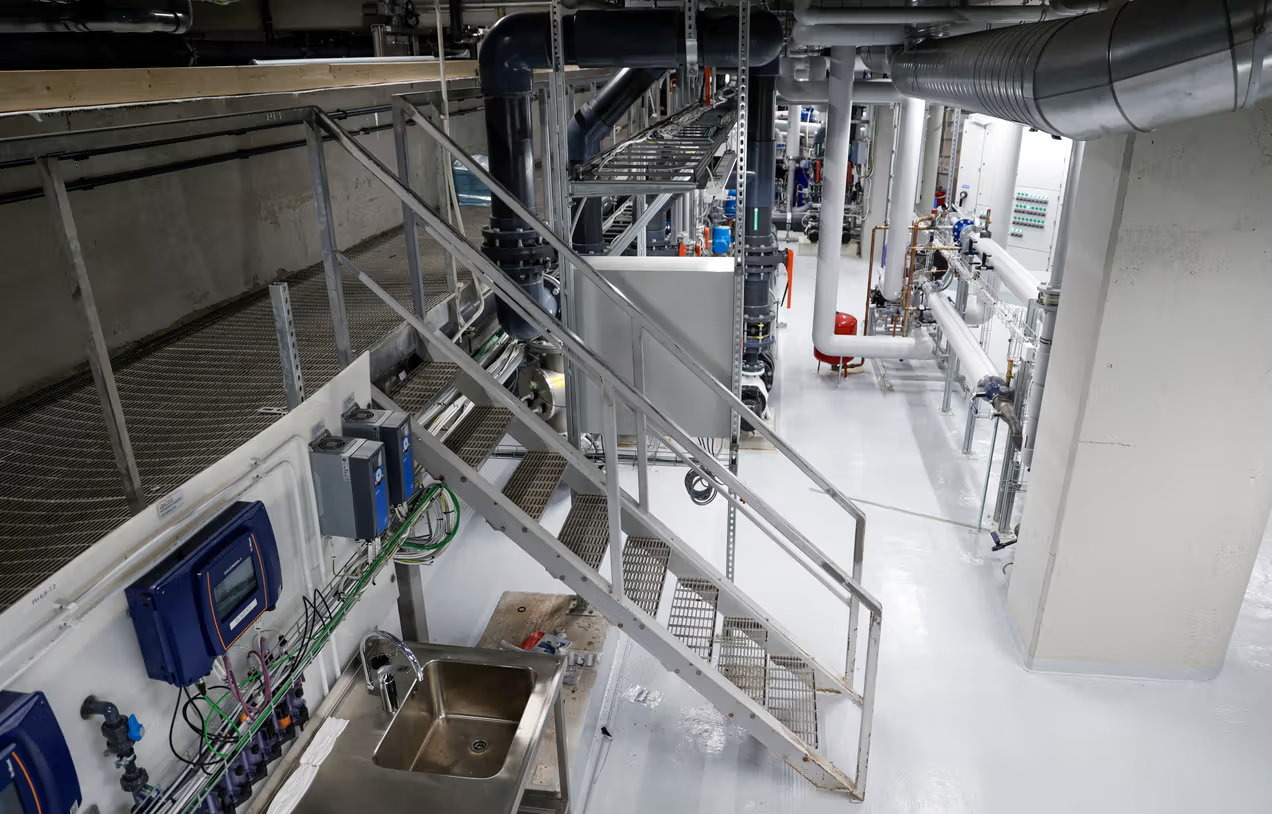
One of the most notable changes is the recovery of waste heat from shower water. Instead of allowing heat contained in used hot water to go to waste, the swimming pool’s new system captures and reuses it.
The changes have helped reduce the swimming pool’s electricity and heating costs by between 8,000 and 10,000 euros a month. According to Hollola, the investment in the pool’s energy technology is expected to pay for itself in less than three years.
The swimming pool project is part of a much larger reduction in energy use across Hollola’s municipal properties. Since 2019, the municipality has saved almost 14,500 megawatt hours of energy. That is roughly equivalent to the annual electricity consumption of 800 detached houses heated with electricity.
In financial terms, the energy savings during the period amount to about 1.8 million euros.
Reijo Reponen, CEO of Hollola Tilapalvelu Oy, says the result has not come from one single project. The municipality has also reduced the number of unnecessary buildings and made better use of the space in the properties it has kept.
“It is the sum of many things,” Reponen says. He points in particular to the removal of unnecessary buildings and efforts to use existing space more efficiently.
Energy is a significant expense for Finnish municipalities. Vesa Peltola, a special expert at the Association of Finnish Local and Regional Authorities, estimates that municipalities and joint municipal authorities spend around 700 million euros a year on energy. That represents about three percent of their operating costs.
Even a relatively small reduction in that bill can have wider consequences for municipal finances. Peltola says that cutting energy costs by 10 percent would reduce pressure to increase municipal taxes and could also help keep customer fees lower.
The most common energy-saving measure carried out by municipalities participating in the agreement has been lighting renovation. However, the largest savings have generally come from more extensive projects, particularly when an entire school or other public building is renovated and its technical systems are upgraded at the same time.
Ventilation systems have also played an important role. Saara Elvas, a leading expert at Motiva, says ventilation renovations and adjustments have contributed significantly to energy savings in municipal buildings.
The benefits are not limited to lower bills. Reducing energy consumption can also make municipalities less exposed to sudden increases in electricity and heating prices. For local governments managing large numbers of schools, sports facilities, offices and other public buildings, changes in energy prices can have a direct effect on operating costs.
The municipal energy efficiency agreement has also provided a way for Finland to meet requirements linked to the European Union’s Energy Efficiency Directive largely through voluntary measures.
Municipalities joining the agreement set their own energy efficiency targets and decide how and when to implement measures. They then report their progress each year, allowing the results of the work to be monitored.
A new period of energy efficiency agreements began at the start of 2026, and Hollola has joined the new public sector agreement as well.
For municipalities that have already completed many straightforward energy-saving projects, however, further reductions can be harder to achieve. Hollola is now in that position after years of work on its buildings and energy systems.
“We have done all the easy things,” Reponen says.
That does not mean the municipality has reached the end of its energy-saving efforts. Reponen says there is still potential to reduce consumption through greater use of automation and heat pump technology.
The experience in Hollola also illustrates how energy efficiency can extend beyond replacing lights or adjusting heating systems. In the swimming pool, a resource that would previously have been lost through wastewater is now being recovered and reused, turning an everyday part of the building’s operation into a source of savings.