DNA evidence has helped secure the release of Douglas Stewart Carter, a 71-year-old Utah man who spent more than four decades on death row for a 1985 killing he has always said he did not commit.
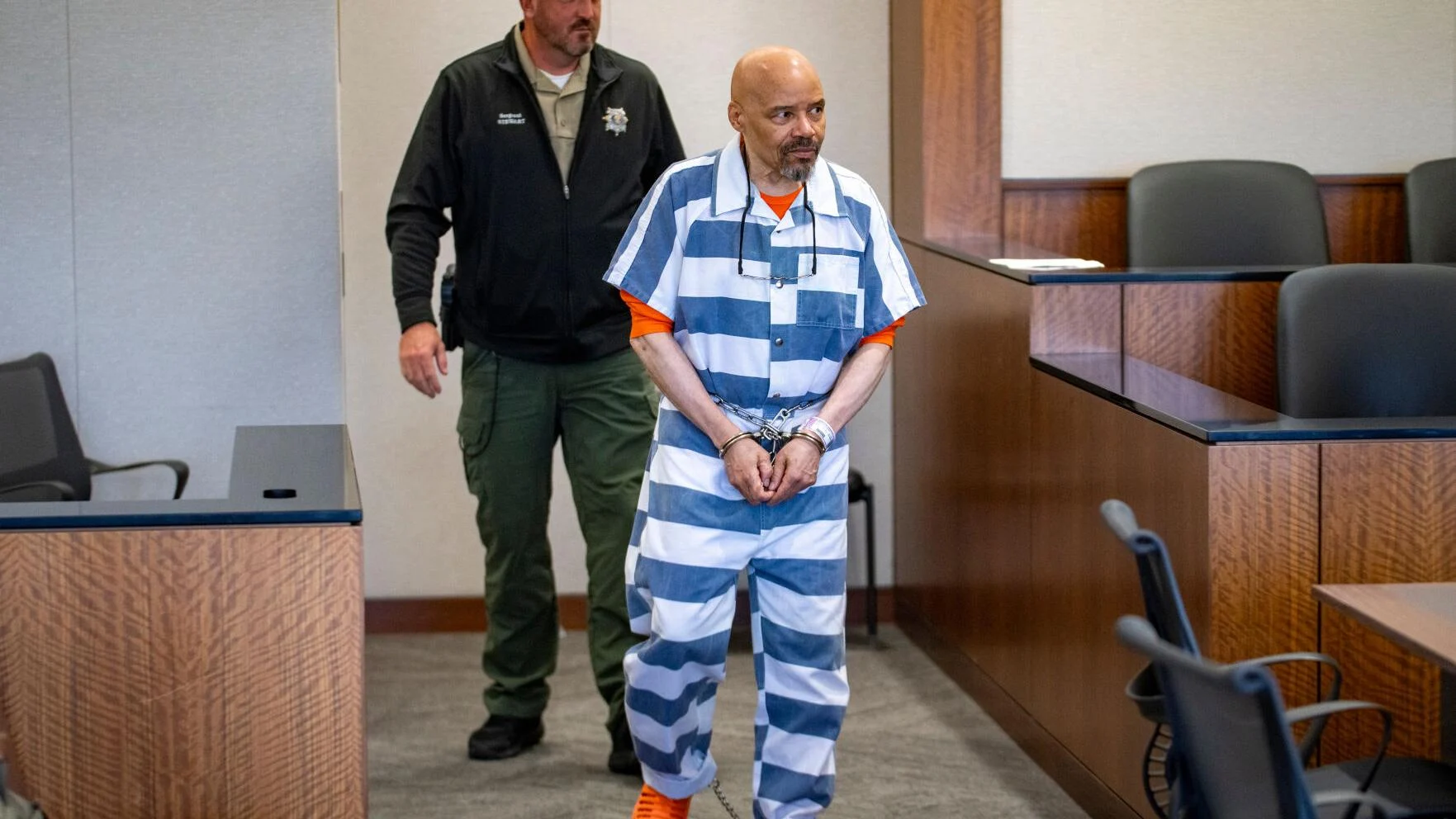
A Utah judge ordered Carter released on bail after prosecutors told the court that newly analyzed genetic evidence does not match him. The development comes after years of legal challenges surrounding his conviction and allegations of serious misconduct by investigators and prosecutors.
Carter was convicted in 1985 of killing Eva Olesen, the aunt of the Provo police chief at the time. Olesen, who was White, was shot and stabbed during what prosecutors described as a robbery. Carter, who is Black, was sentenced to death after a jury found him guilty.
The case had little physical evidence connecting Carter to the crime scene. His conviction rested largely on a confession he later said was coerced and testimony from two witnesses who claimed Carter had bragged about killing Olesen.
Carter has consistently maintained his innocence. He said police repeatedly threatened him during questioning and that he ultimately signed a false confession.
The Utah Supreme Court ordered a new trial last year after finding what it described as multiple instances of intentional misconduct by police and a prosecutor. The ruling opened the door for renewed examination of the evidence that had kept Carter’s conviction in place for decades.
That examination has now produced a significant result.
Utah County prosecutors told the court that DNA testing completed on evidence from the case excluded Carter as a possible contributor. The analysis involved blood found on a doorknob and genetic material recovered from the handle of the knife used to stab Olesen.
The results were received by prosecutors on September 22.
Utah County prosecutor Erwin Petilos told Judge Derek Pullan on Monday that reconsidering Carter’s bail was “necessary and fair” while the state continues reviewing the remaining evidence.
The decision means Carter can leave custody while prosecutors determine how to proceed with the case. Pullan had previously scheduled a two-month retrial for 2027, but prosecutors last week withdrew a notice stating that they intended to seek the death penalty.
They have not said whether the newly analyzed DNA will be used to look for another person whose genetic profile matches the material recovered from the crime scene.
Carter’s release marks a dramatic change in circumstances for a man who has spent most of his adult life behind bars because of a conviction that has increasingly come under scrutiny.
His legal troubles began in Provo, Utah, where he was living with his mother when Olesen was killed on February 27, 1985. According to court documents, investigators eventually focused on Carter as a suspect in the killing.
By April of that year, Carter had left Utah because he believed he was wanted in connection with an unrelated assault case. He was arrested in Nashville, Tennessee, in June.
While being interrogated there by a Provo detective, Carter signed a confession.
He later said the confession was obtained through threats and intimidation. Despite his claims, he was convicted and sentenced to death. The defense presented no witnesses at the trial.
Carter was sentenced to death again after a 1992 retrial. His appeals continued through the following decades, but Utah courts repeatedly rejected efforts to overturn the conviction.
A major shift in the case came in 2011, when two witnesses from Carter’s original trial were located in Mexico.
The witnesses subsequently said they had lied in court. They alleged that police had given them cash and gifts in exchange for testimony implicating Carter and had instructed them not to reveal those payments. They also said police and prosecutors threatened them and their son with deportation if they refused to cooperate.
Their accounts became central to Carter’s continuing legal fight and contributed to more than a decade of further litigation.
The Utah Supreme Court ultimately ordered a new trial last year, pointing to the misconduct uncovered in the case. The DNA testing followed that decision and has now provided prosecutors with evidence that, at least in the samples tested, does not connect Carter to the crime.
For Carter, however, release after 41 years in the state’s custody is unlikely to resemble an ordinary return to freedom.
His attorney, Neal Hamilton, said Carter will stay in extended accommodation near the family of his son. Carter’s son was adopted by another family as an infant and did not learn about his father’s conviction until years later.
Hamilton also said Carter will need therapy to address the effects of spending decades incarcerated.
“It’s not just as simple as, ‘Let’s let him go,'” Hamilton said. “He’s being released with 41 years of state-induced trauma and the effect it will have on him is very real.”
Carter’s release does not resolve the murder case. Prosecutors are continuing to examine the remaining evidence, and the planned retrial has not simply disappeared because of the latest DNA results.
But the testing has changed the position of a case that began with a disputed confession and witness testimony and has now reached a point where physical evidence being examined by modern forensic methods excludes the man who has spent decades facing execution.
For Carter, the immediate consequence is that after more than 40 years on death row, he will be outside prison while the legal process continues.