Cigarette smuggling to Finland has increased sharply in 2026, with Finnish Customs seizing more than 34 million illegally imported cigarettes during the first six months of the year. The figure is already twice the number of cigarettes confiscated during the whole of 2025, pointing to a growing pattern of larger and more organised trafficking operations.
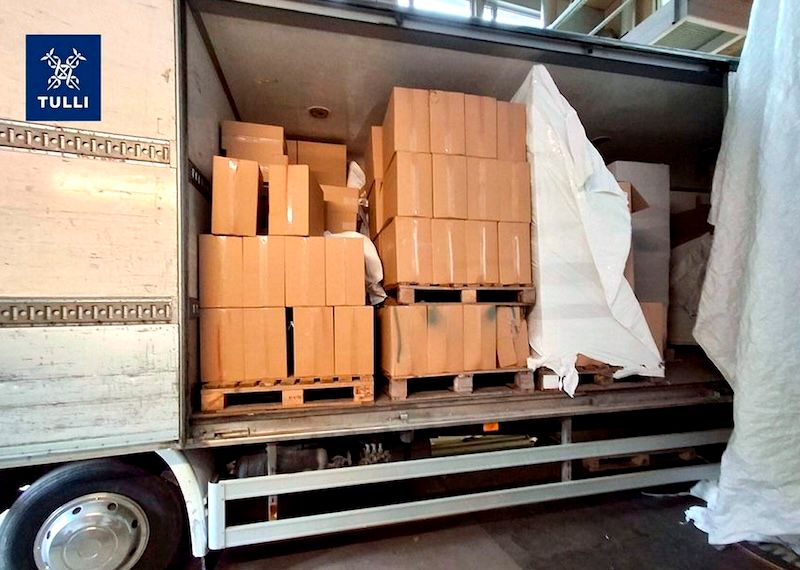
The seizures made by the end of June represent more than EUR 13.5 million in estimated lost tax revenue, according to Customs figures released Thursday. Investigators say the scale and organisation of the cases are changing, with shipments containing hundreds of thousands, and in some cases millions, of cigarettes becoming increasingly common.
Rather than being brought into the country in small quantities, the cigarettes are often transported in large consignments and moved to storage facilities after arriving in Finland. Many of these facilities are located in the southern part of the country. From there, wholesale distributors can supply smaller sellers operating in different parts of Finland.
“Cigarettes are imported in significant quantities in consignments intended for commercial distribution,” said Tero Virtanen, Senior Customs Officer and head of Crime Investigation South.
Customs says the structure of these operations is becoming more complex. Different people may be responsible for arranging shipments, receiving and storing the cigarettes and distributing them further. Some operations also cross several national borders and make use of legitimate businesses or commercial transport networks to conceal illegal activity.
The main route identified by Customs runs through ferry connections between Estonia and ports in southern Finland. Authorities say foreign operators, including people from the Baltic countries, are frequently involved in controlling the smuggling and distribution networks. Estonian authorities have also intercepted major cigarette shipments believed to have been destined for Finland.
Investigators say criminal groups increasingly hide cigarettes among legitimate goods, allowing them to move through established commercial logistics systems within the European Union. In one case investigated in June, Customs officers found four million cigarettes concealed among legal cargo.
Another investigation involves 15 people suspected of importing as many as 10 million cigarettes and other tobacco products into Finland during 2025 and 2026. According to Customs, the main suspects had established contacts in Estonia that were used to organise shipments into Finland.
The cases illustrate how illegal tobacco trafficking can rely on ordinary supply chains rather than entirely separate smuggling routes. Customs says cooperation with transport companies and other private-sector actors can therefore be important in identifying suspicious consignments.
“Key factors in identifying this phenomenon and preventing customs offences are knowledge of logistics, cooperation with the private sector as well as international cooperation between authorities,” said Petri Lounatmaa, director of the Customs Crime Investigation Department.
The investigation has also taken authorities beyond Finland’s borders. Customs says information gathered during its cases indicates that a significant proportion of the cigarettes entering the Finnish illegal market are produced in illicit factories in the Baltic countries or Poland.
The money generated by the trade can also move across borders. Virtanen said proceeds from cigarette sales, or part of the money generated through the business, are often transferred abroad.
For Finland, the growth in cigarette smuggling represents more than an enforcement challenge. Cigarettes sold through the illegal market bypass tobacco taxes and other charges that would normally be collected on legal sales. Customs says individual investigations involving illegally manufactured cigarettes have already revealed suspected tax losses running into millions of euros.
With more than 34 million cigarettes seized in just six months, Customs is now dealing with a scale of illegal tobacco trafficking that is significantly larger than the previous year’s total. The investigations also suggest that the trade is increasingly built around organised supply networks, international contacts and the use of legitimate transport and commercial structures to move large quantities of cigarettes into Finland.