Ireland will not participate in Eurovision 2027, with public broadcaster RTÉ confirming that it will also decline to broadcast the contest as concerns over the Gaza crisis and Israel’s participation in the competition remain unresolved.
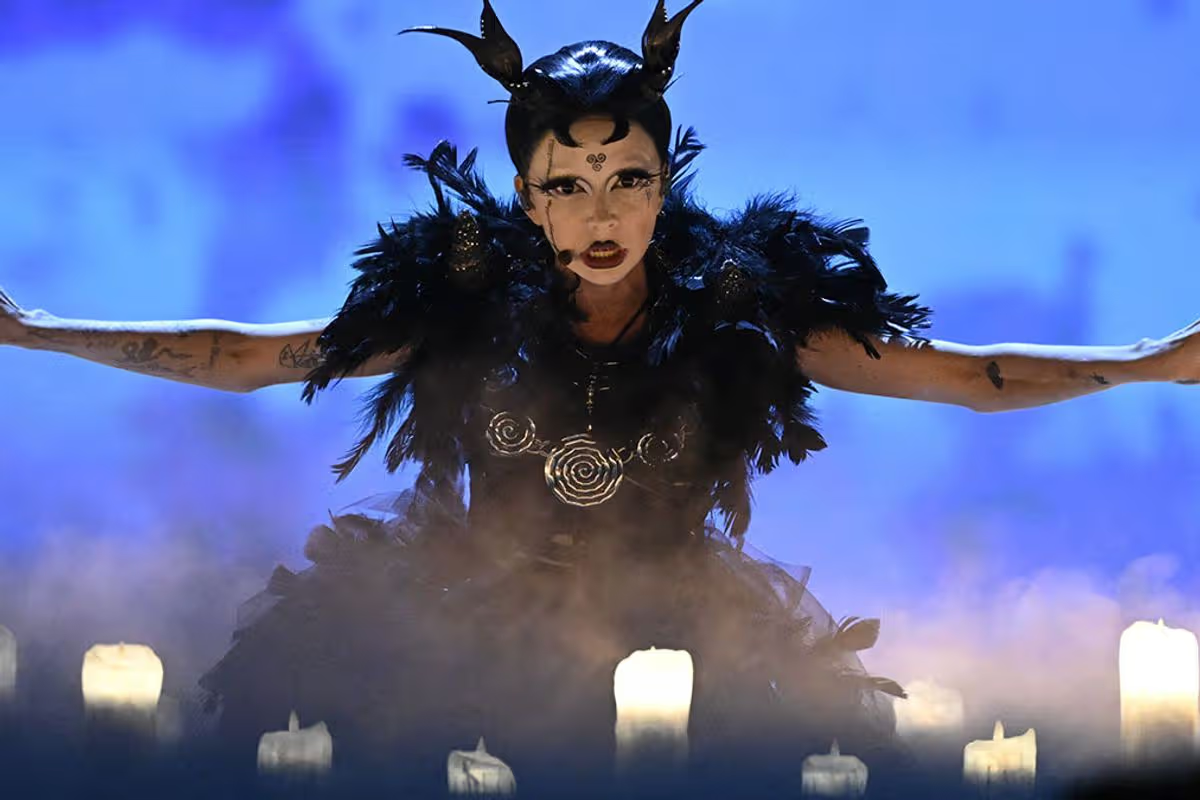
RTÉ announced the decision on Thursday, saying its position was unchanged from last year’s contest. The broadcaster pointed to the continuing loss of life in Gaza and the worsening humanitarian conditions affecting civilians, while also expressing concern about restrictions facing independent international journalists seeking access to the territory.
“RTÉ feels that Ireland’s participation cannot be justified given the appalling and ongoing loss of lives in Gaza and the humanitarian crisis there which continues to put the lives of so many civilians at risk,” the broadcaster said.
The decision means Ireland will remain absent from Eurovision for a second consecutive year. RTÉ withdrew from Eurovision 2026 after the European Broadcasting Union, which organises the contest, confirmed that Israeli public broadcaster KAN would be allowed to participate.
Ireland also chose not to broadcast the 2026 competition. Iceland, the Netherlands, Slovenia and Spain took the same position that year, leaving Eurovision facing an unusually visible dispute over whether Israel should take part while the war and humanitarian crisis in Gaza continued.
For RTÉ, the issue has not changed sufficiently to justify a return in 2027. Its latest decision effectively carries forward the position it adopted before the previous contest rather than marking a new departure in its approach to Eurovision.
The European Broadcasting Union has responded by acknowledging the Irish broadcaster’s decision while making clear that it hopes Ireland will eventually return to the competition.
Eurovision Song Contest director Martin Green said the EBU regretted RTÉ’s decision but respected the broadcaster’s position. He described Ireland as a valued member of the Eurovision community and said its absence would be felt.
The disagreement is not limited to Ireland. Dutch public broadcaster AVROTROS has also announced that it will not participate in Eurovision 2027, although responsibility for determining the Netherlands’ eventual participation now rests with NPO, the organisation overseeing public broadcasting in the country.
The EBU has not yet published the final list of broadcasters that will take part in next year’s contest, meaning the number of countries absent from Eurovision 2027 could still change.
The contest itself will move to Bulgaria after the country secured its first Eurovision victory in Vienna in May. DARA won Eurovision 2026 with “Bangaranga”, giving Bulgaria the right to host the following competition.
The Eurovision 2027 semi-finals are scheduled for 11 and 13 May, with the final due to take place at Arena Burgas on 15 May. But while preparations for the event continue, the decisions by Ireland and the Netherlands show that the political controversy surrounding Israel’s participation has carried into another Eurovision cycle.
For Ireland, the choice is now clear: RTÉ will stay outside the 2027 contest and will not broadcast it, maintaining its position that participation cannot be separated from the humanitarian situation in Gaza.