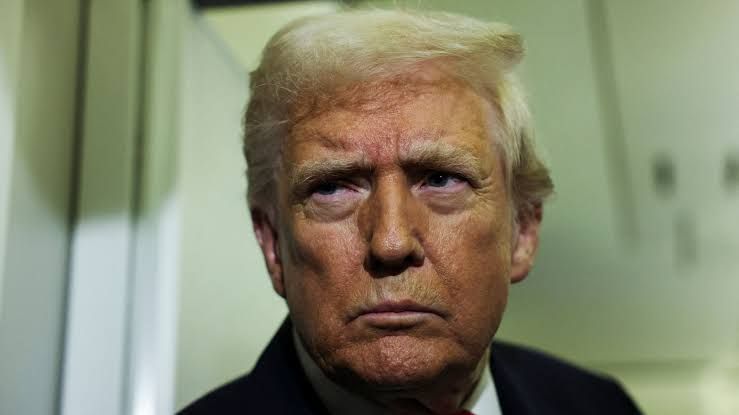
Google’s €13 billion investment in Finland has drawn criticism from US President Donald Trump, who has urged the technology company to reconsider plans to expand its data centre and artificial intelligence infrastructure in the country.
Trump made his comments on Monday in a post on Truth Social, arguing that Google was turning to Finland because obtaining permits for major technology projects had become too difficult in the United States.
“Google has recently stated that they want to build a massive Plant in Finland, all because they are finding permitting too difficult in the United States. I am not happy about this, and want them to change their thinking,” Trump wrote.
He also criticised what he described as excessive regulation of technology companies in the US, arguing that such restrictions ultimately benefit China.
The intervention came just days after Google announced its largest single investment in Europe. The company plans to spend €13 billion over the next two years on data centres, artificial intelligence infrastructure, clean energy projects and other operations in Finland. The expansion will include new facilities in Kajaani, Muhos and Vaala, as well as an expansion of Google’s existing data centre in Hamina.
Google has been operating in Finland for more than 15 years, and the company says the country’s combination of infrastructure, energy availability and climate makes it well suited to large-scale data centre operations. Its new investment is intended to meet growing demand for services including Google Search, Maps and Gemini.
The scale of the announcement has made the project an important economic story in Finland, although its expected benefits have also prompted debate. Google says the construction phase in 2027 and 2028 will support more than 37,000 jobs across Finland and contribute an average of €3.6 billion a year to the country’s GDP. The company also expects the facilities to support thousands of permanent jobs once they are operational.
Those figures have been treated with caution by some Finnish economists. The Finnish Ministry of Finance has estimated that around 20 to 30 percent of the €13 billion investment will be directed to Finnish production, while researchers have questioned how many jobs will remain once the construction work is completed and the highly automated facilities are operating.
Environmental and infrastructure concerns have also formed part of the domestic debate around the rapid expansion of data centres. Such facilities require large amounts of electricity and can place pressure on local resources, while their economic benefits can vary depending on how much of the investment is ultimately spent within the country.
Despite Trump’s intervention, there is little indication that Finland’s project is being reconsidered. University of Helsinki technology professor Jussi Kangasharju said Trump’s comments should not be given too much weight because the Finnish expansion has been under preparation for several years.
“I wouldn’t take it too seriously. This has been in preparation for several years. It would be quite strange if the project were to fall through because of a comment like this,” Kangasharju said, according to Yle.
Prime Minister Petteri Orpo has also dismissed the possibility that Google will abandon the investment. Speaking to reporters at Parliament on Tuesday, Orpo said he was not concerned about the company withdrawing, pointing to the contracts and commitments already associated with the project.
For Finland, the attraction of Google’s investment goes beyond the availability of land for new data centres. The country has abundant low-carbon electricity, a cool climate that can help reduce cooling requirements, and established digital and energy infrastructure. Google has also announced partnerships linked to Finland’s energy system, including an agreement supporting the life extension of the Loviisa nuclear power plant and plans for additional renewable energy and battery storage.
Kangasharju argues that the country’s broader infrastructure is ultimately more important than the cold weather alone. Finland, he said, is among a relatively small number of locations that can offer the combination of conditions required by large data centre operators.
Trump’s criticism therefore places the Finnish investment inside a much wider debate over where the next generation of AI infrastructure should be built. His argument is that the United States should make it easier for technology companies to construct large facilities at home. Google’s decision, meanwhile, reflects the commercial appeal of a country where energy, infrastructure and operating conditions already support large-scale computing.
For now, the €13 billion Finland investment remains on course, despite the US president’s public objection. Google’s plans represent a long-term expansion of its Finnish operations rather than a newly announced project that can easily be shifted from one country to another. The debate over its economic and environmental consequences in Finland is likely to continue, but Trump’s comments alone have not changed the direction of the project.