
There is a particular reality to flying Turkish Airlines out of African cities that does not sit neatly in generic airline reviews. It sits instead at the intersection of geography, geopolitics, and the practical mechanics of global mobility. Istanbul is not just a transit hub here. It is a filter point where documents, intent, and routing decisions are quietly reassessed in ways many travelers only fully understand once they have experienced it firsthand.
Turkish Airlines operates one of the most extensive networks connecting Africa to Europe, Asia, and the Americas. For many African travelers, it is not a luxury choice but a structural one. Routes are fewer, alternatives are expensive, and direct connections are limited. That dependence shapes the entire experience from booking to boarding.
The Transit Reality at Istanbul Airport
Istanbul Airport functions as a high-volume global transfer hub. The scale matters. Thousands of passengers from multiple visa regimes converge within narrow transit windows. For African travelers, this is where expectations and procedural reality often diverge.
Transit is generally straightforward if your itinerary is fully through-ticketed and you remain airside. However, complications arise when separate tickets are involved or when nationality-specific visa requirements intersect with layover conditions. Some travelers underestimate how strictly these conditions are applied, especially when onward travel involves Schengen destinations or countries with tighter entry controls.
There is also a practical layer that is rarely discussed. Transit queues, document checks, and secondary screenings can vary significantly depending on route origin and destination profile. This is not unique to Turkish Airlines, but the Istanbul hub amplifies it due to scale and connectivity patterns.
Documentation Discipline and Check-In Scrutiny
Airline check-in is where compliance is quietly enforced before boarding even begins. Turkish Airlines staff operate within standard international aviation rules, but implementation can feel more exacting on certain routes.
For African travelers, this often translates into heightened attention to visa validity, return tickets, accommodation details, and passport condition. Not because policies differ on paper, but because enforcement is shaped by destination requirements and prior immigration rejection patterns on specific routes.
This is where preparation becomes decisive. A complete travel file is not optional in practice. It is the difference between smooth boarding and extended secondary questioning. Even minor inconsistencies, such as mismatched booking details or unclear onward travel plans, can trigger delays.
The Istanbul Hub Advantage and Its Trade-Offs
Istanbul is strategically positioned between continents, and Turkish Airlines has built its business model around that geography. For African routes, this creates both opportunity and constraint.
The opportunity is connectivity. Cities like Lagos, Nairobi, Accra, Johannesburg, and Addis Ababa connect onward to Europe, North America, and parts of Asia through a single hub. Ticket pricing is often competitive because the airline prioritizes volume and network reach over premium point-to-point margins.
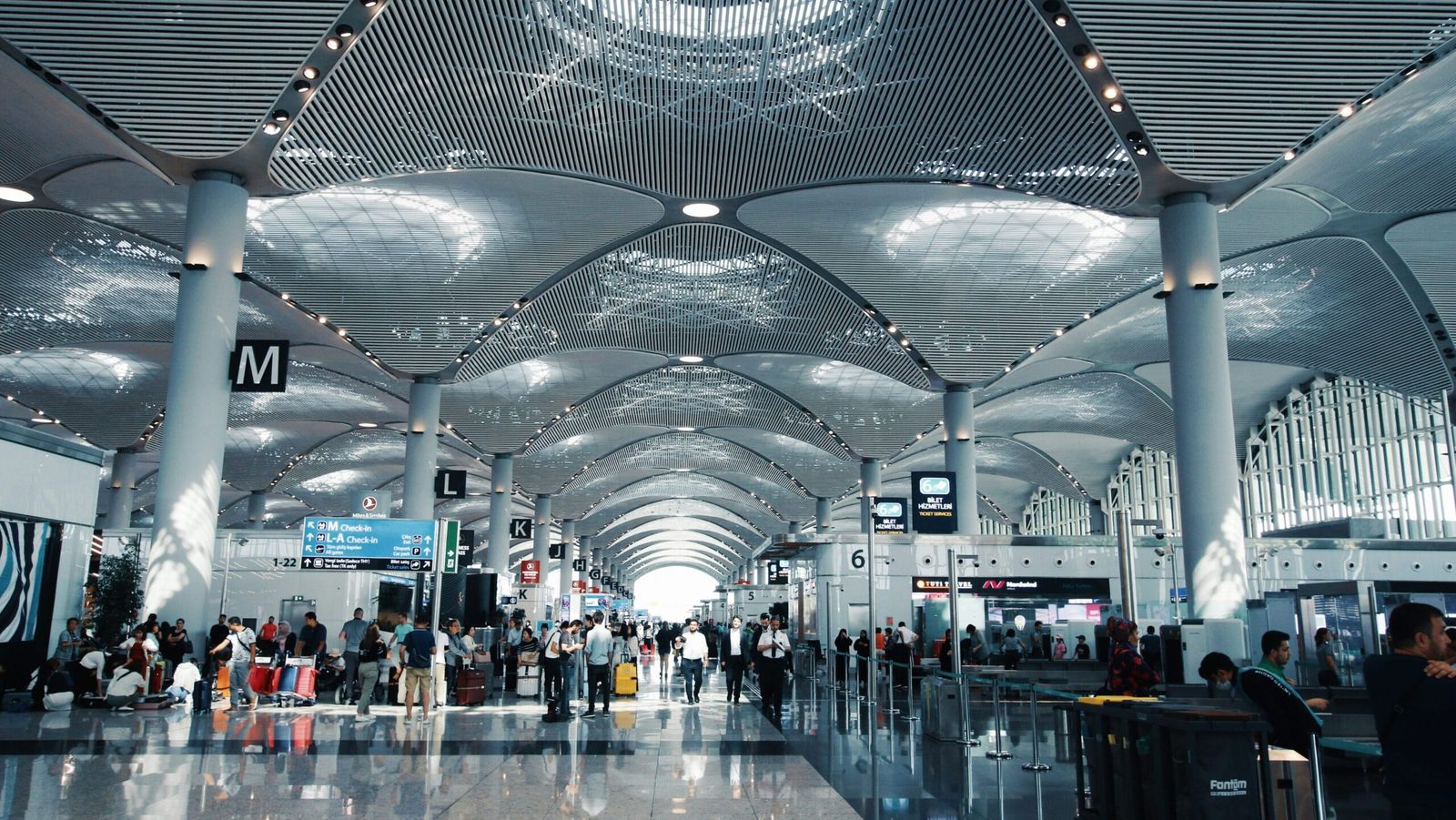
The trade-off is dependency on a single hub system. When delays occur in Istanbul, rerouting options are limited compared to multi-hub European carriers. Weather disruptions, congestion, or operational delays can cascade across tightly timed African connections.
Boarding Dynamics and Passenger Flow
Boarding processes are standardized, but passenger flow patterns reveal operational realities. Turkish Airlines flights serving African routes are typically full or near capacity. Load factors are high because demand consistently exceeds supply in many African markets.
This affects boarding sequences and seat allocation flexibility. Families, students, and labor travelers often dominate these routes, creating a distinct cabin composition compared to leisure-heavy long-haul flights elsewhere.

Cabin service remains consistent across regions, but the rhythm of the flight is shaped by passenger demographics. Communication patterns, boarding urgency, and baggage distribution all reflect this underlying structure.
Flying Turkish Airlines as an African involves more than choosing a carrier. It involves navigating a system where connectivity, documentation, and transit rules intersect with uneven travel infrastructures across continents. The airline itself is not the constraint. The constraint is the global routing architecture it operates within.
Pricing Patterns and Seasonal Pressure
Fare structures on Turkish Airlines routes into and out of Africa are influenced by demand spikes tied to academic calendars, labor migration cycles, and holiday travel peaks. Prices can shift sharply within short booking windows.
Students traveling to Europe or North America via Istanbul often book months in advance to secure lower fares. Last-minute travel tends to carry significant premiums, particularly on routes with limited direct competition.
This volatility is not arbitrary. It reflects constrained capacity on Africa-Europe corridors and high reliance on connecting traffic through Istanbul.
Cultural and Operational Expectations
One overlooked dimension of flying Turkish Airlines is the cultural operating environment of Istanbul Airport itself. English is widely used, but not universally dominant in every interaction point. Multilingual signage helps, yet fast-moving transfer scenarios can still create friction for first-time travelers.
Operationally, Turkish Airlines maintains a reputation for structured service delivery. However, expectations should be calibrated to high-volume international hub conditions rather than boutique service experiences. Efficiency is prioritized over personalization.
Forward-Looking Shifts in Africa Connectivity
The broader trajectory of Turkish Airlines in Africa is expansion. New routes, increased frequencies, and fleet modernization continue to reshape connectivity options. This expansion is not purely commercial. It reflects shifting global trade patterns and the increasing strategic importance of African air corridors.
For African travelers, this means more routing options in the medium term, but also continued reliance on Istanbul as a central node. Diversification of hubs across global airlines may eventually reduce this dependency, but that shift is gradual rather than immediate.