Tag: digital travel tools

  • Best Travel Apps Every Traveler Actually Relies On in Practice

    Best Travel Apps Every Traveler Actually Relies On in Practice

    Best Travel Apps Every Traveler Actually Relies On in Practice
    Best travel apps are often discussed as convenience tools, but that framing misses the more accurate reality. They now function as the decision layer of travel itself. Not support tools. Not accessories. Decision infrastructure.

    What matters is not how many apps exist, but how a small set of them quietly governs movement, pricing behavior, timing, and even risk perception across borders. The modern traveler rarely notices this shift because it did not arrive as disruption. It arrived as convenience.

    And convenience rarely announces its consequences.

    The consolidation problem no one talks about

    Travel used to require distributed judgment. You compared paper maps, airline offices, hotel desks, and local advice. Each source had its own bias, and travelers learned to negotiate contradictions.

    Now that contradiction has been compressed into ranked interfaces.

    A few platforms dominate discovery. A few apps dominate routing. A few systems dominate payment. The result is not just efficiency. It is consolidation of perception.

    The traveler sees fewer possibilities than actually exist, but sees them more clearly than ever before.

    That trade-off defines the entire ecosystem of modern travel apps.

    Navigation apps are no longer about directions

    Google Maps is often treated as a utility, but that understates its role. It is the default spatial interface for most travelers on Earth.

    It does not simply guide movement. It defines what movement feels reasonable.

    Transit options are ranked. Walking times are normalized. Businesses are filtered through visibility systems that combine location data, reviews, and engagement signals.

    The implication is subtle. Travelers no longer construct mental geography first. They outsource it.

    Even offline map tools like Maps.me function less as independent systems and more as emergency extensions of a dominant mapping logic.

    Navigation is no longer something you do. It is something you follow.

    Flight and transport apps have turned pricing into behavior analysis

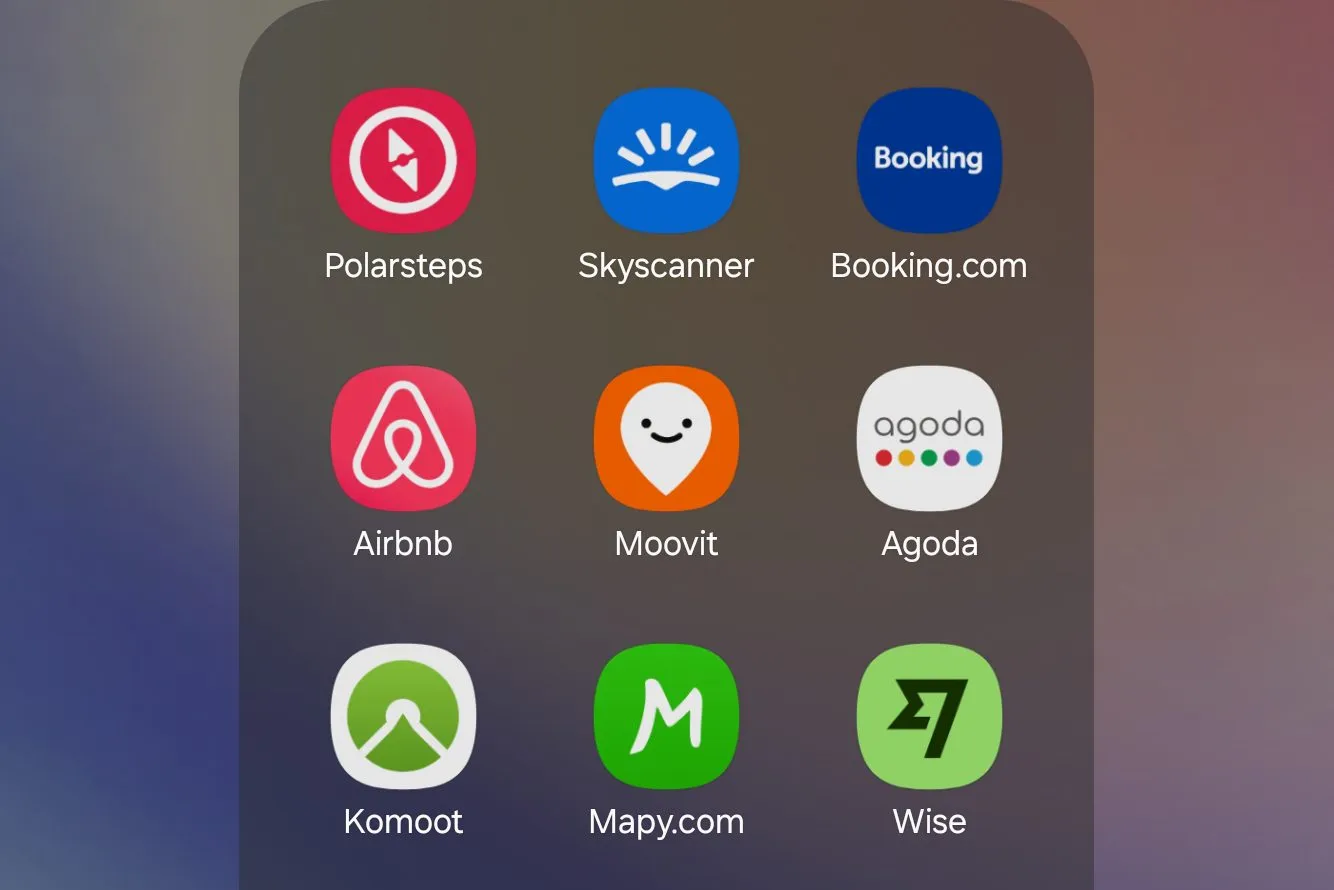
    Flight comparison tools like Skyscanner and Google Flights are often described as search engines. That description is incomplete.

    They are volatility trackers.

    Prices are not presented as static values but as shifting patterns influenced by demand curves, route competition, and behavioral prediction models. What travelers interpret as “cheap” or “expensive” is often just timing within an algorithmic cycle.

    Rail and bus aggregators like Rome2Rio extend this into multimodal logic. The question stops being “what is the route” and becomes “what combination of systems produces the least friction.”

    Travel planning becomes systems thinking without most users realizing it.

    Translation apps have changed the tempo of interaction

    Language used to slow travel down in a very specific way. It forced pauses. Interpretation. Uncertainty.

    Apps like Google Translate compress that delay into seconds.

    Camera translation removes the need for linguistic decoding in menus, signs, and documents. Conversation mode removes the hesitation in basic human exchange.

    What changes is not comprehension alone. It is speed of decision-making in unfamiliar environments.

    That speed has a secondary effect. It reduces reliance on context. Travelers act earlier, with less waiting for confirmation from surroundings.

    Currency apps quietly shape spending behavior

    Currency tools such as XE Currency appear simple, but they influence perception more than calculation.

    When every price can be instantly translated into a familiar baseline, spending stops feeling foreign. That psychological shift matters more than accuracy.

    Fintech platforms deepen this effect by removing conversion awareness entirely. Payment happens in the background, not as a conscious step.

    Over time, this changes how travelers evaluate value. Not in dramatic ways, but in consistent micro-adjustments that accumulate across a trip.

    Accommodation platforms have narrowed discovery without removing choice

    Booking.com and Airbnb are often framed as marketplaces. They are more accurately ranking systems layered on top of supply.

    What is visible is not neutral. It is filtered through engagement metrics, review velocity, pricing behavior, and conversion probability.

    This does not eliminate independent accommodation. It changes how it surfaces.

    Discovery becomes algorithmic rather than exploratory. The traveler still chooses, but within a pre-shaped field of visibility.

    Itinerary apps exist because fragmentation is now the default

    TripIt and similar tools exist for a reason that is often overlooked: travel logistics are no longer centralized.

    Flights, hotels, transfers, tickets, and confirmations are distributed across multiple platforms, each with its own interface logic.

    Aggregation tools restore coherence, not by simplifying travel, but by reassembling it after fragmentation.

    In practice, this becomes less about planning and more about maintaining order during motion.

    Safety is now inferred through distributed signals

    Traditional notions of travel safety relied on institutions, advisories, and local knowledge.

    Modern systems rely on distributed indicators: driver ratings, route transparency, live location sharing, and platform reputation systems.

    Ride-hailing apps, in particular, have normalized continuous visibility as a safety condition.

    It is not perfect. But it is widely trusted because it replaces ambiguity with structured feedback.

    best travel apps do not operate independently. They form a connected system that quietly shapes how travel unfolds in real time.

    Navigation determines movement options. Transport apps influence cost perception. Currency tools affect spending thresholds. Translation apps adjust interaction depth. Accommodation platforms filter visibility. Safety systems shape perceived risk.

    None of these functions operate in isolation anymore.

    Together, they form a continuous feedback loop that influences decisions before travelers consciously recognize they are making them.

    This is the defining characteristic of modern travel technology: not control, but structured influence.

    The direction this ecosystem is moving toward

    The trajectory is not expansion of app categories. It is consolidation of functions.

    Navigation, booking, payment, and planning are increasingly merging into unified systems that reduce friction by absorbing complexity internally.

    At the same time, regulatory pressure in different regions is pushing against excessive concentration, particularly in transport and accommodation markets.

    The result is not one dominant system, but competing integrated ecosystems that behave differently depending on geography and regulation.

    What remains consistent is the underlying shift: travel is no longer a sequence of isolated decisions. It is continuous interaction with systems that anticipate and filter those decisions in advance.

  • Best Travel Apps for International Trips: A Practical Guide for Real-World Travel

    Best Travel Apps for International Trips: A Practical Guide for Real-World Travel

    Best Travel Apps for International Trips
    The best travel apps for international trips are not the ones that promise convenience. They are the ones that quietly remove friction at scale. The difference becomes obvious somewhere between a missed connection in Frankfurt and a last-minute hotel check-in in Nairobi, when speed, accuracy, and offline reliability stop being features and start becoming necessities.

    There is a tendency to treat travel apps as interchangeable utilities. That assumption rarely survives a long-haul itinerary across multiple currencies, languages, and regulatory environments. The most effective apps are built around specific constraints: unstable connectivity, cross-border payments, fragmented transport systems, and the unpredictability of human movement.

    This is not a list of popular downloads. It is a selection shaped by performance under pressure.

    Navigation and Ground Movement

    Google Maps

    Best Travel Apps for International Trips

    Google Maps remains structurally dominant because of its global data coverage and continuous updates. Its offline mapping function is still one of the most reliable tools when mobile data becomes expensive or inaccessible.

    In dense urban environments such as Tokyo or Istanbul, its real-time transit integration reduces uncertainty in a way few competitors match. Yet its real value emerges outside major cities, where mapping infrastructure is uneven. Rural roads in parts of Eastern Europe or West Africa are often better documented here than on regional platforms.

    There are limitations. Business listings can be outdated in developing markets, and local transport nuances are not always captured accurately. Still, it remains the baseline navigation tool for international travel.

    Maps.me

    Best Travel Apps for International Trips

    Maps.me operates with a different philosophy. It prioritizes offline-first functionality over real-time data. For travelers moving through regions with inconsistent connectivity, this becomes essential.

    The app relies on OpenStreetMap data, which is often more detailed in remote or less commercialized areas. Hiking trails, footpaths, and secondary roads are frequently better represented than in mainstream mapping apps.

    It lacks the dynamic updates of Google Maps, but in situations where signal drops to zero, it often becomes the more dependable option.

    Flights, Delays, and Real-Time Tracking

    FlightAware

    Best Travel Apps for International Trips

    FlightAware is less about booking and more about visibility. It tracks aircraft movements in near real time, offering insight into delays, diversions, and gate changes.

    Airlines do not always communicate disruptions clearly or promptly. FlightAware fills that gap by providing raw operational data. Frequent travelers rely on it not because it is polished, but because it is accurate.

    In regions where airline communication systems are less responsive, such as parts of South America or Southeast Asia, this kind of independent tracking becomes especially valuable.

    TripIt

    Best Travel Apps for International Trips

    TripIt organizes travel documents into a single timeline. It aggregates flight bookings, hotel reservations, and car rentals into a structured itinerary.

    Its utility is less about innovation and more about consolidation. International trips often involve fragmented bookings across multiple platforms. TripIt reduces that fragmentation without adding unnecessary complexity.

    The premium version adds real-time alerts, but even the basic version serves as a stable reference point when travel plans become disjointed.

    Accommodation and Local Stay Options

    Booking.com

    Best Travel Apps for International Trips

    Booking.com operates at a scale that makes it difficult to ignore. Its inventory spans major hotel chains, independent guesthouses, and short-term apartments across nearly every market.

    Its strength lies in volume and flexibility. Free cancellation policies are particularly relevant for international travel, where plans can shift quickly due to visa issues, transport delays, or local disruptions.

    However, pricing transparency can vary. Taxes and fees are not always presented consistently across regions. Experienced travelers often cross-check before confirming.

    Airbnb

    Best Travel Apps for International Trips

    Airbnb offers a different type of accommodation experience, one that intersects with local housing markets and regulatory frameworks.

    In cities like Barcelona or Amsterdam, local restrictions have reshaped availability. In emerging markets, however, Airbnb often fills gaps where hotel infrastructure is limited.

    The platform is most effective for longer stays or in locations where traditional lodging is either overpriced or underdeveloped. Its variability requires careful reading of reviews and host history.

    Currency, Payments, and Financial Management

    XE Currency

    Best Travel Apps for International Trips

    Currency conversion becomes less about curiosity and more about precision when moving across multiple economies. XE Currency provides real-time exchange rates and supports offline conversions based on the last updated data.

    Its interface is minimal, which works in its favor. There is little room for error when calculating costs in unfamiliar currencies.

    For travelers moving between volatile currencies, this app provides a consistent reference point.

    Revolut

    Best Travel Apps for International Trips

    Revolut has positioned itself as a travel-friendly financial tool. It offers multi-currency accounts, competitive exchange rates, and spending analytics.

    In Europe, it integrates smoothly with local payment systems. Outside Europe, its effectiveness depends on regional banking infrastructure, but it still provides lower transaction costs compared to traditional banks.

    There are regulatory considerations. Not all features are available in every country, and account limitations can apply. Even so, it has become a standard tool for managing cross-border expenses.

    Language and Communication

    Google Translate

    Best Travel Apps for International Trips

    Google Translate remains the most versatile language tool for travelers. Its offline language packs and camera translation feature are particularly useful in environments where signage is not easily interpretable.

    In countries with complex scripts such as Japan or Thailand, the camera function can quickly decode menus, instructions, and public notices.

    Accuracy varies by language pair. It performs well with widely spoken languages but less reliably with regional dialects. Still, its accessibility makes it indispensable.

    iTranslate

    Best Travel Apps for International Trips

    iTranslate offers a more conversational interface, focusing on voice translation and phrase-based communication.

    It is not as comprehensive as Google Translate, but it performs well in structured interactions such as hotel check-ins or taxi directions.

    For travelers who prefer guided communication rather than raw translation, it provides a more controlled experience.

    Connectivity and Data Access

    Airalo

    Best Travel Apps for International Trips

    Airalo addresses one of the most persistent issues in international travel: mobile data costs. It provides eSIM packages for multiple countries, allowing travelers to activate local data plans without physical SIM cards.

    Its coverage is expanding, particularly in Asia and Europe. Pricing is generally competitive, though not always the cheapest option compared to local providers.

    The advantage is convenience. For short stays or multi-country itineraries, it reduces the need to navigate local telecom systems.

    NordVPN

    Best Travel Apps for International Trips

    Digital security is often overlooked in travel planning. Public Wi-Fi networks in airports, hotels, and cafes present consistent risks.

    NordVPN encrypts internet traffic, providing a layer of protection when accessing sensitive information. In countries with restricted internet access, it can also enable access to blocked services.

    Its relevance depends on destination. In some regions, VPN use is regulated or restricted, which requires awareness before use.

    The effectiveness of these apps is not measured by download numbers or interface design. It is measured by performance in unstable environments.

    A delayed flight, a lost booking confirmation, a language barrier at a border checkpoint, or a sudden need for local data can expose the weaknesses of poorly designed tools. The apps that endure are those that anticipate these scenarios.

    There is also a broader context. Travel technology reflects global inequalities. Data coverage is denser in developed markets. Payment systems are more integrated in certain regions. Language tools perform better for dominant languages. Understanding these limitations is part of using these apps effectively.

    No single app solves international travel. The reality is modular. Navigation, finance, communication, and logistics each require separate systems. The challenge is not choosing the best app in isolation, but assembling a set that works cohesively across borders.

    The most experienced travelers refine this toolkit over time. Not by chasing new features, but by observing what fails, and replacing it with something that does not.