
Sarah Mullally has made history as the first female Archbishop of Canterbury, stepping into the role at the heart of the Anglican Church and taking on leadership of a global community of 85 million members. Her appointment marks a decisive moment for the Church of England, coming after her predecessor resigned amid controversy over abuse cover-ups.

The 63-year-old former midwife and nurse was formally installed in a ceremony at Canterbury Cathedral in southeast England. Around 2,000 guests attended, including the heir to the throne, Prince William, and his wife Princess Catherine. The installation adhered to centuries-old tradition. Mullally knocked three times on the cathedral’s west door with a staff to request entry. Local schoolchildren greeted her, asking why she had come. She answered with a clear declaration of purpose: “I am sent as archbishop to serve you, to proclaim the love of Christ and with you to worship and love him with heart and soul, mind and strength.”
During the service, Mullally was seated in two ceremonial thrones. One represents her responsibility as bishop of the diocese of Canterbury, and the other symbolizes her role as spiritual leader of the worldwide Anglican community.

Her predecessor, Justin Welby, stepped down in November 2024 after a report revealed failures in responding to historical abuse cases, including a 1970s serial abuse scandal. The report found the Church had concealed the abuses and that Welby had not reported allegations that reached him in 2013.
Mullally has said she intends to take decisive action to address past failures. In a recent BBC interview, she emphasized the need to make the Church safer and to respond effectively to victims and survivors of abuse. She added that the Church is working to become more trauma-informed and attentive to those affected by abuse.
Her appointment signals both continuity and change. As someone with a professional background in healthcare and pastoral care, Mullally brings practical experience in care, accountability, and ethical responsibility. Her leadership is expected to emphasize transparency, survivor support, and a renewed focus on the Church’s moral and spiritual obligations. Observers note that her enthronement could redefine how authority and pastoral care intersect in one of the world’s oldest religious institutions.
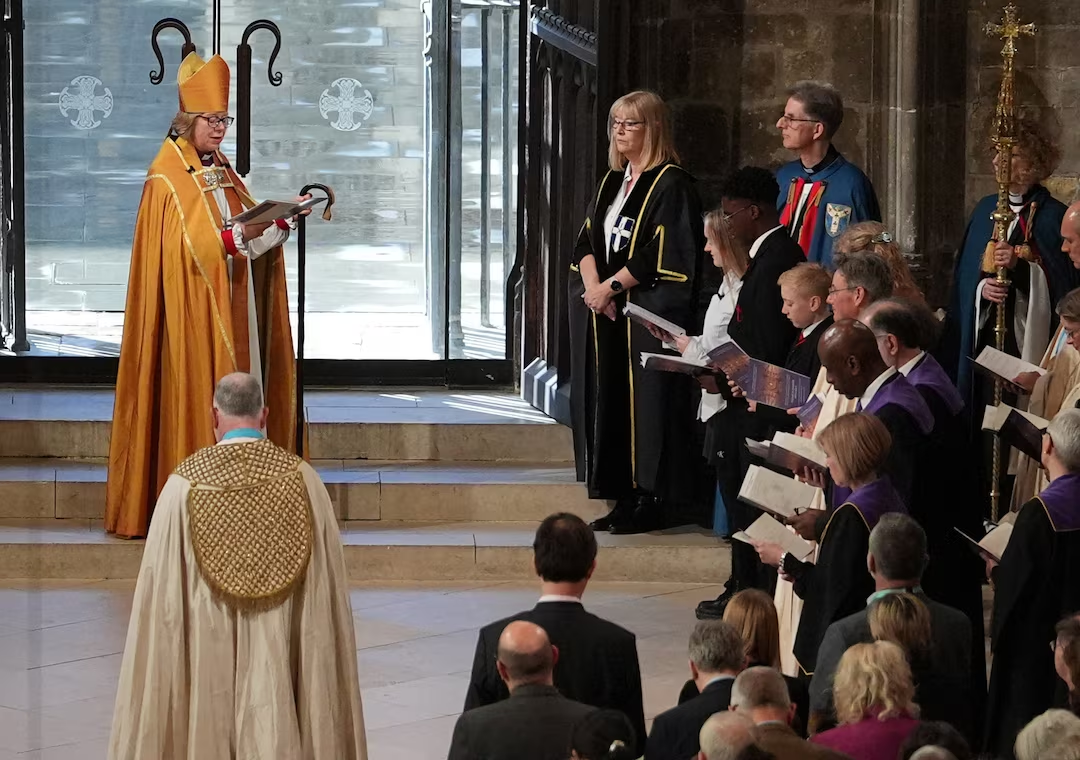
The ceremony and her appointment have been widely noted as historic, not only because she is the first woman to hold the position but because it reflects a broader effort by the Church of England to confront its past while shaping a path forward. For many Anglicans, Mullally represents a combination of spiritual leadership and practical reform, a figure prepared to address institutional failings with both compassion and accountability.
Her tenure begins under intense scrutiny, yet it also offers an opportunity to redefine the public perception of the Church, emphasizing ethics, transparency, and meaningful engagement with its global community.


