

Cristiano Ronaldo injury update has quickly become one of the most searched phrases in world football after the Portuguese captain was forced off during Al Nassr’s 3-1 win over Al Fayha at the weekend, raising fresh concern about his fitness just three months before the World Cup.
For a player who has built his career on physical durability and relentless self-discipline, even a hint of vulnerability sends ripples far beyond a single club match. Ronaldo did not simply limp off. He signalled to the bench with less than ten minutes remaining, a gesture that suggested something more than routine discomfort.
The incident unfolded late in the game at Al Nassr. Ronaldo had already endured a frustrating evening, including a missed penalty in the 12th minute after Mohamed Simakan was fouled. It was a rare lapse in a career defined by ruthless efficiency from the spot.
As the match wore on, observers noticed Ronaldo moving more cautiously. When he eventually gestured toward the technical area, there was no theatrics. He walked off with visible discomfort, later seen on the bench with an ice pack strapped to his leg while the game played out.
The immediate diagnosis from the bench was muscle fatigue. But at this level, muscle fatigue can range from minor tightness to a strain that disrupts weeks of preparation.
Speaking after the match, Al Nassr manager Jorge Jesus was measured but clear.
“Ronaldo suffered muscle fatigue and the medical staff will urgently perform the necessary tests to determine his condition.”
In elite football, the word urgent is rarely used lightly. Clubs protect their assets, especially global superstars. When tests are described as urgent, it signals the need for immediate clarity, not public drama.
Al Nassr are chasing domestic and continental ambitions. Portugal, meanwhile, are counting down to a World Cup campaign where leadership and experience will matter as much as tactics.
The timing is what intensifies the Cristiano Ronaldo injury update. With only three months before the World Cup, recovery windows shrink. Training loads are carefully managed. Every muscle issue is treated as both medical and strategic.
Ronaldo is no longer 25. At 41, recovery cycles differ. What once required a few days can now demand structured rehabilitation. Yet his longevity has consistently defied conventional sports science assumptions. Few players in history have sustained this level of output across two decades.
Portugal fans understand that this tournament may represent his final World Cup stage. The emotional weight attached to his availability is immense.
The missed penalty also drew attention. It marked the 35th penalty miss of his career. Yet raw numbers tell a different story. Ronaldo has converted 181 penalties out of 216 attempts. That translates to an 83.8 percent success rate, with just 16.2 percent missed.
Those figures are not evidence of decline. They are evidence of extraordinary volume. When a player takes over 200 penalties at the highest levels of club and international football, variance becomes inevitable.
The more pressing issue is not the missed spot kick. It is the muscle condition that followed.
The deeper narrative surrounding this Cristiano Ronaldo injury update is not simply about muscle fatigue. It is about timing and legacy.
Ronaldo stands 35 goals away from the symbolic 1,000 career goals milestone. Milestones matter less to him publicly than trophies, but they remain part of the broader historical record. Every appearance now carries dual meaning. Club objectives on one side. Historical legacy on the other.
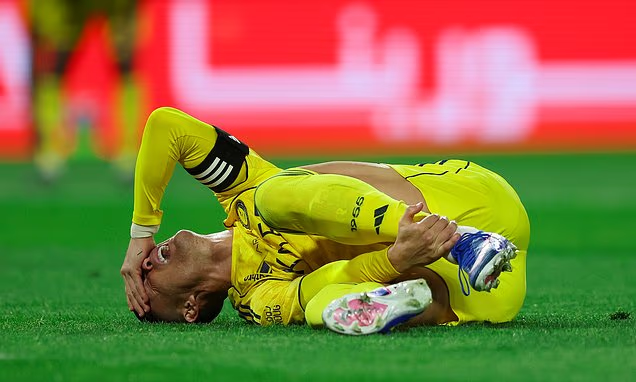
Injuries complicate both.
For Al Nassr, even short absences can alter momentum in a competitive league environment. For Portugal, every training camp between now and the World Cup becomes critical.
Muscle fatigue in elite athletes can stem from cumulative load, travel schedules, or minor strain. If managed early, it resolves quickly. If ignored, it can evolve into a tear that sidelines a player for weeks.
Ronaldo’s conditioning has long been his defining edge. Teammates and coaches frequently reference his meticulous recovery routines. Yet the body eventually speaks, even for those who treat it like a science project.
Medical tests will determine whether this is a precautionary episode or the start of a more complicated rehabilitation timeline.
Al Nassr will likely take a conservative approach. There is little incentive to rush a 41-year-old global icon back into domestic fixtures if a short rest can preserve long term availability.
Portugal’s coaching staff will monitor closely. Communication between club and country becomes crucial at this stage of the calendar.
For supporters, the wait is uncomfortable but familiar. Ronaldo has faced injury concerns before major tournaments and returned with defining performances. That history tempers panic.
Still, uncertainty lingers. Football at the highest level is unforgiving. Margins shrink as tournaments approach.
The Cristiano Ronaldo injury update will evolve once medical results are confirmed. Until then, it represents more than a match incident. It is a reminder that even the most disciplined career cannot escape the reality of time.


