
Best Adventure Destinations in South America is not a list that rewards speed. It reveals itself through altitude, distance, and the slow adjustment of the body to extremes. The continent does not offer adventure as spectacle alone.
It demands negotiation with terrain, weather, and often infrastructure that remains uneven by design or necessity. The result is a set of experiences that feel earned rather than curated.
The Andes as Structure, Not Backdrop

Across western South America, the Andes form a continuous axis that shapes both geography and movement. Travel here is vertical before it is horizontal. Roads climb sharply, weather shifts within hours, and oxygen levels define the pace of any itinerary.
In Peru, the Inca Trail remains the most recognized high-altitude trek, but its controlled access system reflects a broader reality. The Peruvian government caps daily permits to manage erosion and overtourism around Machu Picchu. This has redirected experienced hikers toward alternatives such as the Salkantay route, which reaches elevations above 4600 meters and exposes the logistical fragility of remote trekking. Weather disruptions are common. Support infrastructure is minimal. The reward is not simply arrival, but sustained exposure to the Andean environment without the density of guided groups.
Further south, Bolivia presents a harsher, less mediated version of the Andes. The Uyuni salt flats, formally Salar de Uyuni, are often photographed during the rainy season when a thin layer of water creates mirror-like reflections. What is less discussed is the operational complexity of reaching and crossing the region. Vehicles must be adapted for salt corrosion. Fuel logistics are tightly calculated. Drivers often navigate without marked routes, relying on memory and informal waypoints. The environment resists casual travel.
Patagonia and the Limits of Exposure

Patagonia is frequently framed as pristine wilderness, but its defining characteristic is volatility. Wind speeds regularly exceed 100 kilometers per hour, and weather systems move with little warning across the southern cone of Chile and Argentina.
In Torres del Paine National Park, the W Trek has become a structured multi-day route with designated campsites and reservation systems. This has introduced a degree of predictability, but it has not reduced exposure. Sudden temperature drops and high winds still define the experience. The park authority has tightened regulations following a series of wildfires linked to human activity, illustrating the tension between access and preservation.
Across the border, Los Glaciares National Park offers a different scale of engagement. The Perito Moreno Glacier is accessible, but ice trekking operations remain tightly controlled. Guides manage route safety in response to shifting crevasses and ice stability. The glacier is advancing, unlike many globally, which introduces ongoing scientific interest but also operational unpredictability.
The Amazon Basin and Controlled Risk

The Amazon is often described in terms of biodiversity, but for travelers it is defined by managed access. Large portions of the rainforest are not navigable without local expertise, and independent exploration is rarely viable.
In Brazil, the city of Manaus functions as a logistical gateway. From here, river systems extend deep into protected reserves. Adventure takes the form of guided expeditions rather than solitary travel. Canoe routes, night walks, and canopy observation platforms are structured to mitigate risk while maintaining proximity to wildlife.
The economic context matters. Many lodges operate through partnerships with local communities, creating revenue streams that compete with logging and mining. This has altered the dynamics of conservation. Adventure tourism in the Amazon is less about personal endurance and more about navigating systems that balance ecological preservation with economic necessity.
High Desert Isolation in Northern Chile
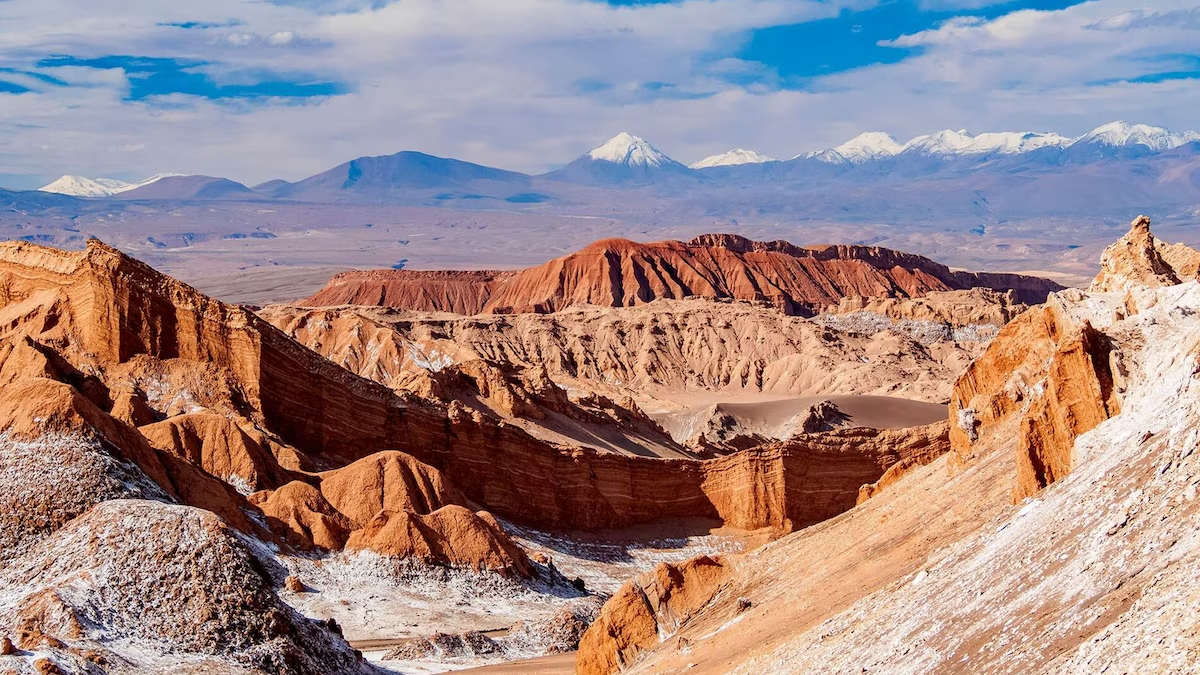
The Atacama Desert in northern Chile is often described as the driest non-polar desert on Earth. That description is accurate but incomplete. Its significance lies in the way it compresses multiple extreme environments into a single region.
From the town of San Pedro de Atacama, travelers can access salt flats, geyser fields, and high-altitude lagoons within a relatively short radius. However, altitude again becomes the primary constraint. Many key sites exceed 4000 meters. Rapid ascent without acclimatization can lead to acute mountain sickness, which remains a persistent issue for visitors who underestimate the physiological demands.
Astronomical tourism has expanded rapidly here due to minimal light pollution and atmospheric clarity. Observatories operate alongside adventure tours, creating an unusual overlap between scientific infrastructure and recreational travel.
Ecuador and the Compression of Terrain
Few countries condense as much ecological diversity into such a small footprint as Ecuador. Within hours, travelers can move from Andean highlands to cloud forests and into the Amazon basin.

The Quilotoa Loop, centered around Quilotoa Crater Lake, offers a multi-day trekking circuit through indigenous communities. Unlike more commercialized routes in Peru, infrastructure here remains relatively informal. Accommodation ranges from basic hostels to family-run lodges. The experience is shaped as much by local interaction as by landscape.
Further west, the Galapagos Islands present a different model entirely. Strict visitor controls, high costs, and regulated itineraries limit environmental impact. Adventure here is defined less by physical exertion and more by proximity to wildlife within tightly managed conditions.
Colombia and the Return of Overlooked Terrain

Adventure travel in Colombia has expanded rapidly over the past decade as security conditions have improved in many regions. This shift has opened routes that were previously inaccessible.
The trek to the Lost City, or Ciudad Perdida, requires multiple days of hiking through humid jungle terrain. River crossings are frequent. Infrastructure is basic. The route is managed by local operators, many of whom are connected to indigenous communities.
This form of travel carries layered implications. Increased visitation brings economic benefits, but also pressure on fragile ecosystems and cultural sites. The Colombian government has begun to regulate access more tightly, though enforcement varies.
Structural Realities Behind Adventure Travel
Logistics, Access, and Uneven Infrastructure
Adventure in South America often depends on transport systems that are inconsistent by global standards. Domestic flights can be reliable, but overland travel frequently involves long transit times and variable road conditions. This shapes itineraries in ways that are not always apparent in promotional material.
Economic Impact and Local Agency
Tourism revenue is unevenly distributed. In regions like Patagonia and the Peruvian Andes, established circuits generate significant income. In less developed areas, benefits are more localized and less predictable. Community-based tourism models are expanding, but they require careful coordination to avoid dependency or cultural dilution.
Environmental Constraints
Climate variability is becoming more pronounced. Glacial retreat in the Andes, shifting rainfall patterns in the Amazon, and increased wildfire risk in Patagonia all influence access and safety. Travelers encounter not just landscapes, but systems under pressure.
The phrase suggests a hierarchy, but on the ground it functions more as a framework. Each destination operates within its own constraints and opportunities. The Andes demand acclimatization and endurance. Patagonia tests exposure to weather. The Amazon requires structured access. The Atacama emphasizes altitude and isolation. Ecuador compresses ecosystems into short distances. Colombia introduces terrain that is still being integrated into the global travel network.
What connects them is not a shared aesthetic, but a shared resistance to simplification. Adventure here is shaped by negotiation rather than consumption. It requires time, planning, and a willingness to engage with systems that are often imperfect.


