Former Prince Andrew Mountbatten-Windsor has been ordered to stop horse riding around King Charles’s Sandringham estate, following a series of incidents that royal aides fear could damage the monarchy’s image.
The 66-year-old former royal, who was arrested last week on suspicion of misconduct in public office, is under investigation for allegedly leaking sensitive information to convicted paedophile Jeffrey Epstein while serving as the United Kingdom’s trade envoy. He spent 11 hours in police custody before being released under investigation. Authorities have completed searches of his former Windsor mansion, Royal Lodge, as part of the ongoing inquiry.
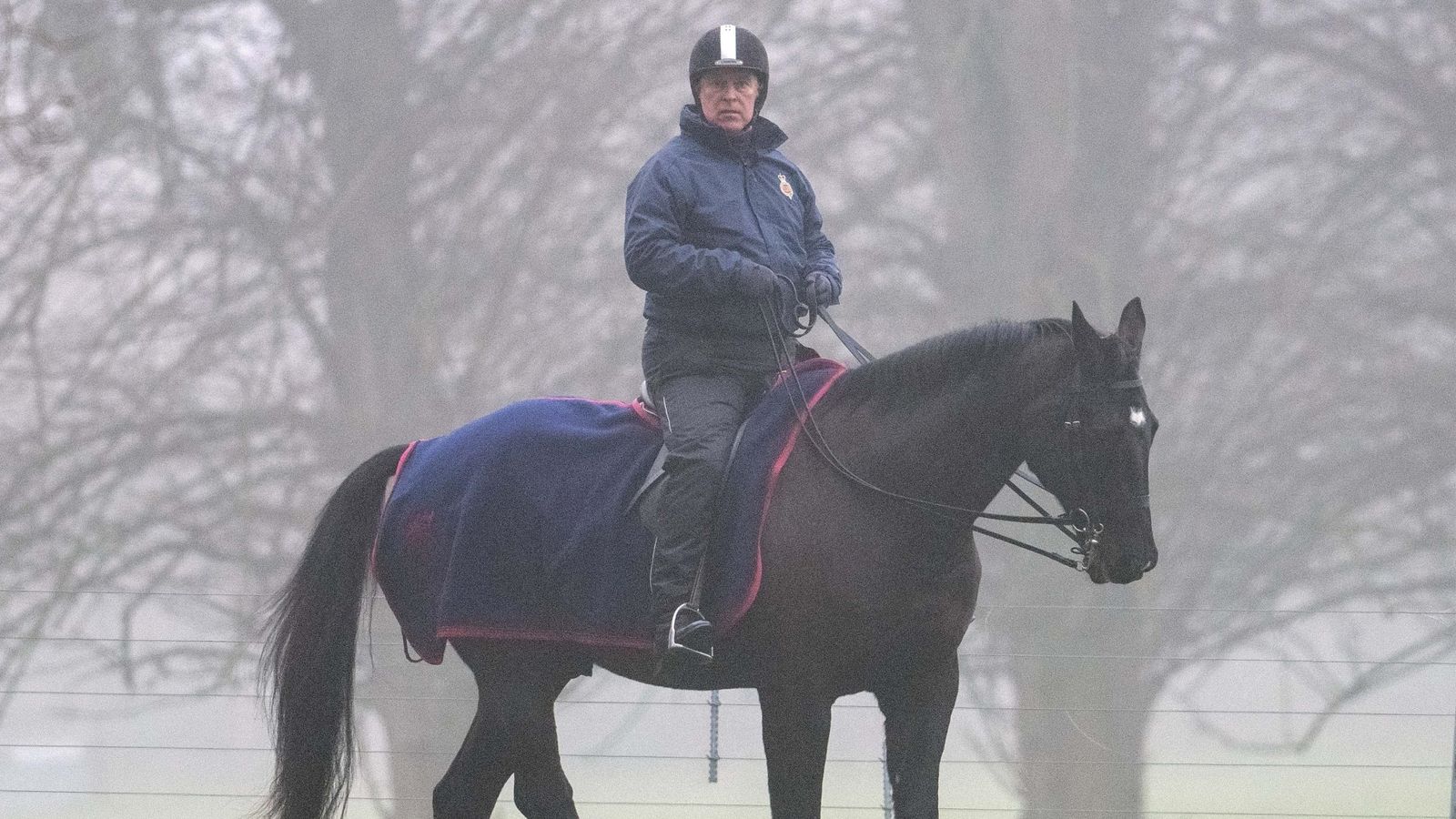
Before relocating to Wood Farm on the Sandringham estate three weeks ago, Andrew was frequently seen riding horses in Windsor, a pastime he reportedly enjoyed. However, photographs taken in late January, including one where he smiled and waved at members of the public on horseback, have been cited by insiders as a key factor in the decision to restrict his riding.
Royal sources have described the public images of Andrew as incongruous with the seriousness of his legal situation. They argued that appearing cheerful in public amid ongoing investigations into his communications with Epstein and allegations concerning his personal life was inappropriate. The decision to ban horse riding reflects the monarchy’s heightened sensitivity to optics and public perception following months of scrutiny.
A source familiar with the matter told The Sun, “Since his arrest last week, he has been ordered not to go horse riding. It is considered a bad look. They do not think he should be seen grinning on his horse like he was in Windsor. Horse riding was one of the few activities he enjoyed, so this is a significant change for him.”
The ban comes as political pressure on Andrew intensifies. Members of Parliament recently supported a motion by the Liberal Democrats calling for the release of documents relating to his appointment as UK trade envoy in 2001. Trade minister Chris Bryant described Andrew’s tenure in the role as marked by self-interest, asserting that he engaged in a “self-enriching hustle” during taxpayer-funded trips abroad. The motion passed in the House of Commons, although the government cautioned that some documents may remain confidential due to the ongoing police investigation.
The parliamentary debate underlined the continuing public and political scrutiny of Andrew, particularly following the loss of his Prince and Duke of York titles last year. Emails that surfaced cast doubt on his prior claims regarding his disengagement from Epstein, and critics argue that his past conduct blurred the line between personal gain and public service.
Sir Chris Bryant reminded the House that he had called for Andrew’s removal as trade envoy over a decade ago. He described Andrew as “a man on a constant self-aggrandising, self-enriching hustle” and criticized him as “rude, arrogant, and entitled, unable to distinguish between public interest and private gain.”
While Andrew has consistently denied wrongdoing in relation to Epstein, he has not publicly addressed the latest allegations. The ban on horse riding, combined with increased parliamentary scrutiny and ongoing police investigations, signals a constriction of both his public presence and personal freedom within the royal estates.
The decision to restrict Andrew’s horseback riding underscores the monarchy’s concern over optics and the management of public image. Royal insiders suggest that even seemingly mundane activities like riding a horse can carry symbolic weight when the individual involved is under legal and political scrutiny. The move also reflects a broader effort to distance the monarchy from controversies linked to Epstein and maintain the integrity of the institution in the public eye.