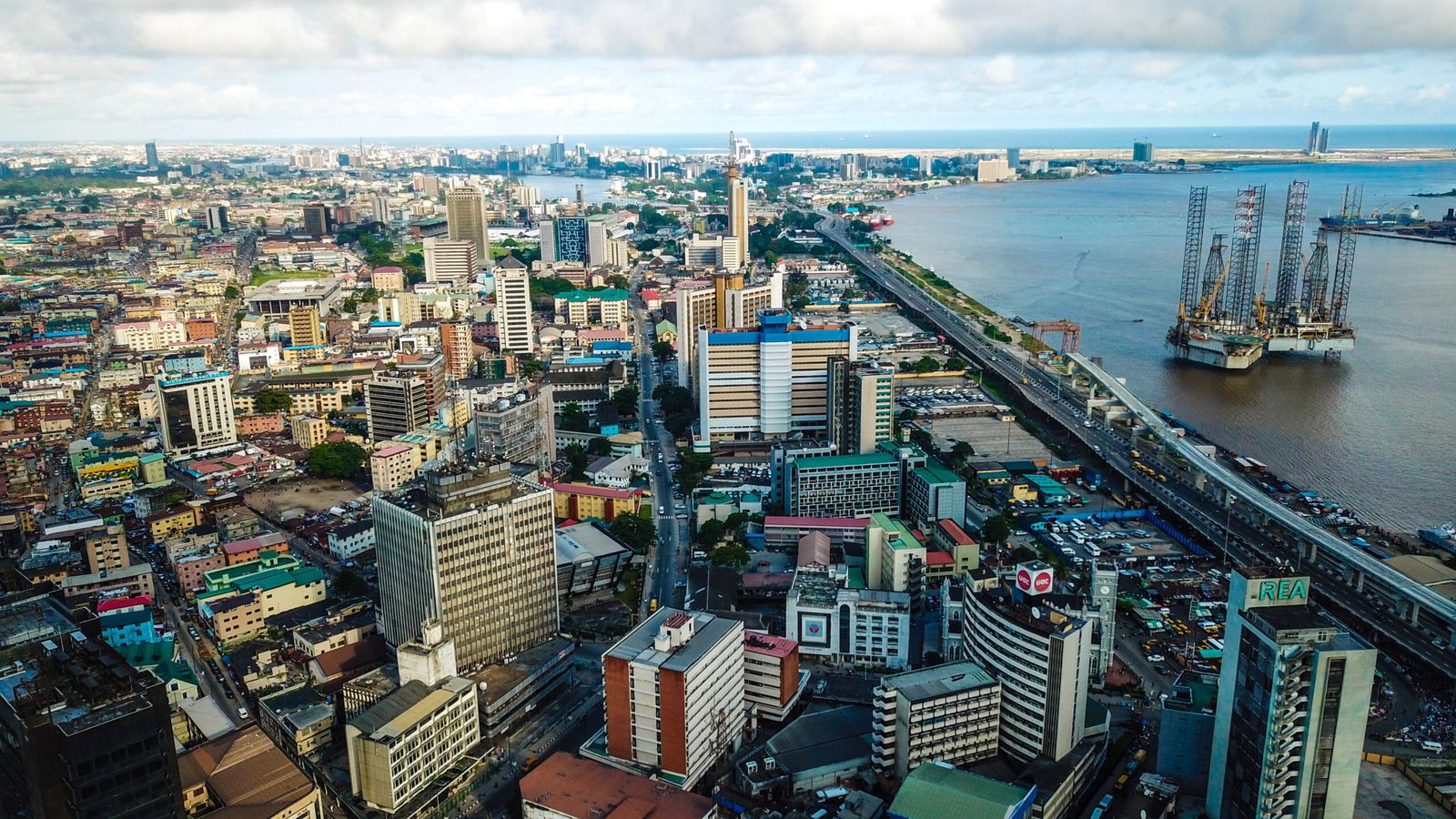
Why Nigeria Feels Fast Paced is not a slogan. It is something you register in your pulse within hours of landing. Step into Lagos traffic at 7:30 a.m. and you understand immediately. Horns are not expressions of anger but instruments of negotiation.
Street vendors move between vehicles with the agility of trained athletes. Drivers edge forward by centimeters, reading micro gestures from strangers through windshields. The city is not chaotic in the lazy sense often implied by outsiders. It is compressed. Every second carries weight.
I have returned to Nigeria repeatedly over the past decade, and the rhythm has not slowed. If anything, it has intensified. To explain why Nigeria feels fast paced, you have to look beyond surface impressions and examine the structural pressures shaping daily life.
Demography and the Compression of Time
Nigeria is home to more than 220 million people, making it Africa’s most populous country. The median age hovers around 18. This is a nation of young people entering adulthood at scale. Each year, millions join the labor market. Universities graduate students into an economy that cannot formally absorb them all.
The result is urgency.
Youthful populations move quickly because they have to. Income opportunities are competitive. Access to housing is competitive. Access to attention, influence, contracts, and political leverage is competitive. The margin for hesitation is thin.
In cities such as Lagos, Abuja, and Port Harcourt, the density multiplies that pressure. Lagos alone is estimated at over 20 million residents, depending on the methodology used. Urban expansion has outpaced infrastructure. Roads designed decades ago now carry volumes that planners never anticipated.
Time becomes a scarce resource. People optimize for it. Meetings are stacked. Side hustles overlap with primary employment. Commutes are used for calls, trading, and coordination. There is no cultural romance about slowness because slowness often carries economic cost.
Informal Economies and Relentless Motion
A significant share of Nigeria’s economy operates informally. Traders, transport operators, small manufacturers, freelance service providers, digital entrepreneurs. Transactions happen in markets, on WhatsApp, through mobile banking apps, in open-air stalls and in high-rise offices.
This informality accelerates pace in subtle ways.
When you do not have predictable institutional buffers, you compensate with speed and responsiveness. A textile merchant in Balogun Market cannot rely on long payment cycles. She negotiates, closes, and moves inventory quickly. A software developer working remotely for clients in Europe or North America is balancing time zones, power supply concerns, and internet reliability. He moves fast because delays are expensive.
The entrepreneurial culture in Nigeria is not aspirational branding. It is survival logic. Multiple income streams are common. It is normal to meet a banker who also runs a logistics startup, invests in crypto assets, and manages a family agricultural project in another state. The cognitive load is high. The tempo follows.
Infrastructure Friction and the Speed Paradox
It may sound contradictory, but infrastructure constraints can make a place feel faster.
Power outages, fluctuating fuel prices, port congestion, and foreign exchange volatility create windows of opportunity that open and close quickly. Businesses adapt by acting decisively when conditions allow. If fuel is available today, transport goods today. If foreign currency can be accessed at a workable rate, execute the transaction immediately.
The pace is not smooth. It is reactive.
In 2023 and 2024, currency reforms and fuel subsidy removals reshaped cost structures across the country. Prices adjusted rapidly. Consumers recalibrated spending habits within weeks. Companies revised payrolls, logistics routes, and procurement channels. Policy shifts travel through Nigerian society at remarkable speed because there is no room for complacency.
This is one reason Why Nigeria Feels Fast Paced. Decisions cascade quickly through dense networks of traders, families, professional associations, and online communities.
Digital Acceleration
Nigeria has one of the largest internet user bases in Africa. Smartphone penetration has expanded dramatically over the past decade. Social media platforms are not peripheral entertainment spaces. They are economic engines and political arenas.
Young Nigerians trade on crypto platforms, run e-commerce stores, build fintech startups, and monetize content. Fintech companies such as Flutterwave and Paystack have become continental players. Even informal traders accept transfers and mobile payments as a matter of routine.
Information moves quickly. So do reputations.
A regulatory announcement trends within minutes. A celebrity controversy spreads nationwide in hours. A startup funding round signals new opportunity and triggers imitation. The digital layer intensifies the physical one. You can be stuck in traffic on Third Mainland Bridge while closing a deal on your phone.
The velocity compounds.
Political Stakes and Social Energy
Nigeria’s political landscape is intensely contested. Elections mobilize massive turnout. Campaign seasons are loud and highly visible. Youth participation has grown, especially in the wake of movements such as End SARS, which demonstrated how rapidly online energy can spill into physical space.
Political stakes influence economic decisions. Exchange rates react to expectations. Investors hedge. Families diversify assets. When governance choices carry immediate implications for fuel prices, transportation, and food costs, attention sharpens. Citizens monitor developments closely.
This constant awareness contributes to the perception that events unfold quickly. In many countries, policy debates feel distant from daily life. In Nigeria, the link is immediate.
Culture of Adaptation
To understand Why Nigeria Feels Fast Paced, you must also consider cultural disposition.
There is a widespread comfort with improvisation. Plans adjust. Meetings relocate. A wedding scheduled for 2 p.m. may begin at 4 p.m., but once it begins, it runs with intensity and volume that compresses hours into sensation. Social life is expansive, layered, and loud. Music, religion, fashion, and nightlife operate at high frequency.
Consider the music industry. Afrobeats artists release singles at a rapid clip, collaborate across borders, and tour globally. The industry has scaled quickly in less than two decades, from local scenes to global charts. That acceleration reflects broader social agility.
This is not random energy. It is practiced responsiveness.
On an ordinary weekday in Lagos, a professional might wake at 5 a.m. to avoid traffic, navigate two hours of commuting, work through intermittent power supply by switching to a generator, handle currency fluctuations affecting suppliers, respond to dozens of WhatsApp messages, and still attend a social function in the evening.
Multiply that by millions of similar routines.
The pace is embedded in logistics, not personality alone. Nigerians abroad often report a sense of temporal deceleration in other countries. Systems function predictably. Appointments hold. Queues move in orderly lines. The absence of constant adjustment can feel like silence.
Regional Variation
It would be inaccurate to imply uniform intensity across the entire country. Rural communities operate differently from Lagos Island’s financial district. Cities such as Kano, Enugu, Ibadan, and Calabar each carry distinct rhythms shaped by commerce, religion, history, and regional economies.
Yet even in quieter towns, the broader national tempo intrudes. Remittances arrive digitally. News spreads online. Commodity prices are influenced by global markets. The connective tissue binds the country into a shared awareness of movement.
The Psychological Dimension
Living in a fast paced environment alters cognition.
Attention spans shorten because stimuli compete aggressively. Multitasking becomes habitual. Negotiation skills sharpen. Emotional resilience develops through repetition of small shocks. At the same time, fatigue accumulates. Burnout is common among urban professionals balancing extended family obligations, inflation pressures, and career ambition.
There is pride in coping. There is also strain.
Why Nigeria Feels Fast Paced is not merely an aesthetic observation. It is the product of demographic momentum, economic improvisation, digital acceleration, infrastructure friction, and political immediacy. It is a society in motion, compressed by scale and animated by youth.
Stand at a busy junction in Lagos at dusk. Watch the motorcycles weave, the hawkers pivot, the office workers check their phones, the music spilling from nearby shops. The scene does not pause for interpretation. It moves. And if you remain still for too long, you feel it immediately. You are in the way.