UN appoints Pekka Haavisto as Sudan envoy at a moment when international mediation efforts risk drifting into fatigue and fragmentation.
The decision by United Nations Secretary-General António Guterres to name Finland’s Pekka Haavisto as Personal Envoy for Sudan is not ceremonial. It places a veteran negotiator into one of the most politically volatile files on the UN agenda.
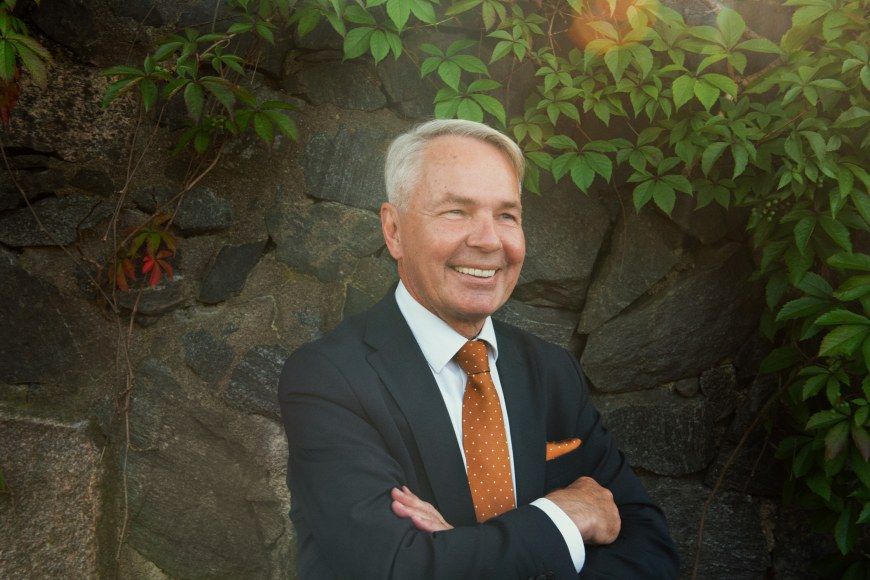
Haavisto succeeds Ramtane Lamamra, whose tenure was defined by attempts to keep dialogue channels open amid intensifying conflict. The transition suggests a recalibration rather than a reset. The structure remains the same. The urgency does not.
Sudan’s crisis is not a single rupture. It is layered, historical, and deeply regional. Armed confrontation, competing political authorities, and humanitarian breakdown have created a negotiation environment where credibility matters as much as leverage.
Haavisto is entering this landscape with prior exposure. From 2005 to 2007 he served as the European Union’s Special Representative for Sudan, participating in the Darfur peace negotiations. That period coincided with intense diplomatic efforts around Darfur, when the region’s conflict dominated global headlines and demanded sustained shuttle diplomacy.
The Darfur file is not just a line on a resume. It is an institutional memory test.
Haavisto also worked as a United Nations Senior Adviser to the Darfur peace process during that period. Few envoys can claim to have sat on both EU and UN sides of the same conflict architecture. That dual vantage point may matter now, as coordination between multilateral actors often determines whether mediation initiatives converge or compete.
Before returning to frontline diplomacy, Haavisto held Finland’s foreign policy portfolio. As Foreign Minister from 2019 to 2023, he navigated a period defined by geopolitical realignment in Europe and shifting security structures. Domestic leadership under pressure is different from crisis mediation abroad, but it sharpens political instinct.
His cabinet experience extends beyond foreign affairs to development cooperation, state ownership policy, and the environment. Earlier in his career, between 1999 and 2005, he worked with the United Nations Environment Programme in post conflict and conflict affected areas including Kosovo, Afghanistan, Iraq, Liberia, and Sudan. Environmental reconstruction in fragile states is often a precursor to broader political stabilization. It requires negotiation with armed actors, technocrats, and donors alike.
From 2016 to 2019 he led the European Institute of Peace, a body designed to support mediation efforts globally. Between 2009 and 2017 he served as Special Representative to the Finnish Foreign Minister for mediation and crisis management in Africa. This long arc suggests continuity rather than reinvention.
Haavisto has been a member of Finland’s parliament since 1987 and has stood as the Green Party’s presidential candidate three times. That domestic political grounding gives him a legitimacy that career diplomats sometimes lack. He understands electoral politics, coalition pressures, and public accountability.
At 67, he brings experience rather than experimentation. He also brings linguistic range, speaking Finnish, Swedish, and English, which matters in multilateral settings where nuance is easily lost.
The phrase UN appoints Pekka Haavisto as Sudan envoy carries weight because the role itself is tightly defined. As Personal Envoy, he represents the Secretary-General directly in political dialogue and peace initiatives concerning Sudan. He does not command troops. He does not impose sanctions. His influence rests on persuasion, trust, and the ability to align competing international actors behind a coherent process.
Sudan’s instability, including the protracted crisis in Darfur, has resisted quick fixes. Mediation in such environments demands patience and disciplined messaging. It also demands relationships built over years, not months.
Haavisto is not new to the Sudan file. That familiarity could accelerate engagement, but it also raises expectations. Past involvement can build credibility. It can also reopen old grievances if not handled carefully.
The appointment signals that the United Nations is leaning on institutional memory rather than novelty. In Sudan’s current reality, that may be the more pragmatic choice.