Finland Travel Budget Guide 2026 begins with a simple reality: this is one of Europe’s most expensive destinations, and yet it continues to draw visitors who are fully aware of that fact. The reason is not mystery or novelty. It is consistency. Infrastructure works. Public space is maintained. Nature is accessible without spectacle. The country does not discount itself to compete. If you travel here, you pay the true cost of a high trust society.

For 2026, the financial landscape is steady but not static. Inflation across the eurozone has cooled compared to its peak years, yet service costs remain structurally high. Wages in Finland are among the strongest in the Nordic region relative to population size, and that reality is embedded in everything from hotel pricing to coffee. A serious budget guide must therefore move past averages and address how money actually moves on the ground.
This is not a destination where careless spending goes unnoticed. It is also not a destination that punishes thoughtful planning.
The Structural Cost of Finland
Finland operates on a high tax, high service model. Value added tax sits at 24 percent for most goods and services, and that is reflected directly in retail and dining prices. Labor protections are strong. Public transport is subsidized yet priced realistically. Energy costs fluctuate seasonally, particularly in the north.
View this post on Instagram
In practical terms, Finland Travel Budget Guide 2026 means understanding that the baseline daily cost in cities like Helsinki is rarely below 120 to 150 euros per person without deliberate restraint. In Lapland during peak winter season, that figure can double.
The country is not uniformly expensive. It is predictably expensive.
Accommodation: Precision Matters
Accommodation will determine the shape of your budget more than any other category.
Helsinki
In Helsinki, standard mid range hotels in 2026 average 150 to 220 euros per night for a central location. Premium properties such as Hotel Kämp often exceed 300 euros, reflecting both heritage status and location near Esplanadi.
Budget options exist but require flexibility. Hostels such as Eurohostel typically range from 35 to 60 euros for dorm beds and 80 to 120 euros for private rooms depending on season.
Short term rentals are widely available and often provide better value for stays longer than three nights. Studios in central districts generally begin around 110 euros per night in shoulder season and rise above 160 euros during summer.
Lapland and Seasonal Volatility
In Rovaniemi and surrounding Lapland regions, pricing is tied to winter tourism. December through March represents peak demand due to northern lights travel and holiday tourism.
Glass igloo properties regularly exceed 400 euros per night. Traditional cabins average 180 to 300 euros. In ski areas such as Levi, holiday weeks can push accommodation to levels comparable with Alpine Europe.
Travel outside peak winter reduces rates by 30 to 50 percent. Autumn and late spring offer the strongest value.
Food and Dining Economics
Food pricing reflects domestic production costs and import logistics. Finland imports a substantial share of its fresh produce during winter months, and that cost is visible in grocery shelves.
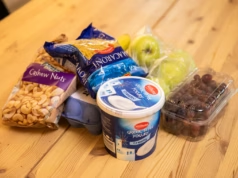
A supermarket lunch assembled independently costs 8 to 12 euros. A casual cafe meal ranges between 14 and 20 euros. Dinner in a mid range restaurant in Helsinki typically falls between 25 and 40 euros per person without alcohol.
Alcohol taxation remains significant. A pint of domestic beer in central Helsinki averages 8 to 10 euros. Wine is proportionally higher. Visitors who budget without accounting for alcohol pricing often underestimate daily spending.
Lunch buffets, common in Finnish cities, offer practical savings. Many restaurants provide fixed price weekday lunch menus between 12 and 15 euros, often including salad and coffee. This is one of the most reliable cost control strategies in Finland Travel Budget Guide 2026.
Transport: Efficient but Not Cheap
Public transportation in Helsinki is managed by Helsinki Regional Transport Authority. A single AB zone ticket costs approximately 3 euros. A 24 hour pass is around 9 euros. Weekly passes offer incremental savings but are most useful for commuters rather than short stay visitors.
Long distance rail operated by VR Group is comfortable and reliable. Helsinki to Rovaniemi one way tickets range from 40 euros when booked in advance to 100 euros or more for last minute sleeper cabins.
Domestic flights within Finland are often not cheaper than trains once baggage fees are included.
Taxis are regulated but expensive. App based services align closely with official pricing structures. A 10 kilometer ride in Helsinki can easily exceed 25 euros.
Nature Is Free. Access Is Not Always.
Finland’s everyman’s right allows public access to forests and lakes, which keeps certain experiences financially accessible. National parks do not charge entry fees. However, reaching them may involve car rental or long train connections.
Car rental in 2026 averages 60 to 90 euros per day in southern Finland and more in Lapland winter season. Fuel prices fluctuate but generally remain among the higher tiers in Europe.
Guided activities in Lapland such as husky safaris or snowmobile excursions typically range from 120 to 250 euros per person. These are discretionary costs but central to many itineraries.
Currency and Payment Culture
Finland operates entirely in euros and is nearly cashless. Card payments are accepted universally, including small cafes and rural transport. Currency exchange fees at airports are high. Withdrawals from local ATMs using major international cards are straightforward.
Hidden fees are rare. Service charges are included in restaurant pricing. Tipping is modest and not structurally expected.
When Finland Becomes Expensive
Seasonality defines the difference between a controlled budget and financial strain.
Summer in Helsinki from June through August sees hotel rates increase by 20 to 35 percent due to festivals and cruise tourism. December in Lapland can push total daily costs above 300 euros per person once activities are included.
By contrast, late October in southern Finland offers dramatically lower hotel rates and minimal crowd pressure. The experience shifts from spectacle to atmosphere. Costs respond accordingly.
Strategic Budgeting Without Compromise
Finland Travel Budget Guide 2026: Smart Allocation
The most effective budgeting approach in Finland is selective spending rather than blanket austerity.
Spend on accommodation location. Helsinki is compact, and central lodging reduces transport costs. Use weekday lunch pricing. Book long distance trains early. Travel to Lapland outside peak Christmas weeks if northern lights viewing is flexible.
Avoid attempting to compress the country into a short itinerary. Internal distances are significant. Over scheduling leads to transport spending that outweighs experience.
View this post on Instagram
Finland Travel Budget Guide 2026 ultimately rests on clarity. This is not a discount destination. It is a stable, efficient society that charges accordingly. Visitors who arrive expecting cheap Scandinavia often leave disappointed. Those who arrive prepared rarely feel misled.
The financial equation here is transparent. The country does not obscure its costs, and it does not subsidize illusion. Budget with precision, and Finland remains entirely manageable.