Why border officers deny travelers from the US and UK is rarely explained in official language. When a refusal happens, it usually comes without drama, without argument, and without much explanation. A passport is taken. A few keys are tapped. A decision is made. For many travelers, the shock comes not from being denied entry, but from how quietly it happens.
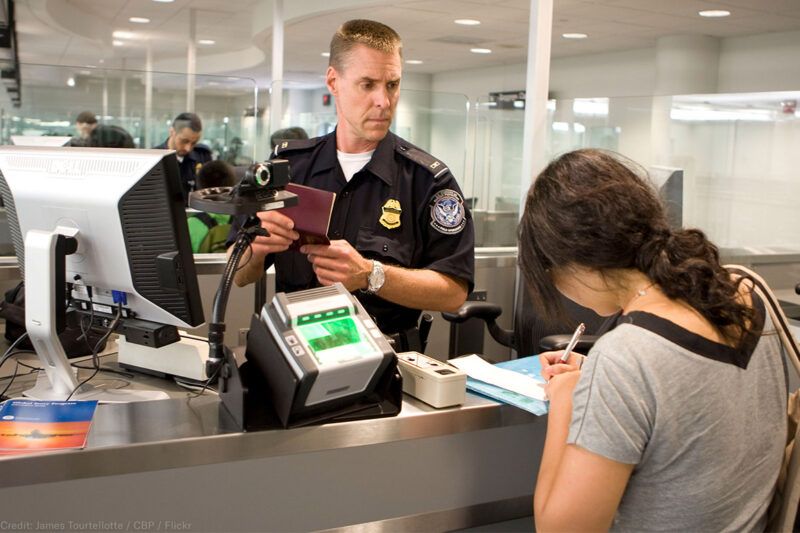
American and British passports are often treated as symbols of global mobility. They open doors easily and usually without paperwork. That ease can create a false sense of certainty. At borders, certainty does not exist. Every arrival is treated as a new case, and past privilege does not carry legal weight.
What most travelers never see is that border control does not operate on reputation. It operates on probability. Officers are trained to ask a simple question that rarely gets spoken aloud. Will this person leave when they say they will.
The answer is not guessed. It is inferred.
Border interviews are not conversations. They are short assessments built from fragments. A job title that does not quite make sense. A return ticket booked too loosely. A long pause before answering a basic question. These details are small on their own, but together they form a pattern.
Travelers from the US and UK often underestimate how much discretion exists at the border. Visa free entry shifts power to the officer standing in front of you. There is no document to appeal to. No pre-approval to point at. Admission depends entirely on credibility in that moment.
One of the most common issues is purpose. Many refusals start with a traveler trying to sound relaxed. Saying things like they are just seeing how things go, or that they may stay longer if they enjoy it. In everyday conversation, this sounds harmless. In immigration terms, it signals uncertainty. Tourism requires limits. Flexibility suggests risk.
Another issue appears with work, especially remote work. Travelers from the US and UK often assume that working online does not count. Border officers do not see it that way. If income is being generated while physically present in another country, that activity can fall outside tourist permission. When officers hear phrases like freelance, consulting, content creation, or client calls, the interview usually stops being routine.
Financial questions play a larger role than many expect. Officers are not impressed by credit cards or vague assurances. They want to know how daily life will be paid for without breaking local laws. Inconsistent answers here often lead to deeper questioning, especially for longer stays.
Digital presence has also changed the landscape. Public social media posts about moving abroad, working while traveling, or staying indefinitely are easy to find. Officers do not need passwords. They look for contradictions. When what a traveler says does not match what is publicly visible, trust disappears quickly.
Past travel history matters more than people realize. Overstays that felt minor years ago still appear on screens. So do previous refusals. Border systems are built to detect behavior patterns, not isolated events. A history of pushing limits makes officers cautious, even when everything else appears normal.
There is also the human element, which rarely gets discussed. Border officers are trained to notice stress responses. Overexplaining is common among nervous travelers. So is joking at the wrong moment. These reactions do not cause denial on their own, but they often push an officer to look harder.
When denial happens, it is usually framed as administrative. The traveler is told they do not meet entry conditions. The explanation is brief. The consequences are not. Notes are added to travel records. Future entries become less predictable. Countries that once allowed visa free access may now require applications.
The hardest part for many US and UK travelers is accepting that denial is not a judgment of character. It is a legal risk decision. Border officers are not there to reward honesty or experience. They are there to prevent problems before they happen.
The reality is uncomfortable but simple. A strong passport opens the door to the interview. It does not decide the outcome.
At borders, stories matter less than consistency. Officers are not asking who you are. They are asking whether what you say makes sense within immigration law. When it does not, denial becomes the safest option.