How to avoid jet lag like a pro is a question almost every international traveler has faced at some point. You plan your dream trip, book the perfect flights, and imagine the excitement of landing in a new city, but instead of enjoying the adventure, your body feels heavy, your mind is foggy, and sleep comes at the wrong time.
Jet lag is not only inconvenient, it can cut into valuable travel time and make business meetings, family visits, or sightseeing far less enjoyable. The good news is that with the right preparation, strategies during the flight, and careful routines after landing, you can reduce or even avoid jet lag symptoms and function at your best.
What exactly is jet lag and why it happens
Jet lag is the result of your body’s internal clock being out of sync with the local time at your destination. This clock, known as the circadian rhythm, regulates sleep, hunger, body temperature, and energy levels. When you cross several time zones, your circadian rhythm does not immediately adjust to the new environment. The sun may be rising outside, but your body still feels it is midnight. This mismatch leads to fatigue, insomnia, lack of focus, irritability, and sometimes digestive discomfort.
Scientists explain that it usually takes about one day per time zone crossed to fully recover if you do nothing. For example, if you fly from London to Los Angeles, crossing eight time zones, your body could need a week to fully adapt. The goal of learning how to avoid jet lag like a pro is to shorten this adjustment period and keep your energy levels stable.
Preparing before you fly
The battle against jet lag begins days before your flight. Small shifts in your daily routine can make a big difference. If you are flying east, where the day will start earlier than at home, begin going to bed earlier and waking up earlier two to three days before departure. If you are flying west, stay awake later at night and sleep in later in the morning. Adjust in increments of 30 to 60 minutes each day.
Equally important is your physical condition before boarding. A body that is rested and hydrated will adapt faster. Try to avoid alcohol and heavy meals the night before travel. Instead, eat balanced food rich in lean protein and vegetables, and drink enough water. Exercise lightly, such as walking or stretching, to keep circulation healthy. These steps may seem small, but seasoned travelers who know how to avoid jet lag like a pro swear by them.
During the flight: habits that matter
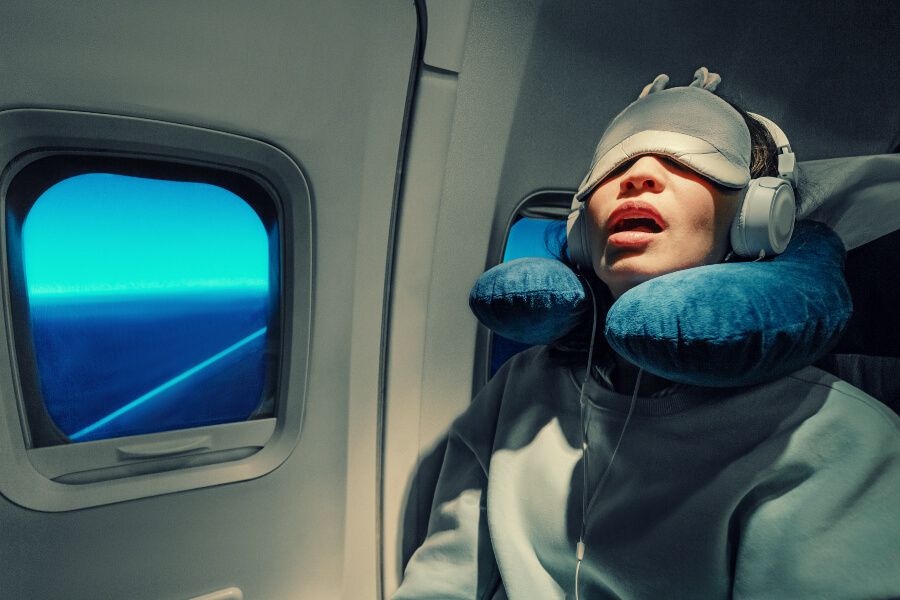
Long flights can be exhausting even without jet lag, but your choices onboard play a huge role in how you feel when you land. The golden rule is to match your activities on the plane with the time at your destination. If it will be nighttime when you arrive, use the flight to sleep. Pack an eye mask, noise-canceling headphones, or even a neck pillow to make rest easier. If you know you will arrive in the morning, keep yourself awake. Watch movies, read, or walk in the aisle to stay active.
Hydration is the second major rule. Air inside planes is extremely dry, and dehydration makes jet lag symptoms worse. Drink water regularly throughout the flight. Limit coffee and alcohol, since both act as dehydrators and interfere with sleep cycles. Some travelers prefer to set a watch or phone clock to the destination time as soon as they board. This psychological trick can help the brain begin adjusting even before landing.
On arrival: adapting fast to local time
The most important step when you arrive is to act according to the local time immediately. If you land in the morning, do not crawl into bed for a long sleep, no matter how tempting. Take a short nap of 20 to 30 minutes if needed, but then get outside. Sunlight is the strongest natural tool to reset your body clock. Exposure to daylight tells your body it is time to be awake, while darkness signals sleep.
Light exercise also helps. A walk around the city, stretching, or even a gentle workout in the hotel gym will keep your circulation flowing and reduce stiffness from the flight. If you arrive at night, create the right sleep environment as soon as possible. Use blackout curtains, earplugs, or white noise apps to block out distractions. Avoid using your phone or laptop before bed, since screens interfere with melatonin production, the hormone that helps you sleep.
How to avoid jet lag like a pro with strong sleep hygiene
Sleep hygiene refers to the habits that create healthy, restorative sleep. For travelers, this becomes even more important. Keep your room cool, dark, and quiet. Establish a calming routine before bed, such as reading a book or listening to soft music. If you wake up in the middle of the night, do not stress. Get out of bed, do something quiet like stretching or journaling, and then try to fall asleep again.
Some experienced travelers use melatonin supplements to signal nighttime to the body, but it is important to use them carefully and consult a doctor first. Unlike sleeping pills, melatonin works with your body’s rhythm instead of forcing it. This makes it a safer option for many people.
Nutrition and hydration: the fuel your body needs
Your diet after arrival can either speed up or slow down recovery. Heavy, greasy meals make you sluggish, while balanced meals with protein, fiber, and vegetables give steady energy. Breakfast at the right time helps train your body to match the local day. For example, eating a morning meal in Paris right after an overnight flight from New York tells your body that the day has started.
Hydration cannot be overstated. Water, herbal tea, and fresh juices are your allies. Avoid too much caffeine beyond the first part of the day, because it can delay sleep at night. Alcohol should be limited, since it might make you drowsy at first but reduces deep sleep quality.
The mindset of experienced travelers
Travelers who understand how to avoid jet lag like a pro also understand that patience is part of the process. Even with perfect planning, your body may still take a day or two to fully align with the new time zone. The key is to be gentle with yourself. Avoid stacking your first day with back-to-back commitments. Instead, give space for rest, adjustment, and slow exploration.
Business travelers often schedule important meetings on the second day, not the first. Vacationers may choose lighter activities, such as city walks or casual sightseeing, before diving into full-day tours. This flexibility not only prevents frustration but also helps your body adapt naturally.
Research continues to study how the human body responds to time zone changes, but the core principles remain the same. Shift your sleep before departure, hydrate during the flight, adapt quickly to local time, protect your sleep environment, and maintain healthy food and activity routines. With these strategies, you can transform long-haul travel from an exhausting challenge into a smoother transition. Knowing how to avoid jet lag like a pro does not just save your energy, it ensures you arrive ready to enjoy every moment of your journey.