
Jensen Huang’s return as chief executive of Nvidia triggered a historic stock market rally, adding approximately $950 billion (€871 billion) to the chipmaker’s market value in a single trading day and increasing the billionaire’s personal fortune by around $34 billion (€31 billion).
Nvidia’s shares closed 31.5% higher on Monday, marking the largest one-day increase in market value recorded by any company. The surge also benefited investors, company employees and stock markets across the United States and Asia, while European markets recorded more modest gains.
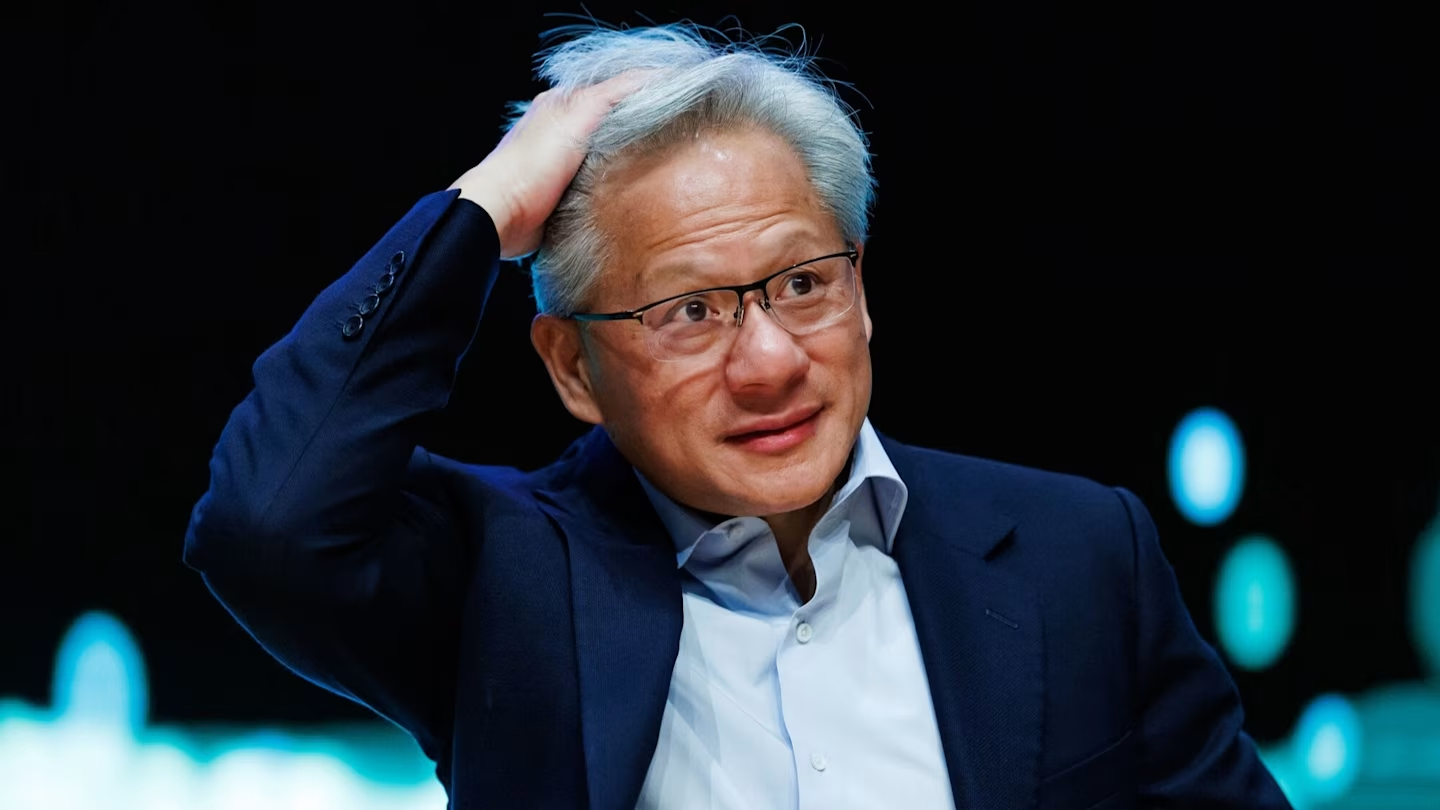
The dramatic rally followed Nvidia’s decision to reinstate Huang as chief executive, just 11 days after his departure. His return prompted renewed investor confidence in the company, which has become one of the most influential players in the global artificial intelligence industry.
According to Forbes’ real-time billionaires list, Huang’s fortune increased by approximately $34 billion during the trading session. The gain reflected the sharp rise in Nvidia shares, which remain a major part of his personal wealth.
US President Donald Trump also claimed a role in bringing Huang back to the company. Speaking to CNBC on Monday, Trump said he had persuaded Nvidia’s board to reinstate the executive, declaring, “I made the deal.”
Nvidia confirmed that its board had received “input from senior levels of the United States government” before making its decision.
Trump’s financial disclosures suggest that his investment accounts could have held between 32,000 and 370,000 Nvidia shares as of September 30. An analysis by the Financial Times estimated that, if those holdings remained unchanged, their value would have increased by between $1.3 million (€1.2 million) and $15 million (€14 million) following Monday’s rally.
The figures remain estimates because the disclosures provide investment values within broad ranges rather than exact shareholdings. They also do not cover any transactions made during October and November. The White House has said Trump’s investment portfolio is managed independently by third-party financial institutions.
Nvidia employees were among those celebrating Huang’s return. Footage shared online showed staff welcoming him back to the company’s headquarters in Santa Clara, California, with applause, cheers and chants of his name.
“Thank you all for the second chance,” Huang told employees.
The reaction reflects the financial impact Nvidia’s rapid growth has had on its workforce. A 2024 poll conducted on Blind, an anonymous online forum for verified technology employees, found that 76% of participating Nvidia workers considered themselves millionaires. More than 40% said their net worth was at least $10 million (€9.2 million).
Employee compensation has played a significant role in that wealth creation. Nvidia reported spending $6.4 billion (€5.9 billion) on share-based compensation during the financial year ending in January. Employees can also purchase a limited amount of company stock at a discount of at least 15%.
The company’s annual report recorded a staff turnover rate of just 3.7% among approximately 42,000 employees during the same financial year. Although individual employee investments are not publicly available, many workers are likely to have benefited from holding Nvidia shares as the company’s valuation climbed.
Huang’s leadership and the financial rewards associated with Nvidia stock have helped build strong loyalty among employees. Reports also indicated that more than 10,000 people claiming to work for the company signed a petition calling for his return.
The impact of the announcement extended well beyond Nvidia. Investors across major stock markets responded positively, pushing technology shares higher and adding trillions of dollars to global market valuations.
In the United States, the technology-heavy Nasdaq Composite closed 6.5% higher on Monday, while the S&P 500 gained 4.7%. Both indices recorded their strongest trading sessions since April 2025. The S&P 500 alone recovered approximately $3 trillion (€2.7 trillion) in market value.
The positive sentiment continued across Asia on Tuesday. Taiwan’s Taiex rose 9%, while South Korea’s Kospi gained 6.3%, moving back above the 5,000-point level. Japan’s Nikkei 225, which had been closed on Monday for a public holiday, advanced 3.9%.
European markets also benefited, although the gains were considerably smaller. The pan-European Stoxx 600 increased by 1.8% on Monday, Germany’s DAX gained 2.2%, and the UK’s FTSE 100 rose by approximately 1.3%.
ALSO READ: Trump and Silicon Valley Pressure Nvidia to Reinstate Jensen Huang as CEO
Shares in European semiconductor companies, including ASML, climbed following the announcement. However, the main European indices were slightly lower on Tuesday morning, suggesting that the rally had not produced the same sustained momentum seen in the United States and parts of Asia.
The difference reflects the structure of Europe’s stock markets. Technology companies represent just 9.5% of the Stoxx 600, according to index provider Stoxx. Banks account for a larger share at 16.2%, making European indices less exposed to major movements in technology stocks.
Despite the market reaction, Huang’s return comes with further scrutiny of his role and the company’s position in the technology industry. He is scheduled to appear before three US House committees behind closed doors on December 1. Two days later, on December 3, he is expected to attend a public hearing before the Senate Banking Committee, a date confirmed by its chair, Senator Tim Scott.
The market’s response to Huang’s reinstatement demonstrates how closely investor confidence is tied to Nvidia and its leadership. While the company has become a central force in the AI industry, Monday’s rally also showed how a major corporate decision can influence personal fortunes, employee wealth and financial markets across several continents.


