
Austin, Texas, has built its reputation around more than its status as the state capital. The city has become one of America’s most recognisable destinations for live music, independent food businesses and creative expression, with a cultural identity that visitors can experience in its neighbourhoods, music venues, street markets and outdoor gathering spaces.
Known as the “Live Music Capital of the World”, Austin offers a music scene that extends well beyond major concerts and annual festivals. Musicians perform in intimate clubs, bars, restaurants and outdoor spaces, giving the city a soundtrack that is part of everyday life. For visitors, discovering Austin often means moving between a food truck serving freshly prepared tacos, a neighbourhood filled with colourful murals and a small music venue where local performers share the stage with touring artists.
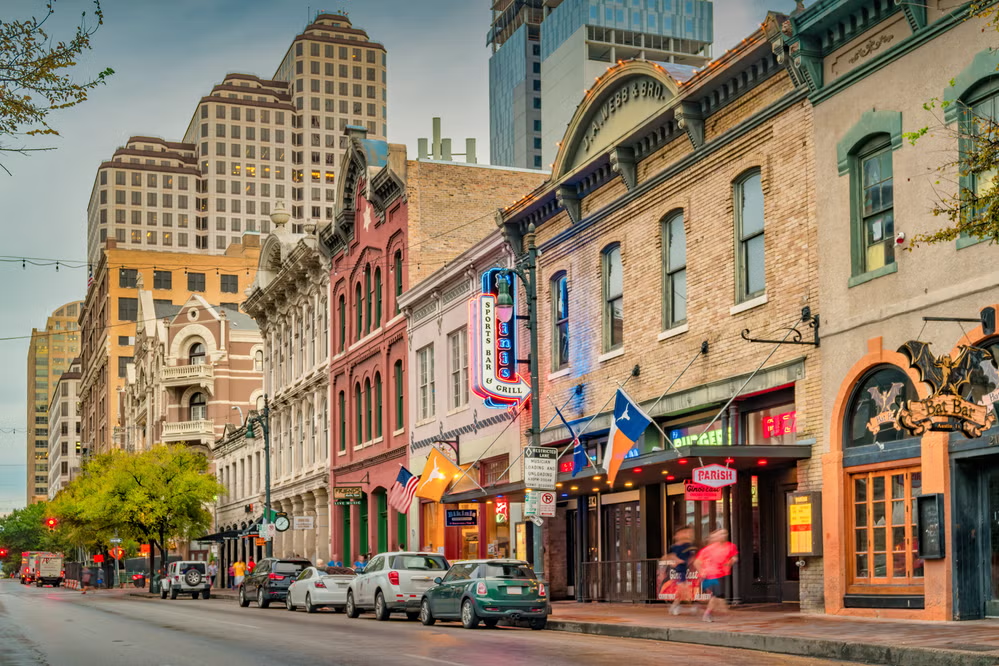
The city’s appeal comes partly from the way these experiences overlap. Food, music and visual art are not confined to separate attractions. They contribute to the character of Austin’s streets and neighbourhoods, creating an atmosphere that is distinctly different from the more conventional image of a large American city.
Austin’s reputation for live music has developed over several decades. Today, the city has hundreds of venues catering to different musical tastes, including blues, country, rock, jazz, hip-hop, soul and independent music. Performances take place throughout the week, making it possible to discover local artists without necessarily planning a visit around a major festival.
The range of venues is one of the reasons Austin’s music culture remains attractive to visitors. Historic establishments such as Antone’s Nightclub have played an important role in the city’s blues history. Founded in 1975, the club became associated with musicians including Stevie Ray Vaughan and Gary Clark Jr. Its history also reflects the contribution of Black musicians to the development of Austin’s musical identity.
Elsewhere, The Continental Club on South Congress is known for its roots music, rockabilly and country performances. The Broken Spoke offers another side of the city’s musical character, with country music and traditional Texas dancing. Visitors looking for alternative rock, indie performances and touring acts can explore venues around the Red River Cultural District, while jazz fans have establishments such as the Elephant Room to consider.

Austin’s music culture is not limited to established performers or well-known clubs. Smaller venues provide opportunities to discover emerging musicians, and some of the city’s most memorable performances happen in relatively modest settings. This gives visitors a chance to experience music as part of the local social scene rather than simply as a scheduled attraction. Checking individual venue calendars before going is advisable because performers, admission prices and age restrictions vary.
The city’s major music festivals bring international attention to this established local scene. South by Southwest, widely known as SXSW, connects music with film, technology and other creative industries, attracting artists, industry professionals and audiences from different countries. Austin City Limits Music Festival is another major event, bringing large crowds to Zilker Park for performances across multiple genres. These festivals offer a different experience from the smaller clubs, but both contribute to Austin’s international cultural profile.
Food is another important part of the city’s identity, and Austin’s food truck culture has become one of its most recognisable features. What began as a modest street-food movement has developed into a substantial part of the local dining economy. Visit Austin traces the trend back to the early 1990s and estimates that the city has around 2,000 mobile food vendors. Their presence has helped make casual outdoor dining a familiar part of life across Austin.
Food trucks and trailers serve a wide variety of cuisines, from traditional Tex-Mex and barbecue to Italian dishes, seafood, vegan meals and international street food. The variety reflects a city whose food culture has been shaped by different communities and independent entrepreneurs. Rather than concentrating dining experiences in conventional restaurants, Austin gives visitors opportunities to discover small food businesses operating from converted trailers, roadside locations and dedicated food parks.
Some of these food parks have become destinations in their own right. The Picnic near Zilker Park brings several food trailers together, allowing customers to choose from different menus while sharing an outdoor dining space. Arbor Food Park on East 12th Street offers another example, with multiple vendors serving customers around communal seating areas. South Austin also has food truck gathering places where visitors can sample different dishes without travelling between individual restaurants.

The appeal is not simply the convenience of having several food choices in one location. Food trucks provide a platform for independent operators to introduce dishes, experiment with menus and build relationships with local customers. For travellers, they offer an accessible way to explore Austin’s dining culture, although prices vary considerably depending on the vendor and type of food.
Texas barbecue remains an important part of the wider food experience. Smoked meats, tacos and other regional specialities are closely associated with the state’s culinary identity, while Austin’s dining scene also embraces international influences. Visitors can move from a traditional Texas meal to Mexican-inspired street food or a plant-based menu within the same neighbourhood. This mixture has helped the city develop a food culture that is both recognisably Texan and increasingly diverse.
ALSO READ: How to Save Money on Hotels and Attractions in Major US Cities Without Missing Out
Austin’s creative identity is equally visible outside its restaurants and music venues. Murals, public art, independent galleries and cultural institutions contribute to the appearance of the city, particularly in neighbourhoods where local artists and small businesses have established a presence.
The Red River Cultural District is closely associated with live music and independent entertainment, while the African American Cultural Heritage District recognises the historical and cultural contributions of Austin’s Black community. The 5th Street Mexican American Heritage Corridor provides another important cultural setting, celebrating Latino heritage through historic landmarks, public art and local businesses. These areas offer visitors a broader understanding of the communities and histories that have helped shape the city.

Art is also visible in everyday public spaces. Murals across different neighbourhoods give buildings and street corners their own visual character, while galleries and community arts initiatives provide opportunities to encounter work by local artists. Austin City Hall’s People’s Gallery, for example, has hosted exhibitions featuring work by Austin artists and arts organisations since 2005. The programme demonstrates how public institutions can provide space for creative work beyond traditional gallery settings.
South Congress Avenue, commonly known as SoCo, offers a different expression of Austin’s independent culture. The area combines restaurants, shops, live entertainment and distinctive local businesses. Visitors can spend time browsing independent stores, exploring the neighbourhood’s architecture and stopping for food before continuing towards downtown. Its appeal lies in the combination of commercial activity and local character rather than in a single landmark.
East Austin also deserves attention. Its cultural identity reflects a mixture of historic communities, independent businesses, restaurants, artists and music venues. Exploring the area provides a different perspective from the more heavily visited entertainment districts downtown. However, the neighbourhood’s development and changing commercial landscape also make it important to look beyond the most visible attractions and recognise the communities whose histories have shaped it.
Austin’s outdoor spaces provide another dimension to a city often associated with nightlife. Lady Bird Lake sits close to downtown, offering opportunities for kayaking, paddleboarding, cycling and walking along the Ann and Roy Butler Hike-and-Bike Trail. The setting provides a welcome contrast to busy streets and entertainment districts, particularly for visitors spending several days in the city.
The city’s location also makes it possible to combine urban activities with time outdoors. Parks, trails and recreational areas are part of the local lifestyle, and visitors do not have to travel far from the central entertainment districts to find green spaces. During warmer months, outdoor dining and evening performances add to the social atmosphere, although the Texas heat can make planning activities around the time of day important.
For first-time visitors, the best way to experience Austin is to avoid treating it as a collection of isolated attractions. Spending time in different neighbourhoods reveals how the city’s food, music and creative communities connect. A day might begin with breakfast from a local food trailer, continue with an afternoon exploring murals and independent shops, and end with a live performance in a small music club. Another evening might involve trying Texas barbecue before heading to a country dance hall or an outdoor concert.
The city also rewards visitors who look beyond its biggest festivals. Major events such as SXSW and Austin City Limits attract international audiences, but the smaller venues, independent food businesses and community arts spaces help sustain the local culture throughout the year. Checking performance schedules, food truck locations and event listings before travelling can help visitors make better use of their time, particularly because individual businesses and venues may change their opening hours or programmes.
Austin is not defined by music alone, nor is its food scene simply an extension of Texas barbecue. Its character comes from the relationship between established traditions and independent creative activity. Blues and country music share space with contemporary genres, while traditional regional dishes sit alongside international street food. Public art and cultural districts provide another layer to a city that continues to attract people interested in music, food and creative expression.
For travellers seeking a destination with more to offer than conventional sightseeing, Austin provides an opportunity to experience a different side of American urban culture. Its strongest attractions are often found in the ordinary rhythm of the city: a busy food truck park, a neighbourhood music venue, an independent shop or a mural encountered while walking between streets. Together, these experiences explain why Austin has become a destination where culture is not simply something to visit, but something woven into everyday life.


