
Norway in a Nutshell is one of the country’s most memorable ways to experience its mountains, waterfalls, historic railway lines and deep fjords without having to organise a complicated road trip. The journey connects some of western Norway’s most impressive landscapes through a combination of train travel, a scenic mountain railway, a fjord cruise and a bus transfer, making it possible to experience several different sides of the Norwegian countryside in a single trip.
Despite its name, Norway in a Nutshell is not a single train journey or a traditional sightseeing tour. It is a carefully connected travel route that brings together existing public transport services, with the opportunity to travel between Oslo, Bergen and the small villages and fjord communities in between. Travellers can complete the experience in one long day or spread it over several days, depending on how much time they want to spend exploring along the way.

The classic route is particularly appealing because it combines the Bergen Railway, the Flåm Railway, a cruise through the Nærøyfjord and a bus journey between Gudvangen and Voss. Each leg offers a different perspective on Norway, from high mountain plateaus and steep valleys to narrow waterways surrounded by towering cliffs. It is an experience that makes the journey itself as important as the destination.
The trip can begin in either Oslo or Bergen, although the direction chosen will depend on travel plans and available connections. Travelling from Oslo introduces visitors to the dramatic landscapes of the Bergen Railway before the route descends towards the fjords. Starting in Bergen offers the opportunity to experience the same scenery in the opposite direction, with the flexibility to continue towards Oslo or return to the city.
The first major stretch follows the Bergen Railway, also known as Bergensbanen, which connects Oslo and Bergen across the mountains of southern Norway. It is one of the country’s best-known railway routes, passing through forests, valleys, mountain settlements and the vast Hardangervidda plateau. The journey offers a striking change in scenery as the train leaves the more populated areas behind and enters the open mountain landscape. The full direct journey between Oslo and Bergen takes approximately six and a half to seven hours, although the Norway in a Nutshell itinerary involves leaving the main railway line at Myrdal to continue towards Flåm.
Myrdal is a small mountain railway station that serves as the interchange between the Bergen Railway and the Flåm Railway. At approximately 867 metres above sea level, it sits high above the fjord village of Flåm, which is only a few metres above sea level. The change between the two trains marks the beginning of one of the most distinctive parts of the journey.

The Flåm Railway, known locally as Flåmsbana, covers approximately 20 kilometres between Myrdal and Flåm. It is among the steepest standard-gauge railway lines in the world, descending through a dramatic mountain landscape with an elevation difference of more than 860 metres. The journey takes around one hour, during which passengers pass waterfalls, mountain farms, rocky slopes and narrow valleys.
One of the best-known sights along this stretch is Kjosfossen, a powerful waterfall that drops through the mountainside. Trains make a short stop here, giving passengers an opportunity to step out and view the waterfall, weather permitting. The railway also passes through numerous tunnels, some of which were carved by hand during construction. The engineering required to build a railway through such difficult terrain is part of what makes the experience interesting beyond its scenery.
The train eventually reaches Flåm, a small village at the innermost part of the Aurlandsfjord. Although it has a relatively small population, Flåm has become an important base for visitors exploring the surrounding fjords. Its location, surrounded by steep mountains and water, makes it one of the most recognisable stops on the route.
Travellers who have enough time should consider staying in Flåm rather than treating it only as a transfer point. The village offers opportunities to explore the waterfront, enjoy local food, visit the railway museum and take in views of the surrounding mountains. There are also accommodation options for visitors who want to spend a night beside the fjord. An overnight stay can make a considerable difference to the experience, particularly during busy travel periods when day visitors arrive and depart throughout the day.
From Flåm, the journey continues by boat through the Aurlandsfjord and Nærøyfjord. This is arguably the most dramatic part of the route for travellers who want to experience Norway’s fjord landscape from the water. The cruise connects Flåm with Gudvangen, passing steep mountain walls, waterfalls and small settlements that appear along the shoreline.
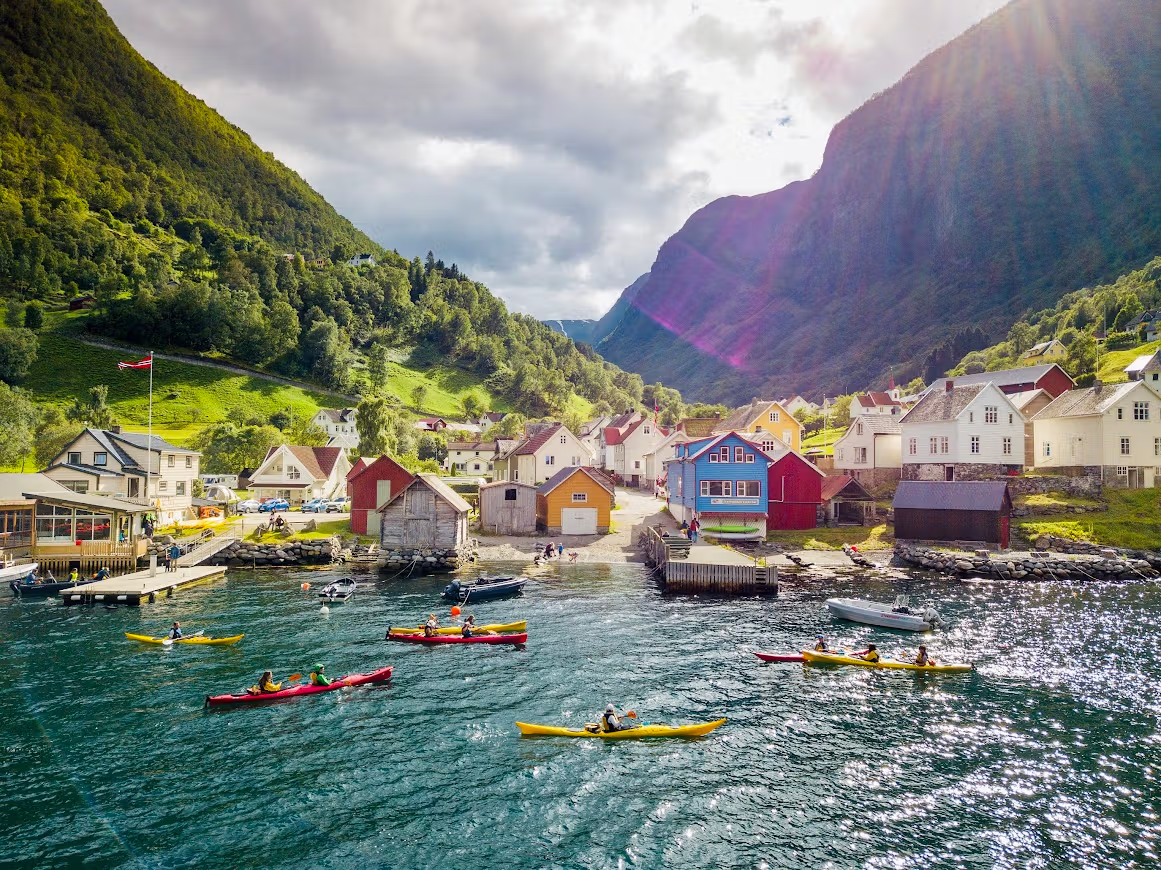
The Nærøyfjord is part of the West Norwegian Fjords UNESCO World Heritage property, recognised for its exceptional natural landscape. It is a particularly narrow branch of the Sognefjord system, with mountains rising sharply on either side of the water. The scale of the surrounding landscape becomes easier to appreciate from a boat, where the steep cliffs and relatively narrow waterway create a very different experience from viewing the fjords from a road or railway carriage.
The cruise between Flåm and Gudvangen takes approximately two hours in one direction. Depending on the service and season, visitors may travel on modern vessels, including electric and hybrid boats. These vessels provide opportunities to view the scenery from indoor seating areas or outdoor decks. The weather can change quickly in western Norway, so having suitable clothing is important even when travelling during the warmer months.
Gudvangen marks the end of the fjord cruise and the beginning of the next overland stage. The village sits at the head of the Nærøyfjord and is surrounded by high mountains and waterfalls. It is also known for its Viking heritage experiences, which offer visitors an opportunity to learn about aspects of Norse history and traditional life. Travellers with additional time can explore these attractions before continuing towards Voss.
The next leg is usually completed by bus through the Nærøydalen valley, connecting Gudvangen with Voss. The road journey provides another perspective on the landscape, passing steep mountain slopes, rivers, waterfalls and settlements. It is a relatively short but visually rewarding section that links the fjord communities with the main railway network.
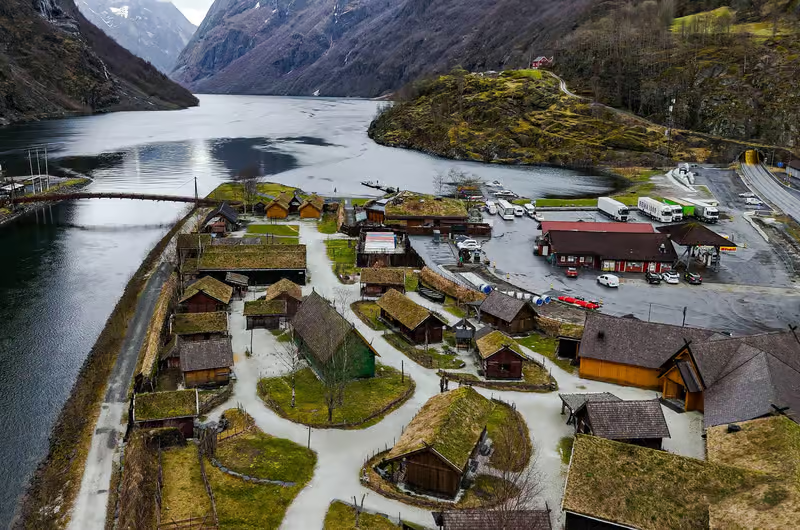
Voss is an important transport and outdoor activity centre in western Norway. Known for its mountains, lakes and opportunities for adventure sports, it is also a useful place to stop for visitors who want to extend their trip. Depending on the itinerary, passengers can continue by train from Voss to Bergen or connect with services towards Oslo. The final railway stretch brings the journey back into the wider transport network, allowing travellers to continue exploring Norway without needing to hire a car.
Although the traditional route is often associated with travelling between Oslo and Bergen, there is no requirement to complete the entire journey in one direction. Travellers based in Bergen can take the train towards Voss, continue by bus to Gudvangen, cruise to Flåm and return to the main railway line through Myrdal. The route can also be arranged in the opposite direction. The exact sequence and transfer points depend on the departure city and the itinerary selected.
One of the biggest advantages of Norway in a Nutshell is that it can be completed without driving. The route brings together established railway, bus and boat services, making it accessible to independent travellers who would rather use public transport than navigate unfamiliar mountain roads. The experience is also self-guided in its standard form. Travellers follow their itinerary and make their own connections rather than travelling with a guide throughout the journey.
The name Norway in a Nutshell is associated with a packaged tour sold by Fjord Tours. However, the transport services themselves operate independently, meaning that experienced travellers can also organise the journey by purchasing individual tickets. The package approach can be convenient because the different stages are arranged into a connected itinerary, while booking independently may offer greater flexibility for people who want to change their route or spend additional nights in particular locations.
Planning is particularly important because the different transport services do not necessarily operate at identical frequencies. A missed connection can affect the rest of the journey, especially when travelling on a tight schedule. Before booking, travellers should check departure times for the Bergen Railway, Flåm Railway, fjord cruise and bus connections for their intended travel date. Entur, Norway’s national journey planner, provides information on public transport connections and ticket options, while the relevant railway and boat operators publish their own service information.
The time of year also influences what visitors experience. Summer is generally the most popular period for the route, with longer daylight hours and more opportunities to enjoy outdoor activities around Flåm and Gudvangen. It is also a busy time for the railway and fjord cruise, making advance reservations sensible, particularly for travellers with fixed departure dates.
Spring and autumn can offer a different atmosphere, with changing colours, quieter periods and varying mountain conditions. Winter brings snow-covered scenery and a more dramatic contrast between the mountains and the fjords. However, shorter daylight hours, weather conditions and seasonal transport timetables require more careful planning. The fjord cruise operates throughout the year, but its schedule changes between seasons, and adverse winter weather can affect the service.
The length of the trip is another decision worth considering. While some itineraries are designed to fit into a single day, this can make for a demanding schedule, particularly when travelling between Oslo and Bergen. An overnight stay in Flåm or another stop along the route allows visitors to spend more time enjoying the surroundings instead of concentrating on the next departure. Those with several days available can also use Bergen, Voss or Oslo as a base for additional sightseeing.
ALSO READ: Ultimate 10-Day Nordic Itinerary: How to Explore Helsinki, Stockholm, Oslo and Copenhagen
Costs depend on the departure point, travel date, transport choices, accommodation and whether the journey is booked as a package or assembled independently. Visitors should compare the total cost of individual tickets with the packaged option rather than assuming one is always cheaper. Accommodation, meals and additional activities can increase the overall budget, particularly during the summer holiday season. Booking early can also help travellers secure their preferred departures.
Packing for the journey requires some thought. Even in summer, mountain areas can be considerably cooler than coastal towns, while rain and changing weather are common features of western Norway. Comfortable walking shoes, a waterproof jacket and layers of clothing are practical choices. A portable charger is useful for longer travel days, and travellers interested in photography should keep their cameras accessible rather than packed away in luggage.
It is also worth remembering that this is not simply a sightseeing experience designed around taking photographs. The route passes through communities where people live and work, and the railway and boats serve practical transport purposes as well as tourism. Respecting local surroundings, following transport instructions and avoiding disruption at viewpoints and stations help preserve the experience for other visitors.
For first-time visitors to Norway, the attraction of the journey lies in the variety of landscapes covered over a relatively short distance. The Bergen Railway introduces the country’s high mountain terrain, the Flåm Railway reveals the steep valleys leading towards the coast, and the fjord cruise brings passengers into the heart of a UNESCO-listed landscape. The bus connection through Nærøydalen completes the journey by road before the railway carries travellers onwards.
Norway in a Nutshell is not the only way to explore the country’s fjords, and travellers with more time may prefer a longer road trip or a stay in several smaller communities. However, its combination of established transport routes makes it one of the most practical ways to experience several of western Norway’s best-known natural attractions without a car. For visitors who want to see the mountains, waterfalls and fjords while experiencing some of the country’s most distinctive railway journeys, it offers a rewarding introduction to Norway.


