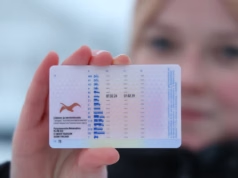
A Finnish police ID card, known as a henkilökortti, can make everyday life in Finland easier for residents who regularly need to prove their identity. While a passport remains an important travel document, an identity card issued by the Finnish police offers a more convenient alternative for carrying identification, handling everyday transactions and, depending on the type of card, accessing electronic services.
For foreign nationals living in Finland, the distinction is particularly important. Having a valid passport or residence permit card does not automatically mean that they have a Finnish identity card. The documents serve different purposes, and understanding those differences can help residents decide whether applying for a henkilökortti is worthwhile.

The Finnish police issue identity cards to Finnish citizens and eligible foreign nationals who meet the requirements. However, the two types are not identical. A Finnish citizen’s standard identity card can also function as a travel document in a number of countries, while an identity card issued to a foreign national is intended for proving identity within Finland and cannot be used for international travel.
This is one of the most important details for immigrants and other foreign residents to understand before applying. A foreigner’s identity card does not replace a passport, nor does it replace a residence permit card. Instead, it provides another officially issued document that can be useful when identifying oneself in Finland.
The Finnish police make a clear distinction between the two documents. A foreigner’s identity card contains a Citizen Certificate on its chip, which can be activated for electronic identification in compatible public services. This is a particularly useful feature for people who do not have access to Finnish online banking identification or another suitable identification method. The card can also be used with the Hightrust.id mobile application or a compatible computer card reader once activated.
The ability to identify yourself electronically is increasingly relevant in a country where many public services are handled online. Residents may need to log in to government services, retrieve personal information or complete administrative tasks without visiting an office. A passport can establish someone’s identity when presented physically, but it does not provide the same electronic identification function as the chip on a Finnish police identity card.
There are, however, conditions attached to obtaining the document. According to the Finnish Police, a foreign citizen must be permanently resident in Finland, have their personal information, including their municipality of residence, registered in the Finnish Population Information System, and hold a valid residence permit or residence card, or have their right of residence registered. The authorities must also be able to establish the applicant’s identity reliably.
ALSO READ: Registering at DVV Finland: The Documents Foreigners Should Bring to Their First Appointment
The card is issued for a maximum of five years. If the applicant’s residence permit or residence card expires sooner, the identity card cannot remain valid beyond that date. This means that the document’s validity is linked to the person’s immigration status, rather than automatically running for a full five years.
For someone who meets the requirements, applying is relatively straightforward. The application can be submitted through the Finnish Police’s online service or at a police station. Applicants generally need a passport photograph that has been electronically submitted to the police photograph server. The photographer provides a code that is entered when completing the online application.
Some applicants will also be required to visit a police station to verify their identity. The online application system informs applicants whether an in-person visit is necessary. Those who already have a valid passport or identity card should bring it when requested. Applicants who do not have either document may be asked to present a valid residence permit card or residence card, subject to the police’s identity verification procedures.
The police list the standard fee for a foreigner’s identity card as EUR 59 when applying at a service point and EUR 53 for an electronic application. Additional charges apply for expedited delivery. The online application is therefore the less expensive option, although applicants should check the current fee schedule before submitting their applications.
There is another important reason not to confuse a Finnish identity card with a residence permit card. A residence permit card demonstrates that a foreign national has permission to live in Finland. A henkilökortti is primarily an identity document. Although both contain personal information and photographs, they are issued for different legal purposes. Having one does not automatically remove the need for the other.
For international travel, the distinction becomes even more significant. A foreigner’s identity card issued by the Finnish Police is not an accepted travel document, even if the holder lives permanently in Finland. Travellers must continue to use a passport or another travel document accepted by their destination. The more extensive travel rights associated with a Finnish citizen’s identity card do not apply to the identity cards issued to foreign nationals.
Finnish citizens have a different arrangement. Their standard identity card can be used for travel to a number of European countries, including Sweden’s neighbouring EU destinations, Germany, France, Spain and Italy, subject to the destination country’s entry requirements. The card is not accepted everywhere a passport is required, and it cannot generally be used to enter the United Kingdom. The Finnish Police advises travellers to check the requirements of their destination before departure.
The Finnish identity card is also generally valid for five years, making it a practical document for people who want an alternative to carrying a passport for routine identification. Its smaller size makes it easier to keep in a wallet, while its electronic certificate offers a function that a conventional passport does not provide.
For foreign residents, however, the strongest argument for obtaining a henkilökortti is not that it replaces a passport. It is that it gives them a Finnish-issued identity document designed for everyday life in Finland, with access to electronic identification services that can make dealing with public administration more convenient.
Anyone considering applying should first check their eligibility and the type of identity card available to them through the Finnish Police. The distinction between a citizen’s identity card, a foreigner’s identity card and a temporary identity card matters, particularly because their travel rights and electronic functions are not the same.