
Lapland dupe is becoming an appealing idea for travellers who want the snowy forests, reindeer encounters and Arctic winter scenery associated with Finnish Lapland without spending a fortune on luxury glass igloos and expensive resort packages. The secret may not be travelling to another country, but looking beyond the best-known tourist centres and choosing smaller destinations where the winter experience can be enjoyed without paying premium accommodation prices.

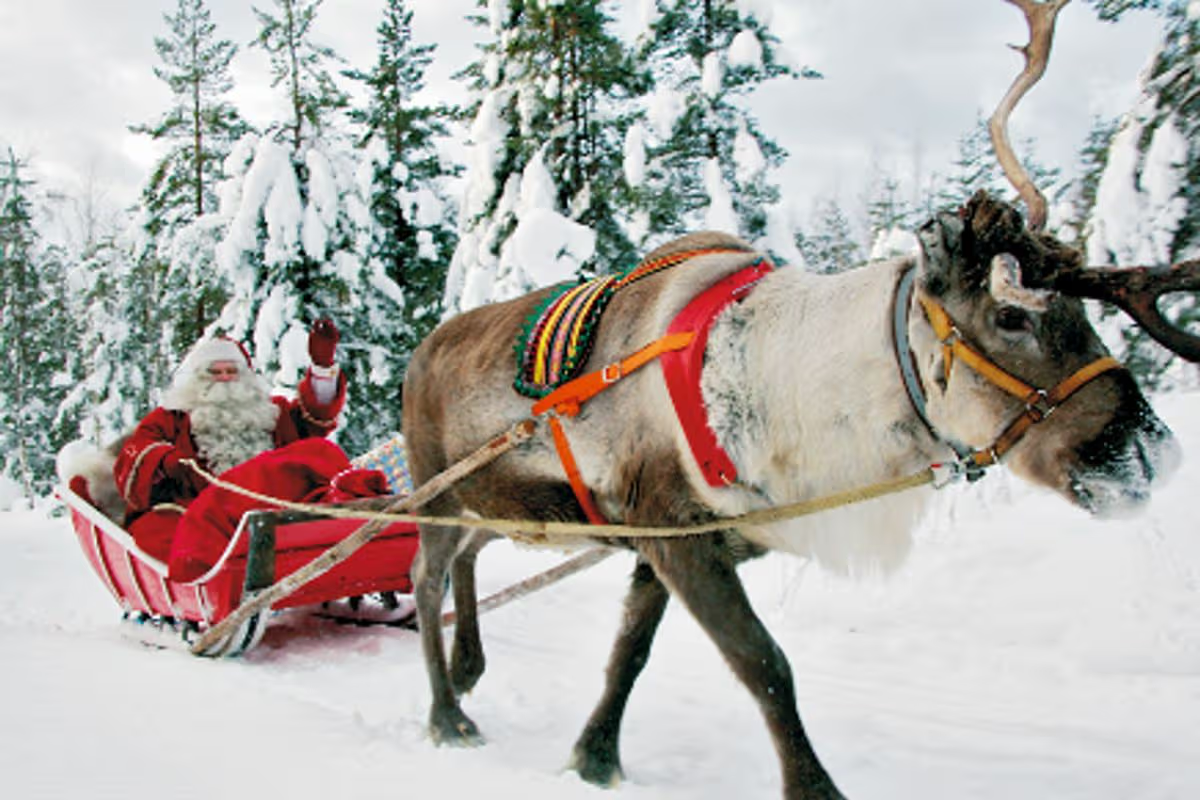
For many international visitors, a winter holiday in Lapland means staying in a glass-roofed cabin, watching the Northern Lights from bed, riding a reindeer sleigh and spending time in a landscape covered in snow. These experiences have helped make destinations such as Rovaniemi, Levi, Saariselka and Kakslauttanen popular winter holiday choices. However, accommodation and organised activities can quickly push the cost of a trip beyond the reach of ordinary travellers, particularly around Christmas and New Year.
ALSO READ: When Is the Best Time to See the Northern Lights in Finland?
Some luxury Arctic accommodation can approach or exceed $1,000 a night during peak periods. But visitors do not necessarily need to book an expensive igloo resort to experience the region’s winter landscapes. In many cases, choosing a less commercialised destination, staying in a conventional hotel or cabin, and booking selected activities separately can make a considerable difference to the overall cost.
There is also a geographical misunderstanding behind the idea of a Lapland alternative. Lapland is not a single resort or even a destination confined to Finland. It is a large northern region extending across parts of Finland, Sweden, Norway and Russia. Its landscapes, communities and tourism experiences vary considerably, meaning that travellers have several options when planning an Arctic winter holiday.
Inari is one of the strongest options for travellers who want a quieter experience without leaving Finnish Lapland. Located around 300 kilometres north of the Arctic Circle’s most familiar tourist gateway, Rovaniemi, the municipality offers snowy wilderness, frozen lakes, reindeer farms and opportunities to learn about Sámi culture. The village of Inari is also home to the Siida Museum, which explores the history, culture and contemporary life of the Sámi people, the Indigenous people of the region.
The advantage of choosing Inari is that a winter holiday does not have to revolve around an expensive glass-roofed cabin. Visitors can look at ordinary hotels, guesthouses and traditional cabins, then spend their money on experiences they actually want. Reindeer farm visits, husky safaris, cross-country skiing and Northern Lights excursions are among the activities available in the wider area. The municipality also provides access to Lake Inari, which becomes a striking winter landscape when frozen.
Further south, Sodankyla offers another option for travellers willing to exchange the busy resort atmosphere for a smaller Finnish town. Reindeer herding remains part of the area’s traditional livelihoods, while the surrounding region provides access to forests, fells and winter outdoor activities. Pyha-Luosto National Park, within reach of the municipality, is particularly appealing to visitors interested in snowy forests, skiing and walking routes rather than spending their entire holiday inside a resort.
Utsjoki, Finland’s northernmost municipality, is an option for those who want to travel further into the Arctic. The area is sparsely populated, with a strong connection to traditional Sámi livelihoods, including reindeer herding and fishing. Its landscape is more remote than that of Rovaniemi, and visitors should expect longer distances between accommodation, restaurants and services. This is not necessarily the easiest destination for a short first-time visit, but it offers a different perspective on northern Finland for travellers who prefer quieter surroundings.
Across the border, Swedish Lapland provides another alternative worth considering. Lulea, a coastal city in northern Sweden, offers access to reindeer experiences without requiring visitors to stay at a remote luxury resort. The local tourism organisation lists several operators offering encounters with reindeer, guided introductions to Sámi traditions and opportunities to learn about the region’s herding culture.
One option is Dálvvas in Karlsvik, approximately 10 kilometres from central Lulea, where visitors can join guided experiences led by a local Sámi guide. Brändon Lodge also offers guided walks with reindeer, accompanied by information about the animals’ seasonal cycle and a traditional meal around a campfire. For travellers who want a more direct encounter, some operators offer opportunities to feed reindeer and learn about their relationship with Sámi communities.
Jokkmokk and the wider Laponia region are also worth considering. Located in Swedish Lapland, Laponia is a UNESCO World Heritage Site recognised for its natural and cultural significance. It includes four national parks and vast areas of forests, mountains, wetlands and traditional Sámi landscapes. The Swedish tourism authority identifies Jokkmokk and Jukkasjarvi as useful accommodation bases for exploring the wider area.
Near Jukkasjarvi, Nutti Sami Siida offers visitors opportunities to meet reindeer, learn about Sámi culture and participate in reindeer sledding during winter. The attraction also has cabin accommodation. Travellers should understand, however, that Laponia is not a conventional resort destination. Getting around requires planning, and some areas have limited accommodation and facilities.
Northern Norway offers another possibility, although it should not automatically be considered a cheaper alternative. Tromso is well known for its Arctic winter experiences, and visitors can arrange excursions that combine reindeer encounters with cultural introductions. At Camp Tamok, for example, an organised experience includes transport from Tromso, reindeer sledding, an opportunity to feed the animals and a meal in a traditional Sámi lavvu, a tent-like shelter.
The published starting price for this particular experience is NOK 3,190 per adult, with a reduced price for children. The excursion lasts approximately six and a half hours, including transport. It is a useful example of how visitors can book a specific Arctic experience without necessarily paying for a luxury overnight package, although accommodation and other travel costs still need to be considered.
For travellers whose main priority is snow and reindeer rather than a particular hotel, the most important decision may be how they organise the trip. A conventional hotel, apartment or cabin can provide a comfortable base, while one or two carefully selected activities deliver the experiences that make an Arctic holiday memorable. Visitors can also consider travelling outside the busiest Christmas and New Year dates, when accommodation demand is particularly high. Prices will vary according to dates, availability, room type and location, so comparing the total cost of a stay is more useful than looking at a hotel’s advertised starting rate.
Transport deserves equal attention. Northern Finland is accessible by train and connecting bus, as well as by air through Ivalo Airport. According to Visit Finland, travellers can take a train from Helsinki to Rovaniemi or Kemijarvi and continue north by bus. The journey from Rovaniemi to Inari takes approximately five hours by bus, while Utsjoki is around six to seven hours away. A rental car offers greater flexibility, but winter driving conditions and the long distances between services need to be taken seriously.
CHECK THIS: How to Dress for Arctic Lapland Without Overpacking: A Practical Winter Layering Guide
There is also an important distinction between seeing a reindeer in the wild and booking an organised encounter. Reindeer roam freely across large parts of northern Finland, and motorists may encounter them on roads and in surrounding landscapes. However, sightings cannot be guaranteed at a particular time or place. Travellers who want to feed reindeer, take photographs at close range or experience a sleigh ride should arrange a visit with a legitimate local operator or reindeer herder.
The cultural side of these experiences deserves attention, too. Reindeer are not simply a winter tourist attraction in northern Scandinavia. They are central to the history, livelihoods and cultural traditions of many Sámi communities. Choosing an experience led by Sámi guides or reindeer herders gives visitors an opportunity to understand that relationship rather than treating the animals as scenery for holiday photographs. In Finland, the Siida Museum in Inari is another valuable stop for anyone interested in learning about Sámi heritage and contemporary life.
Travellers should also be realistic about the weather. Snow conditions vary with the season and location, and no destination can promise a particular amount of snowfall on specific travel dates. December and January bring the atmosphere many Christmas holidaymakers are looking for, but they also coincide with some of the busiest periods. January, February and March can offer excellent winter scenery, although daylight hours and temperatures differ considerably across the region.
The idea of a Lapland dupe should therefore not be about finding an identical destination for a fraction of the price. It is about understanding that the Arctic experience is much bigger than a glass igloo, a luxury resort or a Christmas-themed tourist attraction. Inari, Sodankyla, Utsjoki and parts of Swedish Lapland offer access to reindeer, winter landscapes and northern culture, while Tromso provides organised encounters in Norway. The right choice depends on transport, accommodation costs and the kind of experience a visitor wants.
A night in a luxury cabin overlooking a snowy forest may be a memorable holiday experience, but it is not the only way to enjoy the Arctic. For travellers prepared to look beyond the most heavily marketed resorts, there are other ways to see reindeer, explore snow-covered landscapes and experience northern Europe without making a four-figure hotel bill the centre of the trip.


