
Cape Verde presidential election has brought incumbent President José Maria Neves back into the race for a second term, with five challengers competing for the country’s highest office, including Joana Rosa Amado, the first woman to contest the presidency in the West African island nation.
Voting is scheduled to begin at 8 am on Sunday, with polling stations remaining open for 10 hours. Provisional results are expected overnight. If no candidate wins an absolute majority, a second round will take place on 29 November.
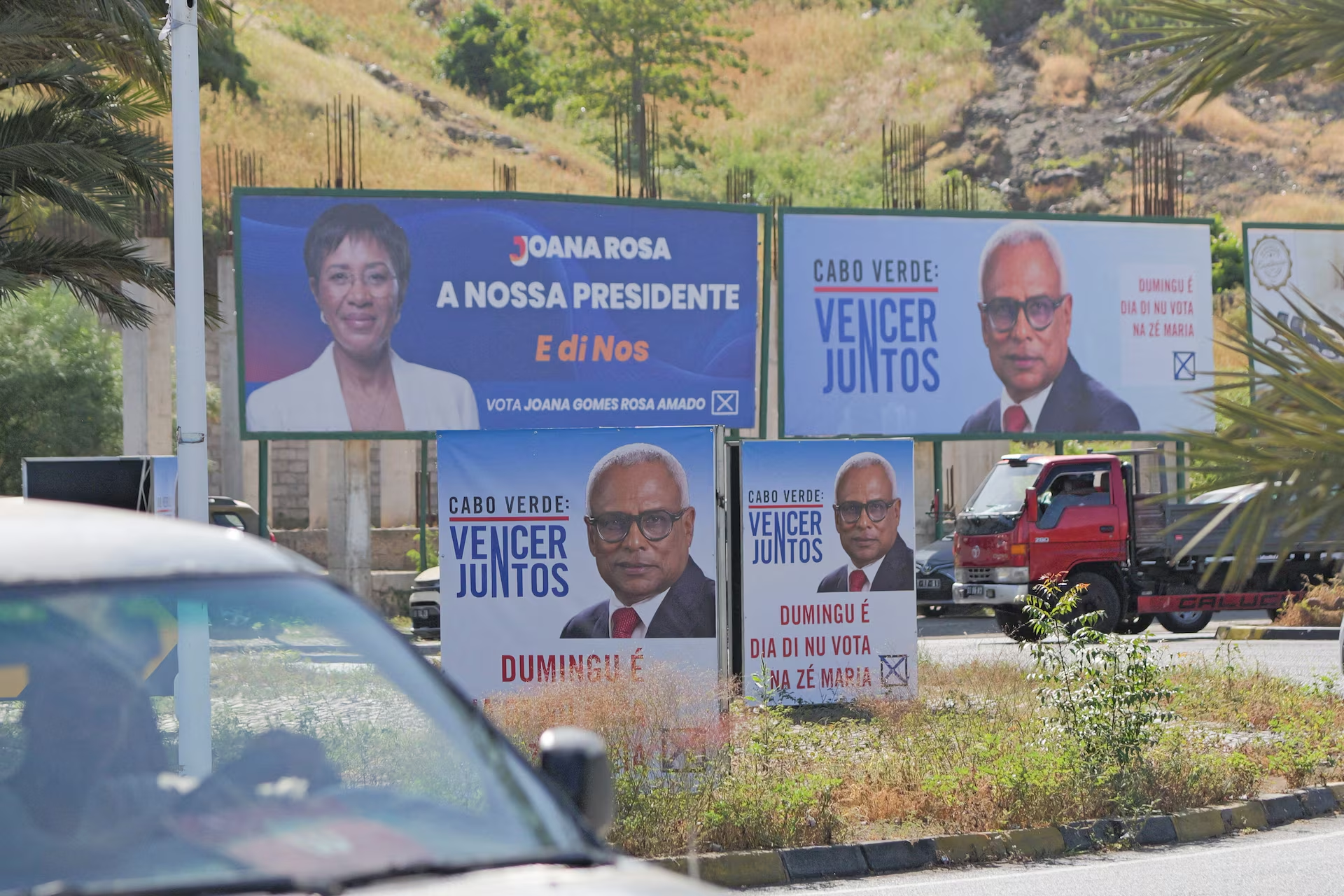
Neves, who won the 2021 presidential election with approximately 52 per cent of the vote, is considered the favourite. His campaign has focused on securing support across political lines to address some of the country’s main concerns, including housing, healthcare, education, employment and wages.
The 66-year-old politician has a long history in Cape Verdean politics. He served as prime minister from 2001 to 2016 and was also president of the African Party for the Independence of Cape Verde (PAICV), the political party supporting his current presidential bid.
His main challenger, Joana Rosa Amado, is a 61-year-old lawyer and former justice minister backed by the opposition Movement for Democracy (MpD). Her candidacy is significant because she is the first woman to run for president in Cape Verde.
Campaigning under the slogan “Listen to Cabo Verde”, Amado has presented herself as a candidate who wants to address the concerns of ordinary citizens rather than make unrealistic campaign promises. She has said the slogan reflects the need to understand the population’s actual needs and expectations.
Amado has also highlighted the importance of women’s representation in national leadership. Speaking to the media, she said electing a woman president would demonstrate to young women and girls that no government position should be considered beyond their reach.
Beyond her historic candidacy, Amado has made the balance of political power a central issue in her campaign. She argues that Cape Verde needs a stronger political counterweight to the PAICV, which supports Neves and controls the national government and most municipalities. Her position places the relationship between the presidency, government and opposition at the centre of the election debate.
ALSO READ: Cape Verde Island Hopping Guide For Independent Travelers
Another candidate attracting attention is Gilson Alves, a 45-year-old surgeon whose campaign includes proposals to tackle corruption, permit gun ownership and reinstate the death penalty. His positions distinguish him from the other contenders and have added another dimension to the presidential contest.
Cape Verde, also known as Cabo Verde, is an island country in the Atlantic Ocean, approximately 600 kilometres off the coast of Senegal. With a population of around half a million people, it has developed a reputation for democratic stability, competitive elections and peaceful transfers of political power.
The country has also recorded economic progress. In July 2026, the World Bank officially classified Cape Verde as an upper-middle-income economy. The change followed economic growth, particularly in tourism, alongside a reported 16.8 per cent increase in gross national income per capita between 2023 and 2024.
However, the country’s economic progress has not removed the difficulties facing many residents. Social inequality remains a concern, while its geographical separation from mainland Africa and the distance between its islands create practical challenges for transport and access to services. Limited affordable travel options between the islands also remain an issue.
The cost of living, fuel prices and youth unemployment are among the concerns weighing on voters as they choose their next president. These issues are likely to influence expectations of the incoming administration, regardless of which candidate wins.
For Neves, the election offers an opportunity to secure another five years in office and continue his political agenda. For Amado, it is a chance to break a long-standing barrier in the country’s presidential politics while challenging the current political balance. The result will determine not only who occupies the presidency but also how Cape Verde responds to the economic and social concerns facing its population.


