
Okavango Delta water safari offers a different way to experience African wildlife, taking visitors through a network of lagoons, narrow channels and flooded grasslands rather than relying entirely on the familiar four-wheel-drive game vehicle. In north-western Botswana, this unusual safari experience places travellers at water level, where the landscape reveals a different side of one of Africa’s most remarkable wilderness areas.
The experience is built around the Delta’s waterways, with traditional mokoro excursions, motorboat trips and opportunities to observe wildlife and birds from the water. Instead of travelling across open plains in search of large mammals, visitors move through reed-lined channels, past floating vegetation and between islands formed by the Delta’s changing waters. It is a safari in which the surrounding environment becomes as important as the animals themselves.

The Okavango Delta is not a conventional river delta. It is an extensive inland wetland system in which the Okavango River spreads across the Kalahari Basin without reaching the sea. Its waters originate in the Angolan highlands, travelling southwards through Namibia before entering Botswana. The resulting network of permanent swamps, seasonal floodplains, islands and waterways supports an unusually diverse range of plant and animal life.
Recognising its ecological importance, UNESCO designated the Okavango Delta a World Heritage Site in 2014. The protected property covers approximately 2 million hectares and contains permanent wetlands as well as seasonally flooded grasslands. It is also home to threatened species including African wild dogs, cheetahs, lions and black and white rhinoceroses.
What makes the Delta particularly unusual is the timing of its annual floods. While Botswana experiences its rainy season during the warmer months, the major floodwaters arriving from Angola generally reach the Delta during the country’s dry season. The water gradually spreads through the wetland, transforming parts of the surrounding landscape when many other areas of the region are becoming increasingly dry.
This seasonal movement influences where wildlife gathers, which channels are navigable and what visitors can experience. Some parts of the Delta remain permanently flooded, while others receive water only during certain periods of the year. The landscape is therefore constantly changing, and a safari organised around water activities depends considerably on where a camp is located and the conditions during a particular visit.
One of the most distinctive ways to explore this environment is aboard a mokoro, a narrow canoe traditionally carved from a single tree trunk. The vessel is propelled by a guide, known as a poler, who stands at the back and uses a long pole to navigate the shallow water. The technique allows the canoe to move through channels that would be difficult to access using conventional boats.
The traditional wooden mokoro has increasingly been replaced by fibreglass versions as part of conservation efforts to reduce pressure on trees. The basic method of travel, however, remains the same. The guide pushes the canoe forward through the water, navigating around reeds, aquatic plants and shallow areas while passengers sit low in the vessel.
Unlike a motorised safari vehicle, a mokoro does not carry visitors quickly between wildlife sightings. Its slower pace makes it possible to pay attention to smaller details of the wetland, including water lilies, insects, frogs and birds occupying the vegetation along the channels. The experience also offers a different perspective on the Delta’s plant life, much of which can easily be overlooked from a vehicle.
ALSO READ: The Wildlife of Samburu Tells a Different Story About Safari in Kenya
Botswana’s tourism authorities describe mokoro excursions as one of the Delta’s defining visitor experiences, noting that the quiet movement of the canoe allows people to explore waterways that are otherwise difficult to reach.
For visitors who want to cover more distance, motorboat excursions provide another way to explore the waterways. These trips can take passengers along wider channels and open stretches of water, offering opportunities to observe aquatic wildlife and birdlife from a different vantage point.

The Delta’s waterways support animals that are particularly adapted to wetland habitats. Red lechwe, for example, are among the mammals associated with its flooded grasslands. Waterbirds occupy the lagoons and reed beds, while hippos and crocodiles inhabit parts of the water system. The surrounding vegetation also provides habitat for smaller species that contribute to the Delta’s ecological diversity.
Birdwatching is another important part of a water-based safari. The combination of permanent waterways, seasonal marshes and vegetation creates habitats for a wide variety of resident and migratory birds. Visitors may encounter species along the channels, around lagoons or among the trees and reeds on the islands. For travellers with an interest in photography, the opportunity to observe birds and wetland wildlife from close to the water offers a different photographic experience from conventional game drives.
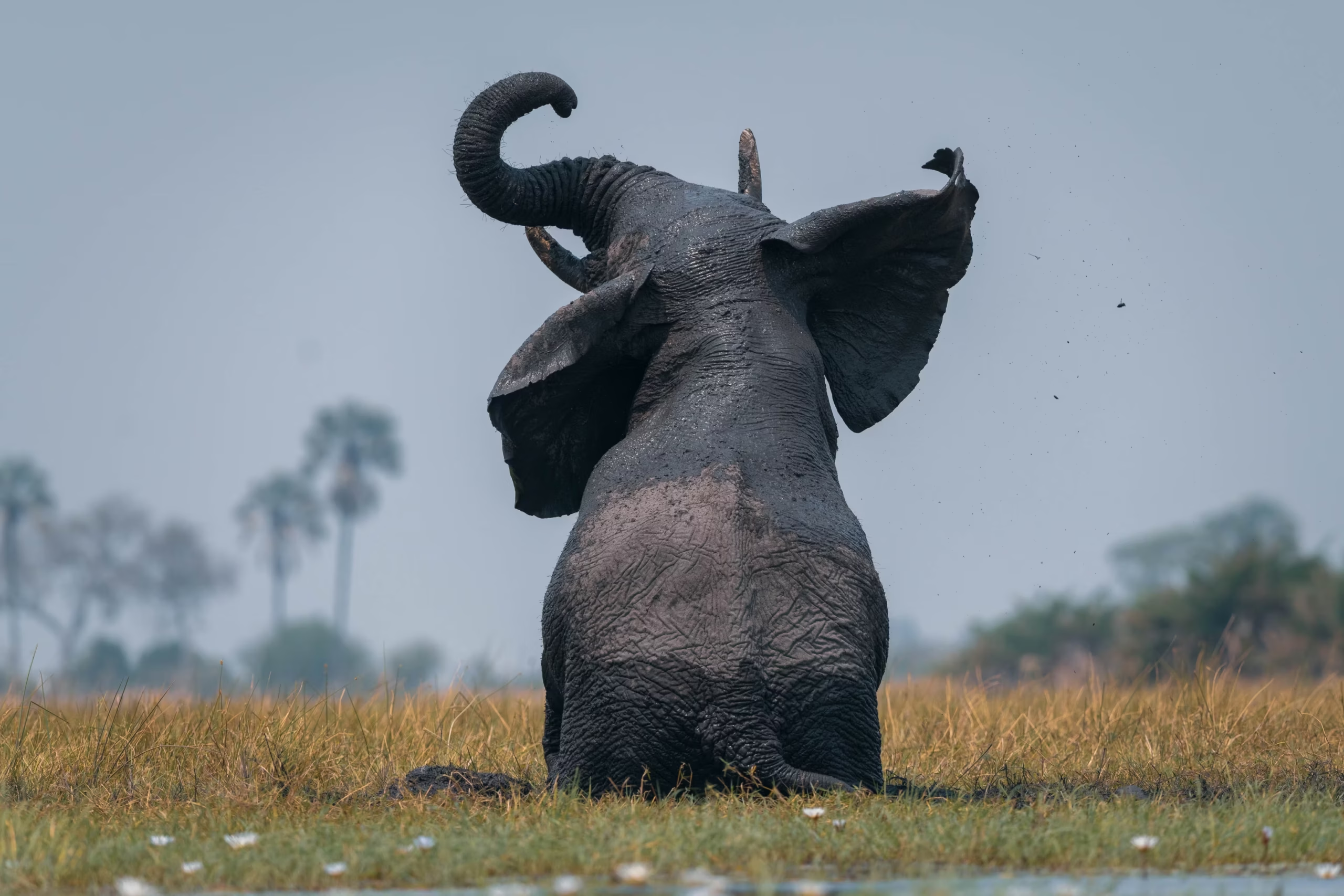
The absence of a traditional game drive does not mean the absence of a wildlife experience. However, travellers should understand that a water-focused safari has a different emphasis. The permanent wetland environment does not generally support the same concentrations of large land mammals as the drier floodplains and surrounding woodland areas. Animals such as elephants, lions, leopards and buffalo are part of the wider Okavango ecosystem, but visitors staying at camps focused primarily on water activities should not expect every excursion to produce the large-mammal sightings associated with a classic African safari.
This distinction is important when choosing accommodation. Some camps and lodges concentrate on water-based activities, offering combinations of mokoro excursions, motorboat trips and guided walks where conditions permit. Others operate in areas where both wetland and dryland habitats are accessible, allowing visitors to combine water excursions with conventional game drives.
A water-focused camp can be particularly suitable for travellers who want to spend more time exploring the Delta’s aquatic environment rather than treating it as an additional activity between vehicle safaris. However, those hoping to see a wider range of large mammals may find that a combination of water-based and land-based accommodation provides a more varied experience.
Timing also deserves attention. Although parts of the Okavango remain flooded throughout the year, water levels in other areas fluctuate considerably. The arrival of floodwater from Angola generally begins around April and May, with the water spreading progressively through the Delta over the following months. In some seasonal areas, water activities become possible only when conditions allow, while low water levels can restrict access to certain channels.
The months when the Delta is most extensively flooded are not necessarily the same in every year. Rainfall, flood volumes and the movement of water through the wetland all influence the experience. Travellers should therefore confirm directly with their chosen camp or safari operator which activities are expected to be available during their intended dates, rather than assuming that every property offers mokoro or motorboat excursions throughout the year.
There are also practical differences between travelling by canoe and taking a motorboat. Mokoro excursions are generally conducted in shallow water and are particularly suited to slower exploration. Motorboats are more appropriate for navigating wider and deeper channels. Both activities require experienced local guides who understand the waterways, wildlife movements and changing conditions.
The presence of hippos and crocodiles also means that the waterways should never be treated as an ordinary recreational swimming environment. Visitors must follow their guides’ instructions and respect the safety procedures established by individual camps and operators. The fact that a mokoro moves quietly through the water does not make it appropriate to approach wildlife without caution.
Beyond the wildlife, the experience offers an opportunity to understand the relationship between the Delta and the communities that live around it. Mokoro navigation has a long history in the region, serving as a practical means of movement through shallow waterways. Today, it also forms part of the tourism economy, with local guides and polers contributing knowledge of the wetland that cannot be replaced by simply travelling through it.
For visitors accustomed to measuring a safari by the number of elephants, lions or other large animals seen during a drive, the Okavango’s water-based experience may require a different set of expectations. Its appeal lies in the opportunity to explore an environment that operates according to the movement of water, where birdlife, aquatic vegetation and the smaller details of the ecosystem receive as much attention as the larger animals.
A stay in the Delta does not have to revolve around a safari vehicle to be rewarding. Moving through its waterways in a mokoro or motorboat offers a closer understanding of why this wetland is so important to Botswana’s natural heritage. For travellers willing to exchange the speed and scale of a conventional game drive for a slower exploration of the landscape, the Okavango Delta presents a safari experience that is distinctly its own.


