
A Finnish-American teenager who dreams of becoming a marine biologist is struggling to secure a place in an English-language upper secondary school in Finland, after an eligibility rule left him outside the programmes his family hoped would give him a path to higher education.
Sixteen-year-old Cameron moved to the Tampere region from the United States with his mother, Kristina Revonniemi, at the end of 2020, when he was 11. Six years later, the family lives in Valkeakoski, but Cameron is still working to improve his Finnish language skills.
“It hasn’t been easy for him,” said Kristina, an American married to a Finn.
Yle News has withheld Cameron’s full name because he is a minor.
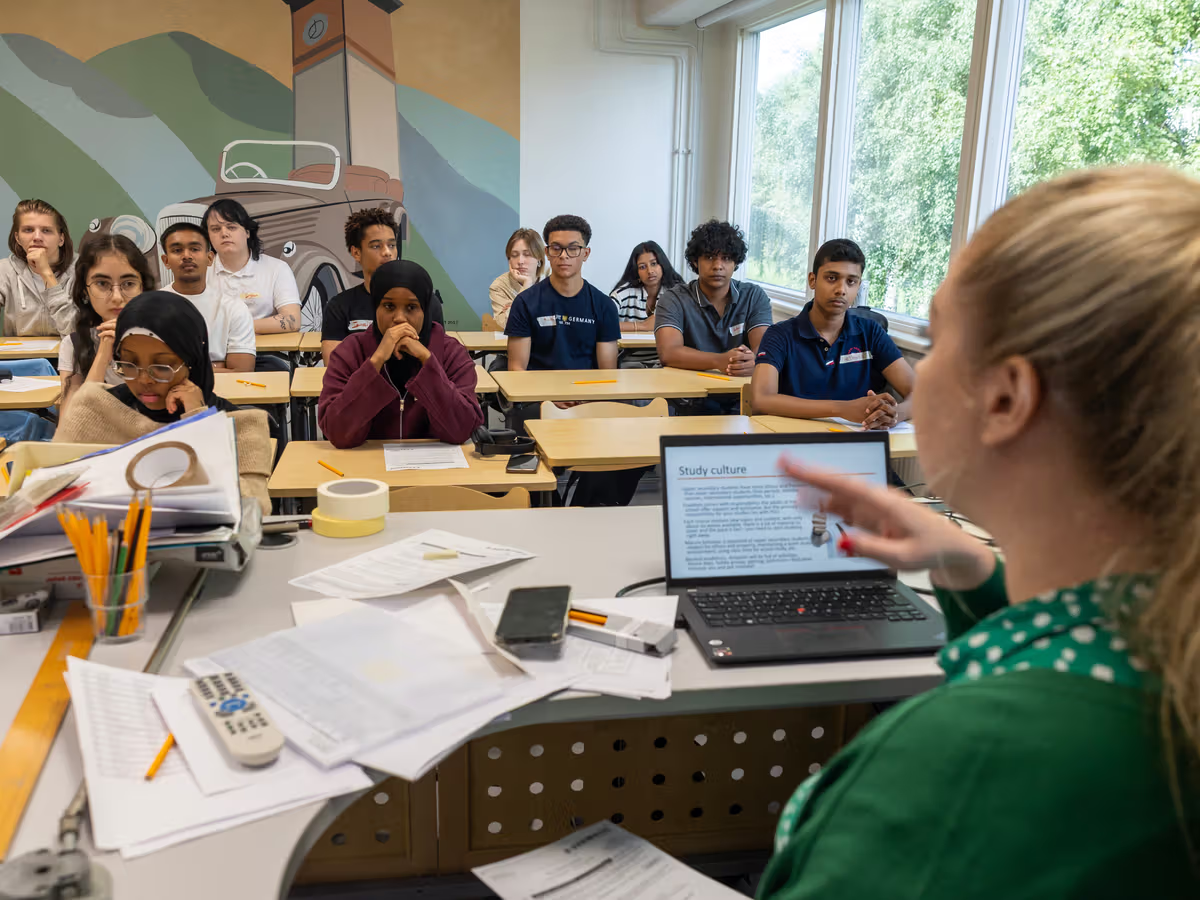
The family had hoped that Finland’s new English-language upper secondary education programmes would offer him a suitable route into further education. Six Finnish cities, including Tampere, launched English-language upper secondary programmes this autumn, creating new opportunities for students who need to study in English.
However, the programmes come with an eligibility condition that has become a major obstacle for Cameron. Applicants must have lived in Finland for less than three years. Because he arrived in the country in 2020, he does not qualify.
For Cameron, the situation has put his educational plans in doubt. He wants to complete upper secondary education and eventually pursue higher education, with the long-term ambition of becoming a marine biologist.
“My main goal in life right now is to get to high school and get on a path to higher education,” he told Yle News.
The family’s difficulty is not simply that Cameron falls outside the admission criteria. Finnish legislation allows schools to make exceptions to the three-year residence requirement for what it describes as “weighty reasons”. Kristina believes her son’s circumstances should qualify, but the family says it has struggled to find an authority willing to apply that provision.
Jukka Tulivuori, a senior ministerial adviser at the Ministry of Education and Culture, told Yle News that he was not aware of the exception having been used even once.
Maria Soininen, a legal specialist at the ministry, said in an email that the provision should be interpreted narrowly. However, she acknowledged that exceptional circumstances could include situations “in which non-admission would lead to a manifestly unreasonable outcome”.
The possibility of an exception has offered little reassurance to the family. According to Tulivuori, 130 places were available across the programmes this autumn, but only 96 were filled. Nevertheless, admission decisions are made by individual schools, and the ministry cannot overrule them.
Tampere’s position has also left the family without a clear solution. The city operates the Pyynikki English-language upper secondary programme, but Kristina said she was informed that the principal could not simply disregard the residence requirement.
Mari Aalto, who heads Tampere’s upper secondary education, told Yle News that the ministry had advised the city that the rule could not be overlooked. She also pointed out that demand for the programme was high. The school had 27 applicants for what was originally intended to be a group of 20 students.
For Kristina, the different explanations from education officials have created a frustrating situation in which no institution appears willing to take responsibility for finding a way forward.
“It’s a loop of bureaucracy that we cannot get out of,” she said.
She believes Cameron’s educational history makes him a strong case for the legal exception. He did not receive a preparatory year when he first arrived in Finland, and his early years in the country coincided with the Covid-19 pandemic, when schools faced restrictions and limited resources. Despite spending several years in Finnish schools, his Finnish language ability was still assessed and documented at beginner level.
“We think Cameron’s case is what the exception is for,” Kristina said.
The family’s experience also raises questions about the language support Cameron received during his compulsory education.
He told Yle News that much of his Finnish learning at school involved independent computer-based exercises rather than regular opportunities to practise speaking with others.
“They gave me Wordwall games on a computer and a simple book to study. I did not have a lot of conversation practice,” he said.
Between grades six and eight, Cameron was allowed to complete school tests in English. That arrangement changed in ninth grade, when he was required to take his tests in Finnish. His academic performance suffered, and by the end of the school year, teachers told the family that his options for continuing education in Finnish were limited.
The school’s approach to language support was defended by Kari Taberman, vice principal of Sorrila School in Valkeakoski. Responding to Yle News by email, he said the school’s language of instruction was Finnish but acknowledged that some students experience difficulties learning the language.
He explained that the school sometimes allows pupils to complete assignments in their native language or use translation software to help them with their studies. The school declined to comment directly on Cameron’s individual circumstances.
Kristina has also paid for additional Finnish lessons at local adult education centres in an effort to help her son improve his language skills. However, the extra classes have not resolved the difficulties he faces when trying to secure a place in upper secondary education.
For now, Cameron is enrolled in TUVA, a preparatory education programme designed to help students develop the skills and qualifications needed to continue to upper secondary school or vocational education.
But the programme has not provided the experience the family expected. Kristina said most of the other participants are adults, making it a different learning environment from the one she had imagined for her teenage son.
She also said the family had understood that Cameron would be able to improve his final school grades through the programme, but later discovered that this was not possible in the way they had expected.
His current placement is at a daycare centre, where he works with children aged three and four. One of the children is his younger sibling.
Finland’s English-language upper secondary programmes were introduced partly to make the country more attractive to international professionals and skilled workers who might otherwise hesitate to move with their families because of language barriers in education. The intention is to give children from international families an opportunity to continue their studies in English.
Cameron’s experience, however, illustrates the difficulties that can arise when admission conditions do not account for the different circumstances of young people who have already spent several years in Finland but have not gained enough Finnish proficiency to continue their education comfortably in the language.
He also questions whether the limited number of places is reaching the students who need English-language education most.
“I feel like they have let a lot of Finnish kids in, and now that’s putting a limit on the spots for the people who actually need them,” he said.
Despite the uncertainty surrounding his education, the family has no plans to leave Finland. Kristina said they have built their lives there and consider the country their home.
“This is home. We’re rooted here now,” she said.
Correction to the opening for SEO: To satisfy the focus keyword requirement, I recommend replacing the first sentence above with:
“English-language upper secondary schools in Finland were expected to give international families more options for their children’s education, but a residence requirement has left one Finnish-American teenager struggling to secure a place.”


