Western Sydney International Airport welcomed its first international passengers on 26 October, marking a major step in the opening of Australia’s newest international aviation hub after decades of planning and construction.
Air New Zealand flight NZ165 from Auckland became the first international passenger service to land at Western Sydney International (Nancy-Bird Walton) Airport (WSI). The arrival followed the airport’s official opening a day earlier, when Jetstar launched its first domestic passenger services.
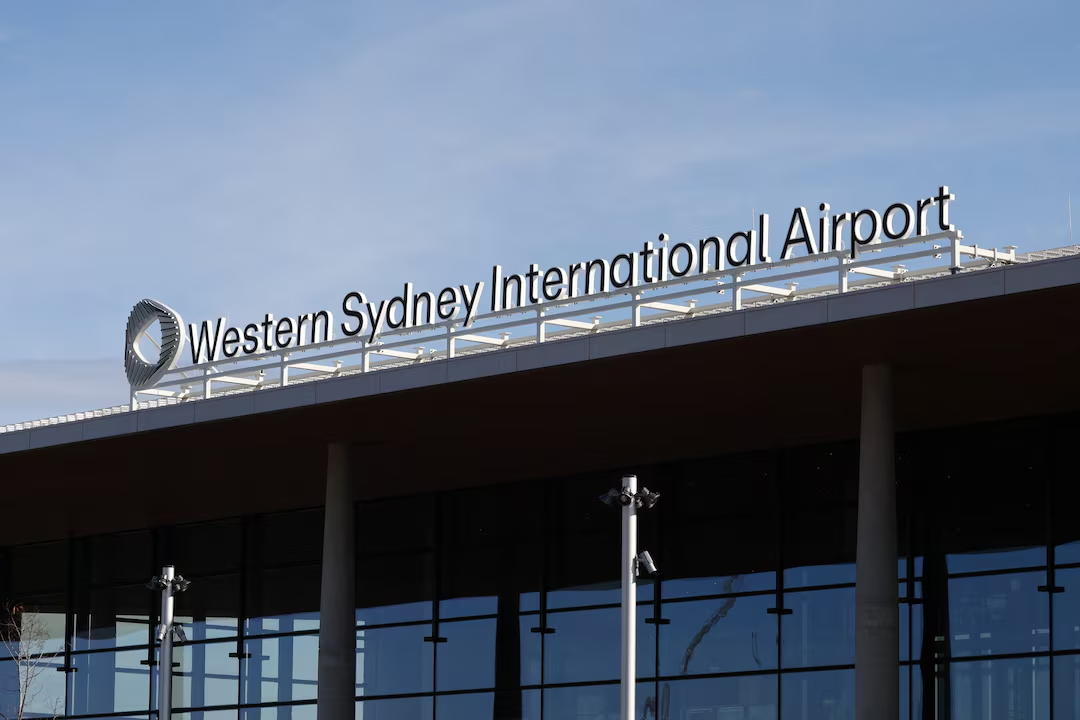
Located at Badgerys Creek, approximately 60 kilometres west of central Sydney, the new airport is designed to operate 24 hours a day. Its round-the-clock schedule gives airlines greater flexibility in planning flights, unlike Sydney’s existing Kingsford Smith Airport, where a curfew restricts take-offs and landings between 11 pm and 6 am.
Australian Prime Minister Anthony Albanese described the opening as a milestone decades in the making, highlighting the airport’s potential to support economic growth, create jobs and attract investment across Western Sydney.
“With the opening of Western Sydney International, this will help drive the next chapter for the region,” Albanese said. He added that the project was about more than a new runway and terminal, pointing to its role in supporting one of Australia’s fastest-growing regions.
WSI chief executive Simon Hickey also described the development as a major national infrastructure project, comparing its significance to the Sydney Harbour Bridge. He said passengers would have access to more than 250 destinations worldwide just over a year after the airport’s opening.
The airport is named after Nancy-Bird Walton, Australia’s first female commercial pilot. Its launch introduces a new option for travellers flying to and from Sydney, particularly those living in Western Sydney who may benefit from having an international airport closer to home.
The terminal brings domestic and international operations together in one building. Automated check-in and baggage-handling technology are intended to simplify the passenger experience, while the initial annual capacity of 10 million passengers provides room for the airport’s early expansion.
Long-term plans envisage a much larger operation. According to the airport, WSI could eventually handle more than 80 million passengers a year, potentially becoming Australia’s primary international gateway as airline services and passenger demand grow.
Travellers can reach the airport by public bus, taxi, rideshare or rental car. Drivers can also use the M12, a toll-free motorway providing road access to the airport. As services expand, the availability and convenience of transport connections will be important for passengers travelling from central Sydney and other parts of the metropolitan area.
Several international airlines are scheduled to join Air New Zealand in the coming months and years. Singapore Airlines plans to introduce daily flights between Singapore and WSI on 23 November 2026. Vietjet is scheduled to begin services to Ho Chi Minh City in January 2027, followed by Fiji Airways flights to Nadi in March 2027. Qatar Airways is due to connect Doha with the new airport from 15 December 2027.
Domestic services are also expected to expand. Jetstar’s initial network includes the Gold Coast, Melbourne and Brisbane. The airline plans daily services to the Gold Coast, up to 14 weekly return services to Melbourne and three weekly services to Brisbane.
Qantas is scheduled to enter the airport’s domestic market on 28 March 2027, when its QantasLink operation is due to begin four weekly flights on each of the Melbourne and Brisbane routes.
The arrival of international passengers marks the beginning of a new phase for Sydney’s aviation network. The airport’s long-term role will depend on how quickly airlines add routes, how passenger demand develops and how effectively transport links connect the new terminal with the wider region. For now, Western Sydney International has moved from a major infrastructure project to an operating airport, with its first international service setting the stage for a gradual expansion of domestic and overseas connections.