
Converting a foreign driving licence in Finland is not always necessary, but the rules change significantly depending on where the licence was issued, how long its holder has lived in Finland and whether the document remains valid. For newcomers planning to drive regularly, understanding the distinction between EU and non-EU licences can prevent an expired permit, an unexpected driving test or a lengthy interruption to their ability to drive legally.
The Finnish Transport and Communications Agency, Traficom, oversees the country’s driving licence system, while Ajovarma handles applications to exchange foreign licences. The process is relatively straightforward for many EU and European Economic Area (EEA) licence holders, but it can involve additional medical documentation, translations and driving examinations for people arriving from outside those groups.
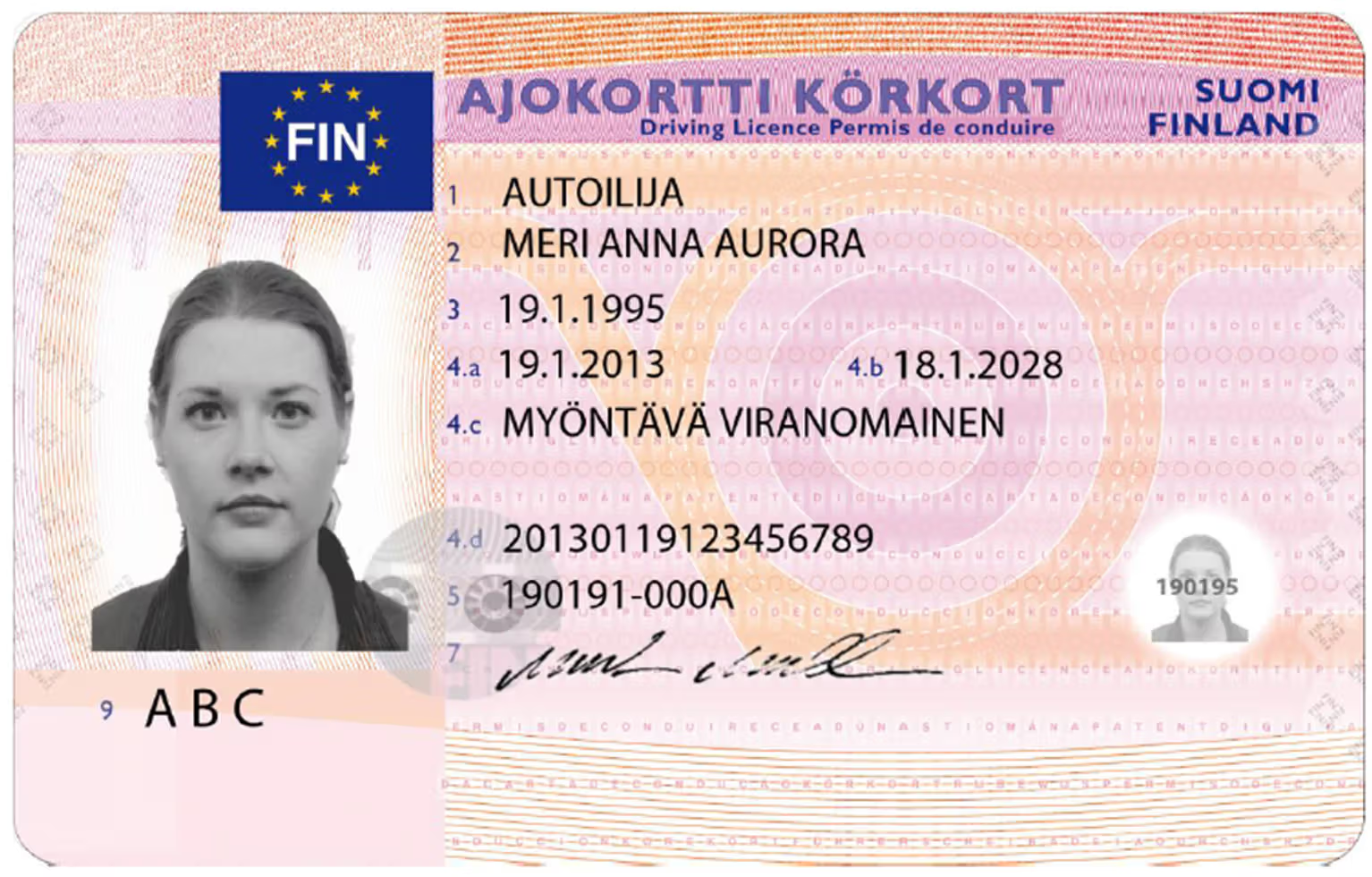
The first question is whether a driver needs to exchange their existing licence at all. A valid licence issued by an EU or EEA country can generally be used in Finland until it expires. Drivers who live permanently in Finland can apply to exchange it for a Finnish licence, and those studying in Finland may also qualify if their studies have lasted at least six months. When an EU or EEA licence approaches its expiry date, it must be replaced in accordance with the applicable Finnish rules if the holder is living permanently in Finland.
For someone moving from Germany, Sweden, Estonia, France or another EU or EEA country, this means that relocating to Finland does not automatically require an immediate licence exchange. The existing licence can remain usable while valid, provided the driver meets Finland’s requirements for driving. The position is different if the licence has already expired: an exchange application will require a medical certificate confirming the applicant’s fitness to drive. Traficom states that this certificate is valid for six months, so applicants should consider its timing rather than obtain it too early.
Non-EU licences require a closer look because Finland does not apply one universal deadline to every foreign driver. Instead, the rules distinguish between licences issued by countries covered by the relevant international road traffic conventions or treated similarly by Finland, and licences issued by other recognised countries. The country of issue, rather than the driver’s nationality, determines which category applies.
A valid licence from a country recognised under Finland’s rules as a contracting state can generally be used for up to two years after the holder moves permanently to Finland. That group includes countries beyond the EU and EEA, with Traficom maintaining an official list of eligible states. Drivers should check that list rather than assume that every non-EU licence receives the same treatment. The two-year period is particularly important for people who intend to remain in Finland and want to exchange their licence before their right to drive under the foreign document expires.
For licences issued by other countries recognised by Finland, the general rule is different. A visitor may be able to drive using a valid foreign licence without the one-year residence deadline applying to them. Once the holder is entered into Finland’s population information system, however, the licence is generally accepted for driving for one year. That registration can include a temporary address, so people should not assume the deadline applies only after receiving permanent residence status. The precise position depends on the licence’s issuing country and the relevant recognition rules.
The distinction matters because the exchange process for some non-EU licences takes considerably longer than the process for an EU licence. Traficom estimates that applications involving licences from contracting states and other countries in the relevant non-EU categories can take approximately three to four months. Applicants should therefore begin well before their permitted driving period ends, rather than waiting until the deadline is close.
For many non-EU applicants, a medical certificate is compulsory. The application may also require an official translation into Finnish, Swedish or English, signed and stamped by an authorised translator. A translation is not always necessary: Traficom says it can be omitted when the original licence clearly shows its issue and expiry dates, the validity periods of the driving categories and all other information needed to assess the application. Because the requirement depends on what is printed on the document, applicants should check the official instructions before paying for a translation.
Applicants should also be aware that holding a foreign licence does not automatically guarantee the right to exchange it for a Finnish one. Traficom states that a foreign licence cannot generally be exchanged if the applicant first obtained the right to drive while their permanent address was already in Finland. There may be a different outcome where a person originally obtained a licence abroad and subsequently renewed it while living in Finland, but this depends on the circumstances. The history of the licence can therefore matter as much as the country that issued the latest card.
The practical application begins with Ajovarma. Applicants should book an appointment and prepare the required documents before visiting a service point. These generally include a passport or other official identification, the foreign driving licence, two passport photographs where required, and a medical certificate when applicable. A valid Finnish passport or identity card can remove the need to provide separate photographs under the published instructions. Students whose permanent residence remains outside Finland may also need a certificate confirming their studies.
The driving licence permit is another part of the process. Traficom’s guidance states that an applicant exchanging a foreign licence needs a driving licence permit, which can be applied for through Ajovarma. Applicants should check the current service instructions when booking so that their application and supporting documents are in order. Arriving without the necessary paperwork can create avoidable delays, especially for people whose right to drive is approaching its deadline.
What happens after the appointment depends on the licence category. In a straightforward EU or EEA exchange, the applicant can receive a temporary driving licence while the Finnish card is produced. Traficom says the permanent licence is generally posted to the applicant’s home address within about two weeks. The temporary licence issued in this process can be used in Finland and other Nordic countries, according to the agency’s guidance.
For a licence from a contracting state or another eligible non-EU country, the process is more involved. The foreign licence is sent to Traficom for storage while the application is assessed. A temporary licence may be issued if the original foreign licence would still be valid for driving in Finland, but this temporary document is valid only in Finland and is subject to specific time limits. It cannot be issued if the foreign licence has already expired. Applicants should not assume that submitting an application automatically extends their right to drive.
Some applicants from outside the EU and EEA must also complete a Finnish driving examination after Traficom has approved their application. The examination consists of a theory test and a practical driving test, both arranged through Ajovarma. Once the applicant passes, the Finnish licence is generally sent by post within about two weeks. Until the permanent card arrives, the examiner’s certificate and photo identification must be carried when driving under the applicable instructions.
These differences make it risky to rely on advice from friends or social media groups, even when those people have recently completed the same process. A person exchanging a French licence may face a different set of requirements from someone applying with a licence issued in Ghana, India, the United States or another non-EU country. Even two applicants from the same country may need to check whether their licences fall within the same recognised category and whether the documents remain valid.
There is also an important distinction between being allowed to drive temporarily in Finland and qualifying to receive a Finnish licence. A foreign licence may be accepted for a limited period without being eligible for a straightforward exchange under every circumstance. Drivers should verify both questions before making decisions about commuting, employment or other activities that depend on driving.
The safest approach is to identify the issuing country, confirm the licence’s validity and check Traficom’s current country list before booking an appointment with Ajovarma. Applicants should establish their applicable deadline, arrange any required medical certificate or translation and allow enough time for the application to be processed. For anyone planning a long-term move to Finland, the exchange process is best treated as an early administrative task, not something to leave until the foreign licence is about to stop being accepted.
Official guidance is available through Traficom and its published instructions on exchanging foreign driving licences. Checking those rules directly is especially important because a licence’s country of issue, expiry date and recognition status can determine whether a driver can continue using it, exchange it without an examination or must pass Finnish theory and driving tests before receiving a local licence.


