
The most Instagrammable hotels in Europe offer more than beautiful rooms. They give guests a view worth travelling for, whether that means the rooftops of Paris, the Mediterranean stretching beyond a cliffside terrace, or the sun setting over Lake Como. Some have become social media favourites because of their architecture, while others owe their appeal to landscapes that look different with every change in light.
Instagram popularity is not the same as a verified ranking of the best hotel views. Research published by travel and lifestyle outlets has used hotel hashtags and tagged posts to measure social media visibility, with Claridge’s in London, The Ritz Paris, W Barcelona and Villa Cimbrone in Italy appearing among the European properties featured in earlier studies.
The selection below brings together ten European hotels known for their distinctive settings, memorable vistas or visually striking design, rather than presenting an unsupported live ranking of Instagram posts.

One of the strongest contenders is Grace Hotel, Auberge Collection. Perched above Santorini’s caldera, the hotel looks out across the volcanic landscape and the deep blue Aegean Sea. Its infinity pool and suites with private plunge pools provide a natural frame for photographs, particularly when the changing evening light falls across the cliffs. The setting is a major part of the experience, and the hotel’s elevated position makes the views central to its appeal.

On Mykonos, Cavo Tagoo Mykonos has built a recognisable visual identity around sculptural white architecture, private pools and sweeping sea views. The infinity pool is among its defining features, while the hotel’s terraces offer a backdrop of open water and the island’s rugged coastline. The combination of minimalist design and the Aegean horizon helps explain its popularity with travellers who share photographs of their stays. It is also important to check the room category before booking, since not every accommodation option includes a private pool or an unobstructed sea view.

Italy’s Amalfi Coast offers a different kind of visual drama at Hotel Santa Caterina. Set above the Mediterranean, the historic property combines terraced gardens, traditional Italian architecture and balconies facing the sea. Its position allows guests to photograph the coastline from above rather than from the crowded streets below. Gardens and pathways also bring greenery into the composition, providing a contrast to the blue water and pale buildings that define this stretch of southern Italy. The hotel describes its rooms and suites as offering sea or garden views, so travellers should confirm the outlook attached to their chosen room.

Further north, Grand Hotel Tremezzo makes the case for lake views over coastal scenery. Its setting on Lake Como places historic villas, villages, wooded slopes and the foothills of the Alps within the same panorama. The surrounding landscape changes throughout the day, from soft morning reflections to warmer evening light across the water. The hotel is also well positioned for boat trips to lakeside settlements such as Bellagio and Varenna, making it a useful base for photographs beyond the property itself.

For travellers drawn to architecture as much as scenery, Villa Cimbrone offers one of southern Italy’s most distinctive panoramas. Its famous Terrace of Infinity, lined with classical busts, overlooks the coastline from the heights of Ravello. The contrast between the historic stonework, sculpted garden and distant sea gives the terrace a character that differs from the familiar infinity-pool photograph. Villa Cimbrone has also appeared in published compilations of Europe’s most Instagrammed hotels, although the available rankings measure social media activity rather than the quality of individual views.

In Barcelona, W Barcelona offers a more urban interpretation of the hotel view. Its sail-shaped building stands beside Barceloneta beach, with guest rooms overlooking the Mediterranean and the city. From the waterfront, the architecture itself has become a recognisable part of Barcelona’s modern skyline. Inside, the outlook depends on the room and floor, but the combination of sea, beach and city gives the hotel a photographic appeal that extends beyond its interiors. W Barcelona also featured in a published ranking based on Instagram hashtag counts, offering a measurable indication of its social media visibility.
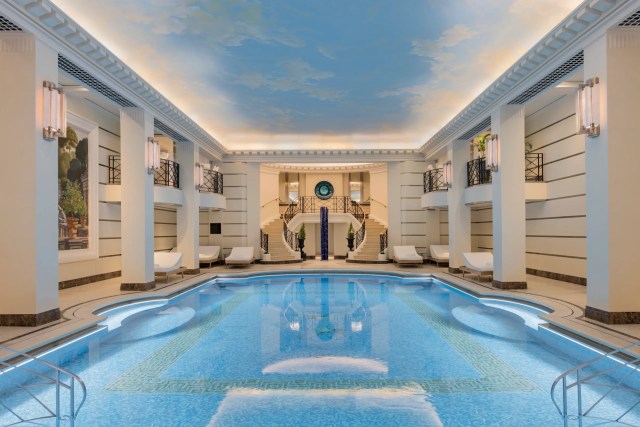
Paris delivers a different sort of spectacle at The Ritz Paris. Rather than relying on a cliff edge or a vast natural panorama, the hotel’s visual appeal comes from its historic interiors, refined courtyards and position on Place Vendome. Its rooms and suites vary in outlook, and a view of the Eiffel Tower should never be assumed without checking the specific accommodation. The hotel’s broader social media profile is well established: research published in 2025 placed The Ritz Paris among Europe’s most popular luxury hotels by Instagram post counts. That measure reflects online visibility, however, rather than proving that it has the continent’s most photographed views.

London’s skyline takes centre stage at Shangri-La The Shard. Occupying upper floors of The Shard, the hotel offers elevated views across the River Thames and the city’s landmarks. From above, the urban landscape becomes the subject: bridges, historic buildings and the river’s curves form a panorama that changes with the weather and time of day. The hotel’s height gives it a different advantage from traditional luxury properties, where gardens or architecture are often the main attraction. Here, the city itself provides the backdrop, whether guests are photographing the view from their room or from one of the hotel’s dining and leisure spaces.

Another London landmark, Claridge’s, demonstrates that a hotel does not need a sweeping natural vista to attract attention online. Its Art Deco character, polished interiors and Mayfair address have helped establish a distinctive visual identity. While the views from individual rooms are not the same as the panoramic outlook from a skyscraper, the hotel’s interiors and public spaces offer a different kind of photographic appeal. Claridge’s has repeatedly appeared in lists measuring Instagram activity at luxury hotels, including research that placed it among Europe’s leading properties by hashtag volume. Those figures are useful indicators of recognition, but they should not be confused with a direct measurement of how often a particular view is photographed.

Rounding out the selection is Ashford Castle, where the appeal comes from an entirely different landscape. The historic castle sits within extensive grounds beside Lough Corrib, surrounded by woodland and green countryside. Its stone facade, formal gardens and waterside setting offer opportunities for photographs in every season, from bright summer greenery to misty autumn mornings. Ashford Castle appeared in a European hotel ranking based on Instagram hashtags published by Money.co.uk research and reported by TravelDailyNews. Its presence in that list points to the appeal of historic properties as well as contemporary beach resorts and city hotels.
Choosing among these hotels ultimately depends on the kind of view a traveller wants to remember. Santorini and Mykonos deliver the familiar appeal of white architecture against blue water; the Amalfi Coast and Lake Como offer layered landscapes shaped by cliffs, gardens and historic settlements; Barcelona and London put city life in the frame; while Paris and Ireland’s castle country provide atmosphere through architecture and heritage.
There is also a practical distinction between a hotel that photographs well and a hotel room that guarantees a particular view. A poolside image may have been taken from a shared terrace, a premium suite or a location accessible only to guests with a specific booking. Travellers should check room descriptions, seasonal opening dates and access rules before making a reservation based on a photograph. The strongest hotel views are not simply backdrops for social media. They are part of the experience of staying somewhere, and the best photographs often come from taking time to appreciate the place beyond the camera.


