The International Criminal Court (ICC) has condemned US sanctions imposed by President Donald Trump’s administration, warning that the measures threaten international law and could obstruct efforts to hold individuals accountable for serious crimes.
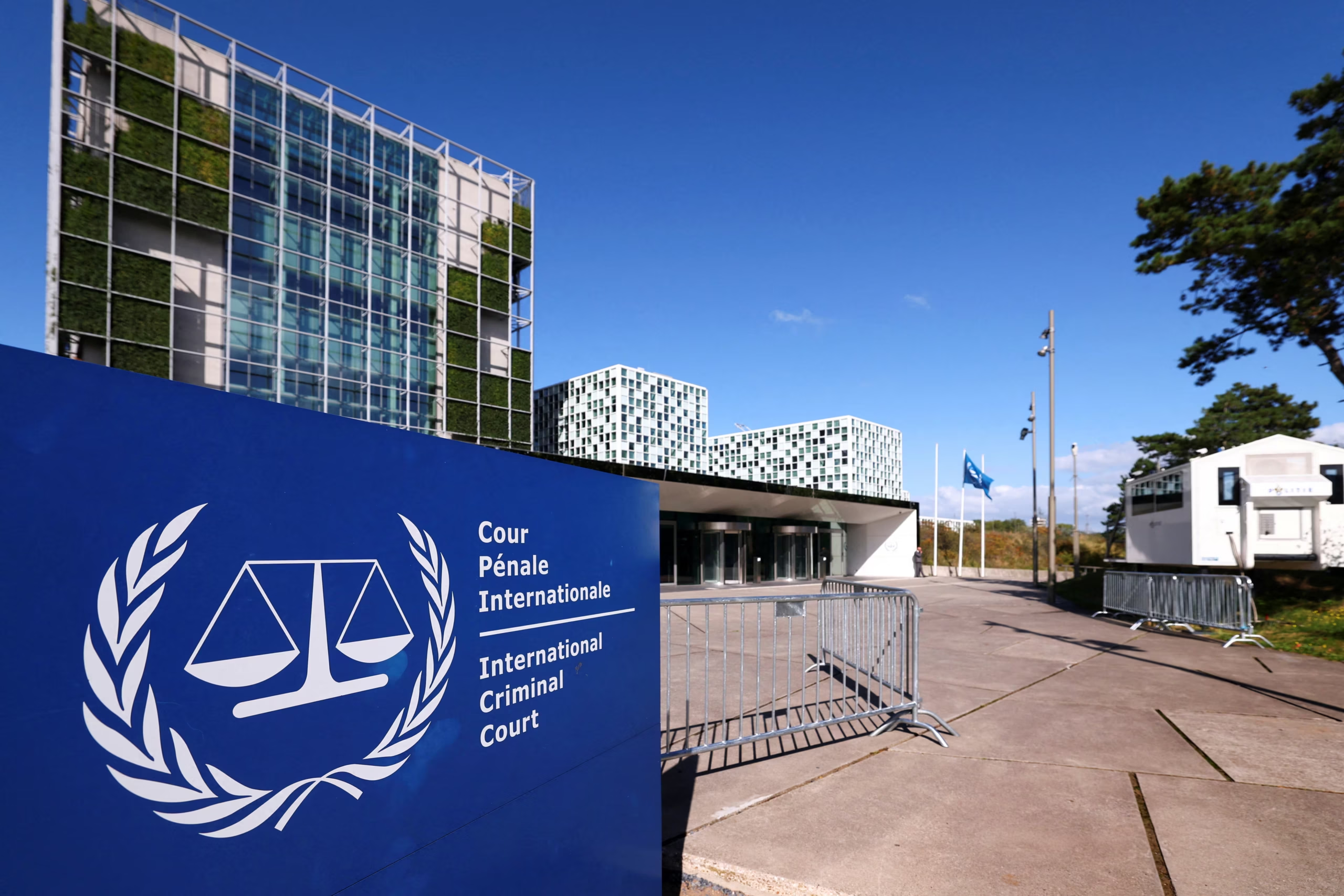
The sanctions, announced by US Secretary of State Marco Rubio on Friday, October 9, block the court’s assets under US jurisdiction and give American companies and individuals six months to wind down their business with the tribunal. The administration accused the ICC of politicisation and of improperly pursuing Americans and Israelis over alleged war crimes.
In a video address posted on social media, Rubio said Washington would prohibit transactions with the court, arguing that the institution posed a threat to the United States. “We will ban transactions with this rogue court, cutting off their resources and crippling its ability to operate against us,” he said.
Rubio also rejected the ICC’s authority over Americans, declaring that the United States and its citizens were not subject to the jurisdiction of what he called a “fake ICC”. He argued that opposition to the court extended across party lines in Washington, but credited Trump with the willingness to take more forceful action.
“Both parties agree on this, but only President Trump has the resolve to take the action needed to end this threat once and for all,” Rubio said. “Either the ICC will end its threats, or we will end the ICC.”
The court responded by describing the sanctions as an attempt to interfere with the administration of justice and weaken the international legal system. In a statement, it said the measures were an assault on the rule of law and the principle that no individual should stand above it.
ICC President Tomoko Akane said the court would continue its work independently and impartially, basing its decisions on the law and available evidence. She stressed that the tribunal’s mandate was to serve victims of grave crimes and called on member states to defend the institution.
“This is not just about defending a single institution, but about safeguarding the international order grounded upon the rule of law,” Akane said.
The dispute also places pressure on US allies that support the court. Rubio said Washington expected its partners to back its campaign against the ICC, whose membership includes several European NATO countries and Japan. He warned that the United States would continue targeting the institution if its allies failed to support the measures.
“If they do not, the United States will continue its campaign to dismantle the ICC, piece by piece, until Americans are threatened no longer,” he said.
The Netherlands, which hosts the court, rejected the move. Dutch Foreign Minister Tom Berendsen described the sanctions announcement as “a deeply regrettable step” and reaffirmed his country’s support for the tribunal. In a post on X, he said the six-month transition period offered an opportunity for dialogue.
The announcement came shortly after former ICC judge Navi Pillay was named the recipient of the Nobel Peace Prize. However, the Associated Press reported that the sanctions had been planned before the Nobel announcement, indicating that the decision was not a response to the award.
The ICC was established to prosecute individuals accused of grave international crimes, including war crimes and crimes against humanity, when national authorities do not pursue the cases. Its work has repeatedly drawn political opposition from governments that challenge its authority or object to investigations involving their citizens or allies.
The latest sanctions deepen the confrontation between Washington and the court, raising questions about the practical impact on its operations, the response of countries that support it, and the future of international efforts to prosecute serious crimes.