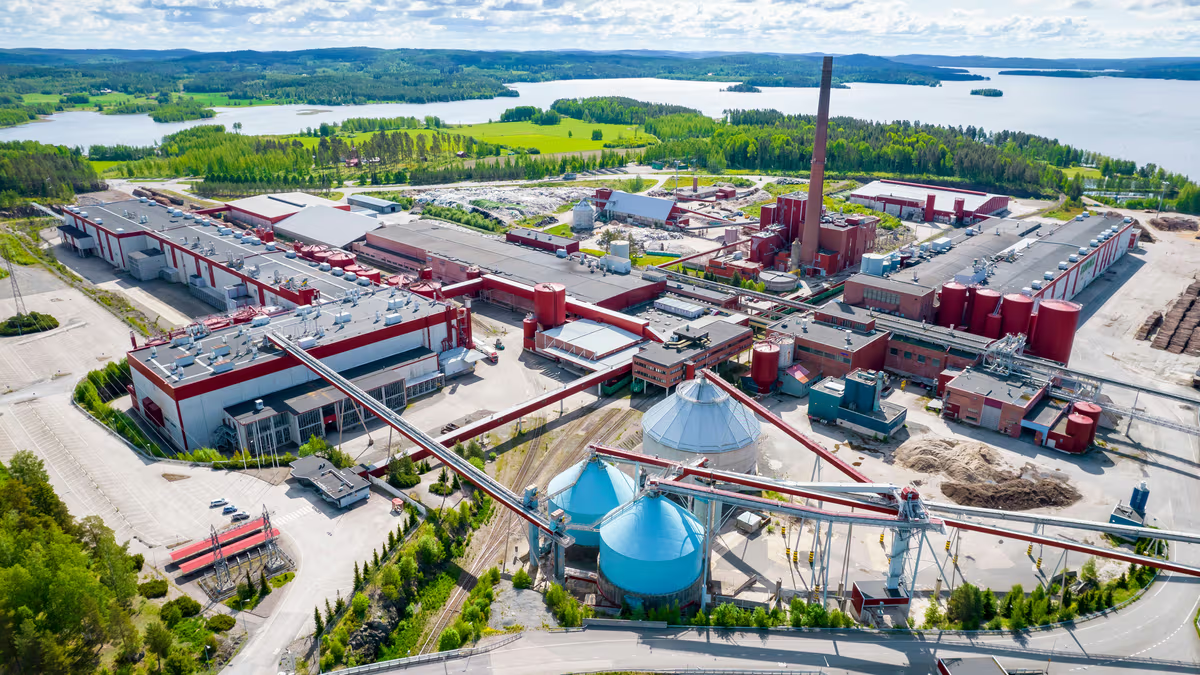
Sesterce plans to invest more than €10 billion in an artificial intelligence data centre campus in Jämsä, central Finland, with construction expected to begin before the end of 2026. The French AI infrastructure company’s proposed development would transform the former Kaipola paper mill site into a major computing hub, creating around 2,000 jobs during construction and approximately 300 permanent positions once operational, according to the company.
Announced on Thursday, 8 October, the project would be developed in two main phases. The first would provide 200 megawatts of capacity, followed by an expansion to 600 megawatts. Sesterce also aims to establish more than one gigawatt of AI computing capacity across Finland over the longer term, signalling ambitions that extend beyond the Jämsä site.
The company intends to make use of infrastructure already available at the former industrial complex, including electricity connections, water systems, existing buildings and transport links. Reusing these facilities could help support the redevelopment of a site that has remained without paper production since 2021.
Sesterce chief executive Youssef El Manssouri told Finnish public broadcaster Yle that the company had already made its investment decision and signed an agreement with the project’s future customer. He described the customer as one of the world’s two leading AI laboratories but declined to disclose its identity or name the project’s financial backers.
The proposed development would bring a new industrial purpose to a site previously operated by Finnish forestry group UPM. The Kaipola paper mill stopped production in early 2021, affecting more than 400 workers. The planned data centre could restore significant economic activity to the area, although the number of permanent jobs would be considerably lower than the temporary workforce expected during construction.
Jämsä town manager Jori Reijula welcomed the investment proposal but said regulatory procedures must be completed before construction can proceed. Speaking to Helsingin Sanomat, he also indicated that several internationally recognised companies were involved in the project, without identifying them.
The development comes as Finland seeks to attract investment in digital infrastructure, including the computing facilities needed to train and operate advanced artificial intelligence systems. These facilities can require substantial amounts of electricity and cooling capacity, making energy infrastructure and environmental management important considerations when evaluating new projects.
Sesterce has outlined several commitments intended to address those concerns. The company says it will support the development of one megawatt of new renewable electricity generation in Finland for every megawatt consumed by the campus, within ten years of operations beginning. It also plans to use closed-loop liquid cooling systems, rainwater and recycled water rather than drinking water for its proposed cooling operations.
The company has further pledged to establish a €10 million community fund for local projects selected in cooperation with the municipality and residents. Annual independent audits are also planned to assess its environmental and community commitments. These measures are company pledges, and their implementation will be an important part of assessing the project’s eventual local and environmental impact.
Electricity network operator Elenia has confirmed that the Kaipola site is already connected to its high-voltage network, providing existing infrastructure for the proposed first phase. However, the connection alone does not establish that all electricity supply, permitting and other requirements for the full development have been secured.
Sesterce’s announcement adds to a growing list of large data centre investment plans in Finland. Google announced €13 billion in planned investments in September, while data centre operator atNorth recently outlined a €2 billion project in Salo. Together, the proposals highlight Finland’s growing role in attracting infrastructure designed to support expanding demand for computing power.
Sesterce says it intends to prioritise Finnish contractors and subcontractors during construction and is also examining other former industrial sites for potential future developments. For Jämsä, the immediate questions are whether the project can clear the necessary regulatory procedures, how its promised environmental safeguards will be delivered, and when the proposed investment will translate into construction and long-term employment.