
Ash Dykes’ Congo Basin expedition was forced into an unexpected detour after visa complications prevented the explorer and his crew from entering the Central African Republic through their original route, delaying their journey to the starting point of a planned 700-kilometre descent of the Sangha River. The setback came before the most demanding part of the expedition had even begun, turning the journey to the river into an early test of the planning and flexibility required to explore one of Central Africa’s most remote regions.
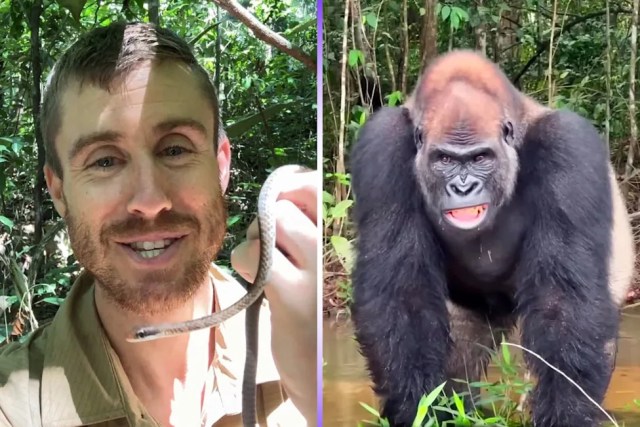
Dykes, a Welsh adventurer known for long-distance expeditions in challenging environments, travelled from London to Cameroon in preparation for the journey. His plan was to reach Nola, in the Central African Republic, and begin paddling south along the Sangha River towards Mossaka in the Republic of the Congo. The expedition is the first mission in Project Six, a series of six adventures planned across a 12-month period.
However, the team encountered difficulties with the paperwork required to cross into the Central African Republic by land. According to reports on Dykes’ updates, documents prepared for air travel did not meet the requirements for the overland crossing, leaving the crew unable to continue as originally planned. The visa complications forced them to find an alternative way into the country rather than abandon the expedition.
The change meant more than adjusting a line on a map. Reaching Nola was a necessary first step in a journey whose main objective depended on getting the team, equipment and supplies to a remote river launch point. With a long-distance expedition, a delay at an international border can disrupt transport arrangements, increase costs and place additional pressure on a carefully planned schedule. In a region where onward travel can involve a combination of road journeys and river transport, finding another route is not always a straightforward exercise.
The visa problem was not the team’s only early setback. After arriving in Cameroon, Dykes reported that a missing bag contained essential equipment, including the pumps needed to inflate the kayaks, as well as tents, food and water. The luggage was recovered after a delay of about two days, allowing the crew to continue preparing for the expedition.
The combination of missing equipment and border complications exposed how much of an expedition can depend on practical details far removed from the physical challenge that attracts public attention. A kayak journey may appear to begin when a paddler enters the water, but the work begins much earlier, with travel documents, equipment checks, transport connections, food supplies and decisions about how to respond when arrangements fail.
The crew’s alternative journey brought further obstacles. Dykes described encountering checkpoints, blocked roads and fallen trees as they worked their way towards Nola. Bad weather complicated the transfer as well. In one account, he described travelling upstream by motorboat for two hours after sunset, in darkness and heavy rain, with lightning striking nearby. What should have been the approach to the expedition had become an adventure in its own right.
Dykes eventually reached Nola, the intended starting point, and prepared to begin the river journey. In a social media update, he sought to reassure followers who had become concerned about the delays, explaining that the team had anticipated difficulties getting to a place that few outsiders visit and that cannot be reached by a simple, direct road journey.
The planned expedition covers more than 700 kilometres, or approximately 434 miles, along the Sangha River from the Central African Republic to the Republic of the Congo. Dykes is travelling by inflatable kayak with a local guide and a videographer. The inflatable design allows the team to carry the boats when conditions make paddling impractical, an important consideration on a route where river obstacles may force changes in how they travel. His official Project Six website describes the mission as an exploration of the rainforest, its wildlife and the communities whose knowledge of the environment has been developed over generations.
The river itself presents a different scale of difficulty from the journey to reach it. Dykes has identified risks that include crocodiles, hippos, forest elephants, tropical diseases, parasites, heat and humidity. Medical assistance may also be days away in some stretches. These are not merely dramatic details for an audience following the expedition online. They are practical hazards that affect decisions about where to travel, when to stop, what supplies to carry and how to respond when conditions change.
The episode also illustrates a distinction that can be lost in coverage of extreme adventures: the Congo Basin is not a single destination with one set of entry rules or travel conditions. Dykes’ planned route crosses national boundaries, and the initial problem arose because the paperwork available to the team did not meet the requirements for their intended land crossing. The explorer said the relevant documentation was intended for air travel into Bangui, the capital of the Central African Republic. The reported explanation was a mismatch between the documents and the entry procedure, rather than a decision to cancel the expedition altogether.
Ash Dykes’ Sangha River Expedition: How Far Has He Travelled So Far?
That distinction matters because the Congo Basin spans several countries, each with its own border procedures and administrative requirements. A route that looks manageable on a map may involve different permissions, transport arrangements and local conditions on the ground. For expedition teams, advance planning must account not only for distance and terrain but also for the rules governing entry and movement between countries. The experience is a reminder that preparation for remote travel begins long before a traveller reaches the wilderness.
For Dykes, the revised approach allowed the journey to proceed, but it also changed the opening chapter of Project Six. Rather than moving directly from arrival in Cameroon to the planned launch point, the team had to negotiate paperwork, recover missing equipment and adapt to difficult travel conditions. The setbacks did not end the expedition, but they showed how quickly a carefully prepared plan can be disrupted by problems outside an explorer’s control.
The central challenge now lies ahead on the Sangha River, where progress will depend on river conditions, the team’s preparation and its ability to respond to the demands of a remote rainforest environment. The visa complications were an early obstacle, not the defining test of the mission. Yet they offered an early indication of what the expedition would require: flexibility, patience and the willingness to change course when the original plan could no longer work.


