Helsinki school face-covering rules will require pupils, teachers and other staff to keep their faces visible during school activities, while allowing religious head coverings such as hijabs that leave the face uncovered. The Finnish capital has rejected proposals for a blanket ban on headscarves and other clothing associated with religious or cultural practices.
The decision followed a Helsinki City Council meeting on Wednesday, 7 October, where councillors considered two proposals seeking to restrict face coverings in schools and early childhood education facilities. Rather than introduce a general clothing ban, the city intends to clarify its existing safety and identification requirements.
The revised Helsinki school face-covering rules will apply to schools, educational institutions and nurseries across the city. They are intended to ensure that pupils and staff can be identified during lessons, examinations and other activities where visibility may be necessary for safety or communication.
The requirements will also cover adults collecting children from early childhood education facilities. However, staff are expected to consider individual circumstances rather than automatically prohibit particular garments in every situation.
Helsinki’s education director, Satu Järvenkallas, told Helsingin Sanomat that the city was not introducing a headscarf ban but clarifying its identification guidelines from a safety perspective.
“We do not want to interfere with people’s clothing, but have clarified the identification guidelines from a safety perspective,” Järvenkallas told the newspaper.
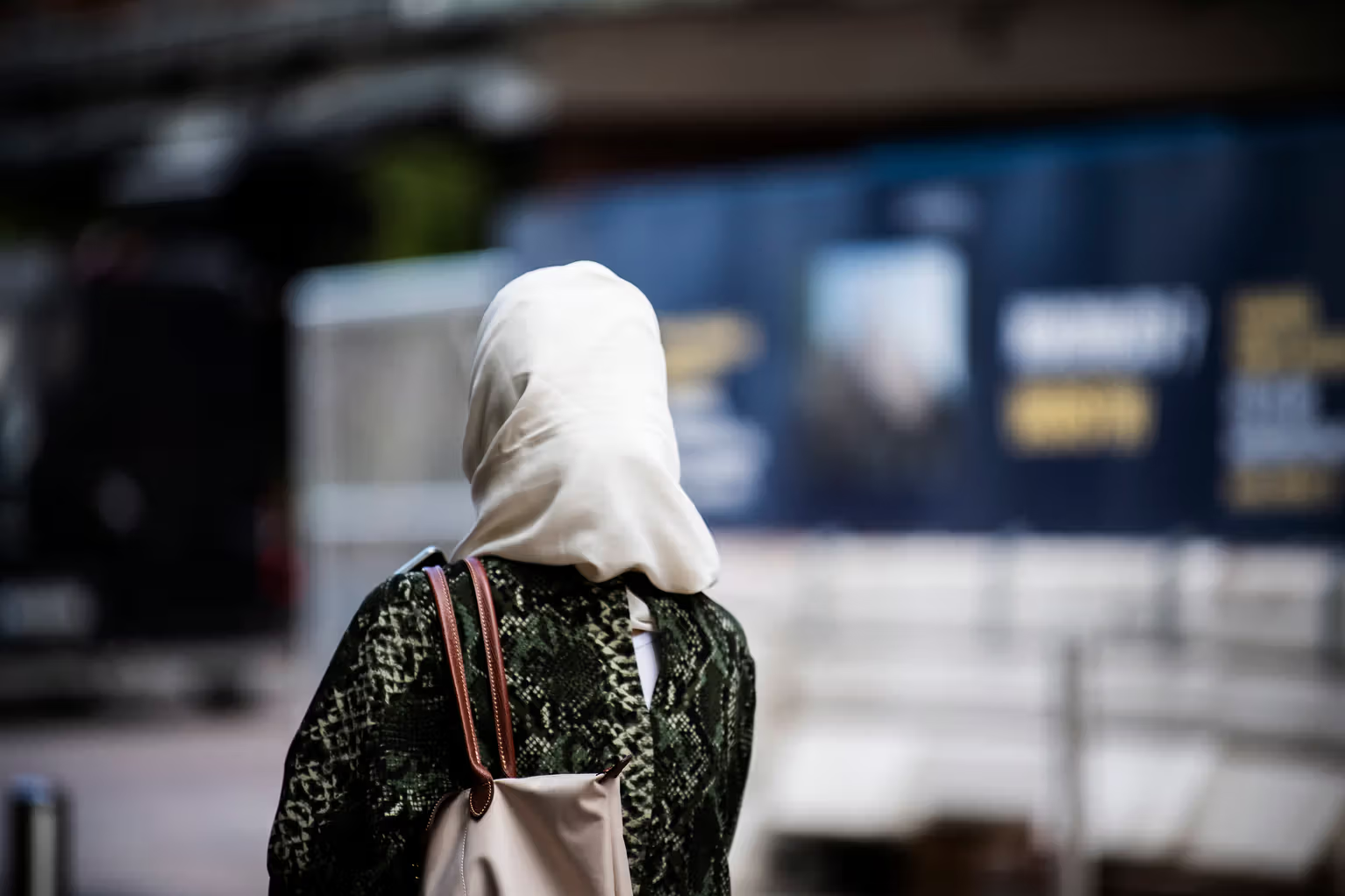
Under the Helsinki school face-covering rules, pupils will still be able to wear hijabs and other religious head coverings that leave the face visible. Clothing that conceals the face, including niqabs, burqas and balaclavas, will generally conflict with the visibility requirement during school activities covered by the guidelines.
The city will consider exceptions according to individual circumstances, including health-related reasons for wearing face masks. The distinction is intended to focus on whether a person’s face can be identified, rather than whether their clothing reflects a particular religion.
The debate began after the Finns Party’s city council group proposed banning headscarves covering the head or face in schools. National Coalition Party councillor Seida Sohrabi submitted a separate proposal focused on garments that conceal the face, including niqabs, burqas and balaclavas.
Helsinki’s council rejected an outright clothing ban, and the Finns Party’s attempt to return the matter for reconsideration also failed. City officials raised concerns that a general prohibition could conflict with equality and religious freedom protections under existing legislation.
The city’s equality and non-discrimination advisory body also opposed the proposed ban, arguing that restrictions should be assessed carefully to avoid discrimination.
During the council debate, Sohrabi said she had received reports suggesting that face-covering clothing was becoming more common in educational institutions. Her proposal added to a wider discussion in Finland about how schools should balance identification and safety requirements with religious freedom and equal access to education.
Not all councillors supported the resulting approach. Left Alliance councillor Sandra Hagman told Helsingin Sanomat that the identification requirement could prevent employees and adult students who wear niqabs from participating in education.
Social Democratic councillor Mahad Ahmed also questioned whether face-covering garments presented a significant problem in Helsinki’s schools. He warned against allowing political discussions about Islam to contribute to prejudice against Muslim communities.
“The Muslim community and Islam have been discussed a great deal in politics recently. We must ensure that Islamophobia does not become a normal part of political discourse, especially in the city council,” Ahmed told Helsingin Sanomat.
The Helsinki school face-covering rules will also require employees to keep their faces visible during teaching activities, making the policy relevant to staff as well as pupils. How the requirements are applied in individual cases will be important, particularly where religious practice, health needs or access to education are involved.
Helsinki is not the only municipality in the capital region to address face coverings in schools. Vantaa has already introduced restrictions on pupils’ face coverings during the school day, while Espoo has considered similar measures.
Helsinki’s education department plans to distribute the revised safety instructions to schools and nurseries as soon as possible. The decision stops short of a blanket ban on religious headwear, instead placing the emphasis on face visibility and identification during educational activities.