
The best European cities for a long weekend are not necessarily the biggest or most famous. They are the places where a few days can produce a genuine sense of having gone somewhere: a city with enough character to reward wandering, enough culture to fill an afternoon, good food within easy reach and a centre that does not require half the trip to navigate.
That is what makes European city breaks so appealing. A Friday departure and Monday return can be enough to change the rhythm of a week, particularly when the destination is compact and well connected. But choosing the right city matters. A destination that demands long journeys between its main sights can turn three days into a race against the clock, while a smaller city can offer a richer experience simply because more of it is within reach.

Lisbon remains one of the strongest choices for this kind of trip. Portugal’s capital has the scale of a major European city but the atmosphere of somewhere that encourages visitors to slow down. Its neighbourhoods rise and fall across steep streets, tiled buildings catch the light, and viewpoints open unexpectedly over the Tagus. A long weekend gives enough time to move between Alfama, Baixa, Chiado and Belém without treating the city as a checklist. There is also a useful balance between major attractions and ordinary street life, which is often what separates a memorable city break from a sightseeing exercise.
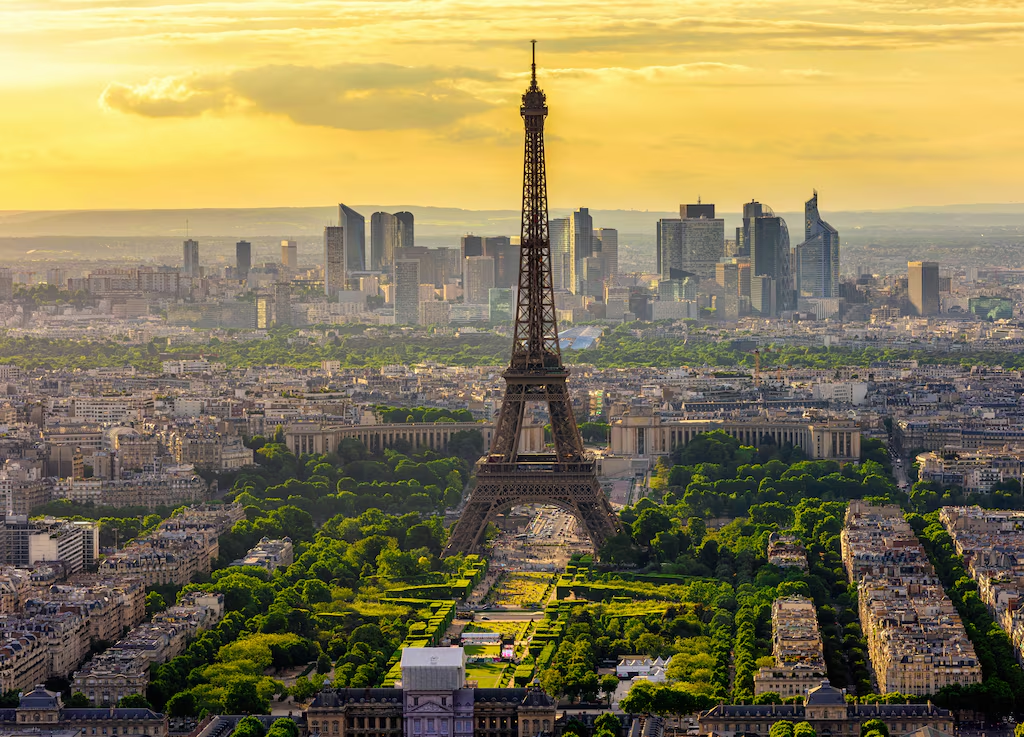
Paris is the more obvious choice, but its reputation does not make it a poor one. The French capital is large enough that three days will never be enough to see everything, yet that is precisely why a long weekend works. The point is not to finish Paris. It is to choose a few neighbourhoods, museums, streets or meals and let the city fill in the gaps. A morning around the Seine can lead towards the Louvre or the Marais; an evening in Montmartre feels entirely different from an afternoon on the Left Bank. Paris rewards repeat visits because each short stay can have a different character.

Porto offers almost the opposite experience. The Portuguese city is smaller, more concentrated and easier to absorb over a few days. Its historic centre falls towards the Douro, with steep streets, tiled facades and viewpoints that make simply walking around part of the experience. Across the river in Vila Nova de Gaia, the relationship between the city and the port wine trade becomes part of the landscape. Porto is particularly well suited to travellers who want a European city break without feeling that every hour has to be scheduled.
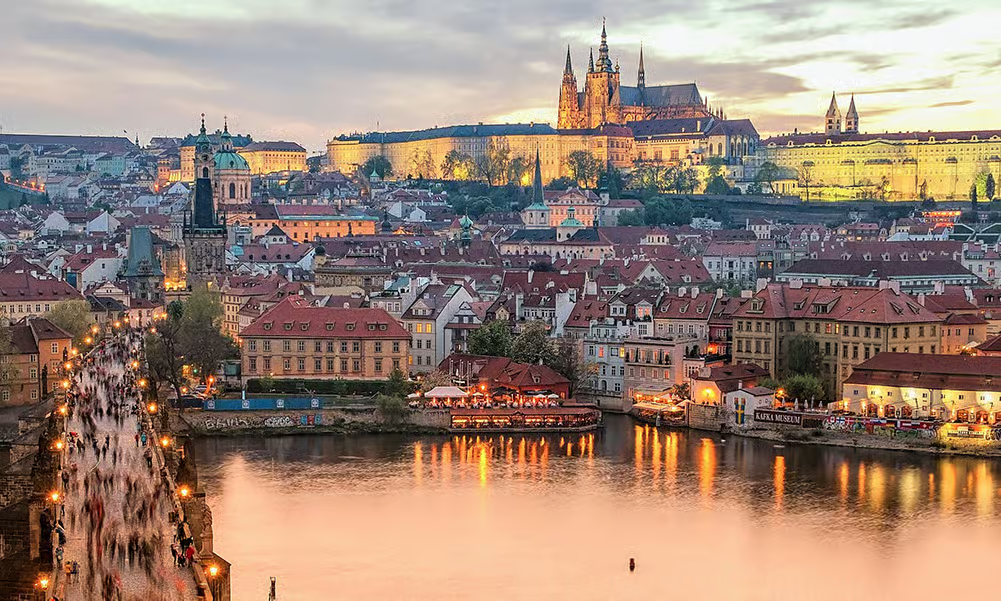
For architecture and atmosphere, Prague remains difficult to beat. The historic centre is dense with medieval, Baroque and Gothic landmarks, while the Vltava and the castle district give the city a distinctive sense of scale. Three days allows visitors to see the principal sights while leaving room for the less obvious pleasure of Prague: crossing a neighbourhood without a particular destination and finding a cafe, courtyard or street that was not in the original plan.
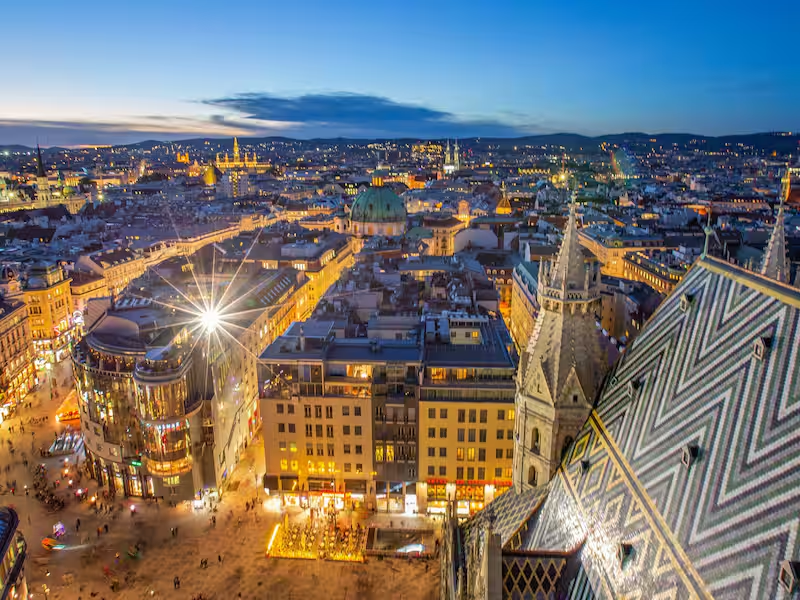
Vienna is a better choice for travellers who prefer museums, music, architecture and long cafe stops to a packed sightseeing schedule. The Austrian capital has an unusual ability to feel grand without becoming exhausting. Imperial buildings, major museums and concert halls sit alongside neighbourhood cafes and quieter residential streets. A long weekend can be built around one or two major cultural visits rather than an attempt to see every famous building in the city.

Budapest is particularly effective when the aim is to combine culture with a more relaxed social atmosphere. The Danube divides Buda and Pest, giving the city two distinct sides, while thermal baths provide something many other European capitals cannot quite replicate. Budapest also works well for travellers who want evenings to matter as much as days. Its restaurants, bars and nightlife give a short trip a sense of momentum without requiring the visitor to spend the entire day moving from attraction to attraction.

Copenhagen suits a different kind of traveller. It is polished without feeling sterile, design-conscious without being defined entirely by design, and compact enough to explore without depending heavily on transport. The city is particularly good for people who want a weekend built around food, architecture, neighbourhoods and everyday urban life rather than a long list of monuments. Cycling, waterfront areas and cafes make the city feel lived in rather than simply presented for visitors.

Amsterdam is similarly effective because so much of its identity can be experienced simply by moving through the city. The canals, narrow houses, museums and neighbourhoods are close enough to connect naturally. A weekend here can easily become overcrowded with plans, so the better approach is selective. Choose a museum, walk a canal district, spend time in a market or cafe and allow some hours to remain unclaimed. The city’s appeal is partly in what happens between the major attractions.
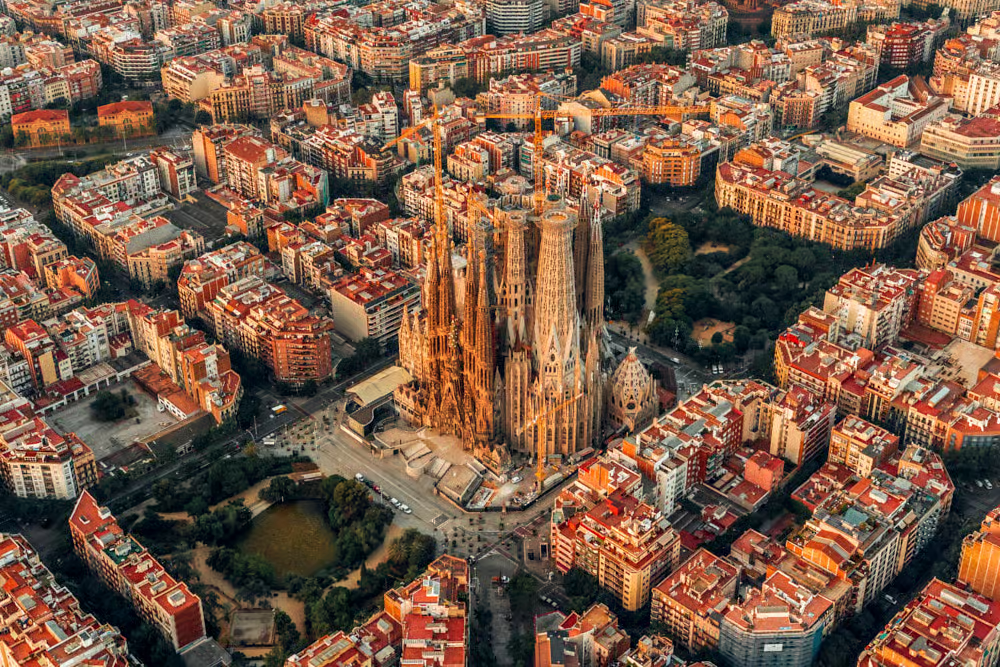
Barcelona works especially well when travellers want more variety from a short break. Architecture, food, neighbourhood life and the Mediterranean are all part of the same trip. Gaudi’s influence gives the city a visual identity that is difficult to confuse with anywhere else, while districts such as El Born and Gracia offer a different experience from the major sights. The beach also changes the rhythm of the weekend. A city break here does not have to mean spending every waking hour inside museums or historic buildings.

For travellers looking beyond the most heavily visited capitals, Krakow deserves serious consideration. Poland’s historic city is compact enough for a short visit and has enough history and cultural depth to support several days without feeling repetitive. The Old Town, Wawel and the former Jewish district of Kazimierz create very different experiences within a relatively small area. It is also the kind of destination where the quality of a weekend can come from walking rather than constantly paying for major attractions.

Tallinn offers another version of the same idea. Estonia’s capital has a remarkably well-preserved medieval centre, but its appeal is not limited to old architecture. The city combines historic streets with a modern, creative atmosphere, making it suitable for travellers who want a destination that feels distinctive without being overwhelming. It is particularly attractive for a short northern European break when the priority is atmosphere rather than a long catalogue of landmarks.
The question of which city is best ultimately depends on what a traveller wants from those few days. Lisbon and Porto are strong choices for food, atmosphere and slower exploration. Paris offers art, history and an almost endless supply of neighbourhoods to discover. Prague is about architectural beauty and old-world atmosphere. Vienna suits culture and refinement. Budapest brings thermal baths, nightlife and history together. Copenhagen and Amsterdam work well for travellers interested in urban life, design and easy movement around the city. Barcelona adds the Mediterranean to the equation, while Krakow and Tallinn show that a memorable European weekend does not have to begin with the continent’s most famous capitals.
There is also a practical lesson in choosing a long-weekend destination: do not measure the success of the trip by how many sights you managed to see. Three days is too short for that approach. The strongest city breaks usually leave something unseen. They give travellers enough time to understand the character of a place without trying to master it.
That may be the real advantage of the European long weekend. It offers a way of travelling that is neither a rushed day trip nor a full holiday. You can arrive with a small bag, spend a few days walking unfamiliar streets, eating local food, visiting one or two places you genuinely care about and then return home with the feeling that the city has given you more than a photograph.
Europe has no shortage of destinations that can fill a week. The more interesting challenge is finding the cities that can make three or four days count. The best European cities for a long weekend are the ones that do exactly that, leaving you with enough memories to justify the journey and enough unfinished business to make you want to return.


