Cheapest island destinations in Europe are increasingly attracting travellers who want the atmosphere of a Mediterranean holiday without paying the prices associated with Europe’s best-known resort islands. The difference can be substantial. While places such as Santorini, Mykonos and Ibiza have become synonymous with expensive accommodation, restaurants and beach clubs, other European islands offer a very different proposition: lower room rates, inexpensive local food, public beaches and a slower pace that does not depend on luxury spending.
The most affordable choices are not necessarily the islands with the cheapest flights. That distinction matters. An island can have low hotel prices but expensive air connections, or affordable accommodation but costly ferries and limited public transport. The real cost of an island holiday depends on how travellers arrive, where they stay, how much they eat out and whether they need a car.
Among the strongest options for budget-conscious travellers are islands in Greece, Croatia, Portugal and Spain, although prices vary sharply by season and location. Smaller or less fashionable islands can offer particularly good value outside the peak summer weeks, when demand pushes accommodation prices higher across much of southern Europe.

In Greece, travellers willing to look beyond Santorini and Mykonos have a long list of alternatives. Crete remains one of the most practical choices because of its size, extensive accommodation market and range of towns and beaches. Travellers can find everything from inexpensive family-run rooms to campsites and apartments, while local tavernas often make it possible to eat well without spending what a meal in a high-end tourist district might cost.
Larger Greek islands also have an advantage that is sometimes overlooked in discussions about budget travel: competition. More accommodation providers, restaurants and transport options can mean more opportunities to compare prices. The trade-off is that some of the most popular coastal areas become considerably more expensive during July and August.
Naxos can also work for travellers looking for a Greek island experience without the premium associated with its better-known neighbours. It has beaches, villages, agricultural areas and a developed tourism infrastructure, but the island’s appeal is not built entirely around luxury tourism. Accommodation prices still rise in high season, yet travellers who book outside the busiest period can find a more manageable balance between cost and experience.

In the Ionian Sea, Corfu presents another possibility. Its popularity means that it is not uniformly cheap, but the island has enough variety to allow travellers to move away from the most expensive resort areas. Staying in a smaller town rather than directly beside a major beach can make a meaningful difference, particularly for travellers prepared to use buses or arrange transport selectively rather than hiring a car for the entire trip.

The same principle applies in Croatia. Islands such as Hvar have developed a reputation for upscale tourism and nightlife, but Croatia’s wider island network offers less expensive alternatives. Brac, for example, combines beaches and historic settlements with a substantial tourism industry, while smaller destinations can provide a quieter holiday away from the most heavily marketed coastal areas.
Croatian islands require some planning because transport costs can become part of the budget. Ferry prices, vehicle charges and the frequency of services vary, and a cheap room does not necessarily translate into a cheap overall trip if travellers are moving repeatedly between islands. For a short holiday, choosing one island and staying there can be more economical than attempting to build an itinerary around several destinations.

Portugal offers another route into European island travel, particularly through the Azores and Madeira. Neither should automatically be described as universally cheap, and flight prices can change considerably depending on the departure city and season. But once there, travellers can find accommodation and food options at prices that may compare favourably with some of Europe’s more expensive island destinations.
The Azores are particularly different from the classic Mediterranean island holiday. The landscape is volcanic and green, with crater lakes, dramatic coastlines, hot springs and rural communities rather than the concentrated beach-resort development found in parts of the Mediterranean. For travellers whose idea of an affordable island break includes hiking and nature rather than spending every day beside a resort pool, that can reduce daily costs.
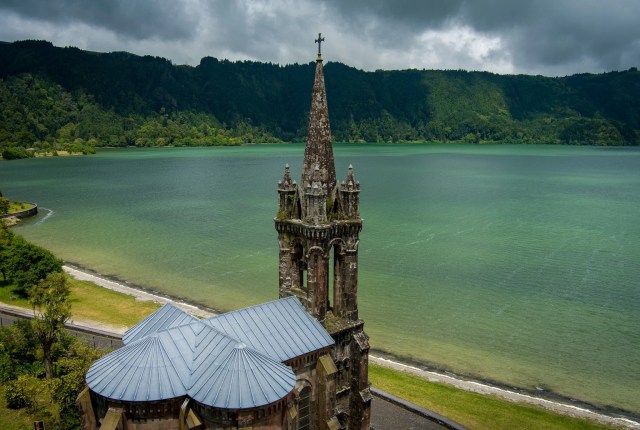
Madeira is more developed as a tourist destination and has become increasingly popular with international visitors. Funchal has a broad range of accommodation and restaurants, while travelling beyond the capital reveals mountain scenery, smaller communities and walking routes. A trip to Madeira can become expensive if built around organised excursions and high-end hotels, but independent travellers have plenty of ways to control spending.
Spain is another country where the word “island” does not automatically mean “expensive”. The Canary Islands have long attracted European travellers seeking winter sun, and destinations such as Tenerife, Gran Canaria and Lanzarote have extensive accommodation markets. That scale gives travellers more choice across different price levels.

The Canary Islands can be particularly useful for budget travellers because demand is spread across much of the year. Prices still rise during holidays and peak periods, but the islands are not dependent on a short Mediterranean summer season. Travellers with flexible dates can sometimes take advantage of periods when accommodation and flights are more competitive.
Mallorca presents a more complicated picture. Some parts of the island have become strongly associated with luxury hotels, expensive restaurants and mass tourism, yet Mallorca is large enough to offer alternatives. Away from the most heavily developed resort areas, travellers can find smaller towns, rural accommodation and local restaurants that provide a different experience. The challenge is reaching those places without allowing car rental and fuel costs to consume the savings.

For travellers considering the Greek islands, Croatia, Portugal or Spain, timing may be more important than choosing the supposedly “cheapest” island. July and August are the months when accommodation demand is at its highest across much of southern Europe. Travelling in May, June, September or early October can change the economics of a trip while also avoiding some of the crowds associated with the height of summer.
Accommodation is often the biggest variable. A hotel directly beside a famous beach can cost several times more than a room a short bus ride away. Apartment rentals can make sense for longer stays, especially when travellers can prepare some meals themselves. Guesthouses and family-run accommodation can also offer better value than internationally branded hotels, although standards and cancellation policies should be checked carefully before booking.
Food is another area where island travellers can either save or spend heavily. Restaurants aimed at visitors in waterfront districts tend to command higher prices, while local tavernas, bakeries, markets and small cafes can offer a more affordable way to eat. This does not mean avoiding tourist areas altogether. It simply means understanding that the most visible restaurant is rarely the only option.
Transport deserves equal attention. An island that requires a rental car for every journey may end up costing more than one with a useful bus network. Travellers should calculate the complete transport cost before booking accommodation, including airport transfers, ferries, local buses and car hire. On some islands, staying close to a town centre can be cheaper overall than booking a remote property with a lower nightly rate.
There is also a broader reason why Europe’s less expensive islands deserve attention. Island tourism is often discussed through its most famous names, yet Europe’s coastline contains hundreds of inhabited islands with very different economies and tourism models. Some have built their reputations around luxury and nightlife. Others continue to depend heavily on family businesses, agriculture, fishing, hiking, domestic tourism or smaller-scale accommodation.
For travellers, that diversity means the best-value island is rarely a universal choice. Someone looking for beaches and nightlife may find one destination attractive, while a traveller interested in hiking, food and village life may save more by choosing somewhere entirely different. The important comparison is not simply the price of a hotel room. It is the cost of the whole trip and what that money buys.
The cheapest island destinations in Europe are therefore not necessarily the islands with the lowest advertised room rates. They are places where accommodation, transport, food and activities can be combined without forcing travellers into the most expensive parts of the tourism economy. In many cases, the best savings come from travelling slightly outside the peak season, staying away from the most famous resort strips and giving smaller destinations the same consideration normally reserved for Europe’s headline islands.
For travellers prepared to do that, an affordable European island holiday is still very possible. The Mediterranean has not become uniformly expensive. It has simply become more uneven, with some islands commanding premium prices while others remain comparatively accessible. Knowing the difference can turn the search for a cheap island holiday from a hunt for bargains into a more rewarding choice about where, when and how to travel.