
Ceuta’s largest migrant camp is being cleared by Spanish police as authorities move to dismantle a makeshift settlement on Trampolin beach that has housed thousands of people for more than two months.
Police launched Operation Trampolin on Sunday, deploying riot officers from Spain’s Police Intervention Unit (UIP), including teams brought in from Seville, Granada, Malaga and other parts of the country. Officers from Ceuta’s Prevention and Reaction Unit (UPR), along with intelligence teams from Ceuta and elsewhere in Spain, are also involved.
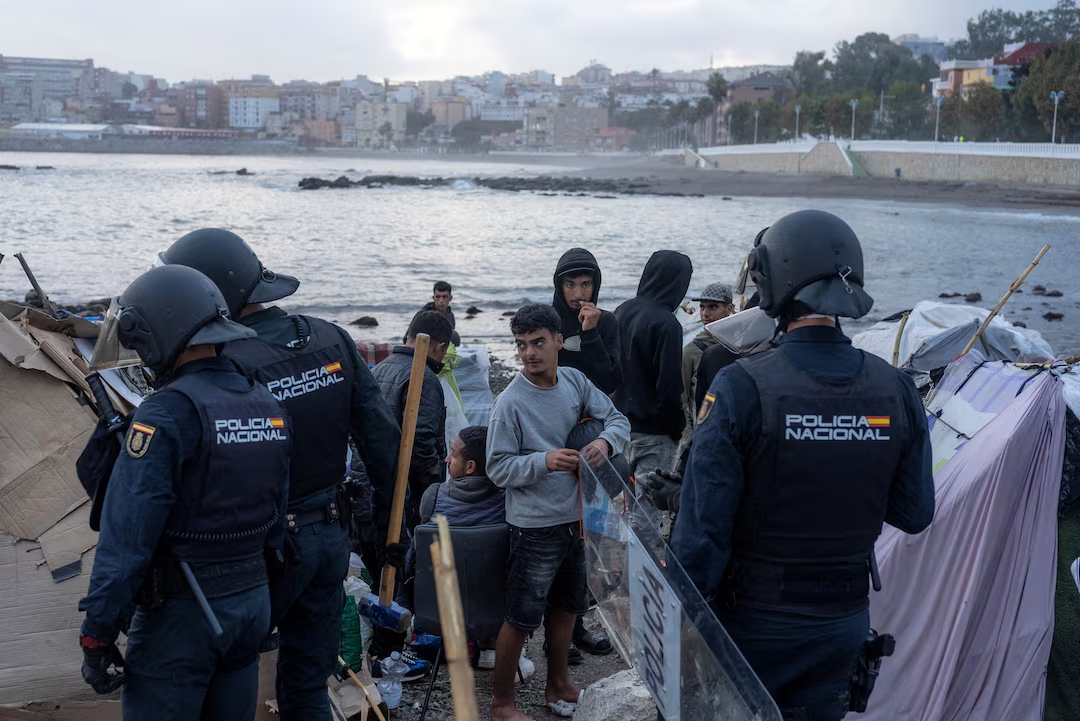
Authorities say the operation is necessary because of deteriorating conditions at the camp. The waters near Trampolin have been declared contaminated, creating what officials describe as a health and safety risk for people living there. Police have also pointed to a rise in violent incidents around the settlement.
Security measures were extensive from the start. Officers sealed access points around the camp, including routes leading towards the hills, while additional police vehicles were brought from mainland Spain. A drone was used to monitor the operation from above. According to El Faro de Ceuta, two BMR armoured vehicles and a Vamtac S3 off-road vehicle were also deployed.
Local authorities announced road closures from about 7:30 a.m. on routes between Benitez and Benzu. A National Police van arrived shortly after that, with the wider deployment beginning before 8 a.m.
The atmosphere in the camp was relatively calm in the moments before the operation began. Music could be heard and street vendors were still working as some residents were waking up. But some migrants, already aware that police were preparing to move in, ran towards the hills. Rain began falling at about 8:30 a.m.
Police then moved through the settlement, going from tent to tent and shack to shack to tell residents they had to leave. Officers dismantled the temporary structures as people were moved out. An interpreter provided information in Arabic about where they would be taken.
Women and children are included in this first phase of the relocation, although most of those being moved are men.
The migrants are being transported by bus to the Tarajal CATE reception centre, where they undergo initial triage and identification. The first bus left shortly before 9 a.m., according to Radio Television Ceuta.
Some of those being relocated could eventually choose to return to their countries of origin. Several migrants moved from the Benitez area earlier in the week reportedly made that decision.
Authorities currently have accommodation available at Loma Colmenar, with space for more than 1,000 people, as well as facilities at the port. But finding enough places for everyone remains one of the central problems facing Ceuta as the authorities try to dismantle the camps.
Sunday’s operation is the third major police clearance in recent weeks, following two operations in Benitez. Spain’s Higher Police Headquarters said the Trampolin settlement contains more than 3,500 people, meaning the operation is expected to continue beyond Sunday’s initial phase.
The lack of adequate reception capacity has already created difficulties. In mid-September, a new camp at the port was designed to accommodate 1,700 people, but more than 2,000 migrants were left without space and returned to the beaches.
The Spanish government has set October 15 as the deadline for completing the eviction of the settlement. The timing has added pressure to the operation because King Felipe VI and Queen Letizia are scheduled to visit Ceuta on October 13.
The current crisis began at the end of July, when more than 70,000 people crossed from Morocco into Ceuta. Most were returned within hours, but thousands remained in the territory or later gathered in temporary settlements.
For those still living on the beaches, the police operation marks another stage in an increasingly difficult relocation process. Authorities now face the task of clearing the camps while finding enough space to accommodate the people being moved.


