How to Get Around Paris Without a Car is less a question of transport than of understanding how the city is built: around metro stations, railway lines, buses, sidewalks, bicycles and the short distances between many of its most recognizable neighborhoods.
For a first-time visitor, the instinct to rent a car can be understandable. Paris is a large capital, and the idea of having your own vehicle can seem convenient when there is luggage, a hotel to find and a long list of places to see. In practice, a car can become more of a burden than a solution. Traffic, limited parking and the sheer density of central Paris make other ways of moving around the city much more practical for most visitors.

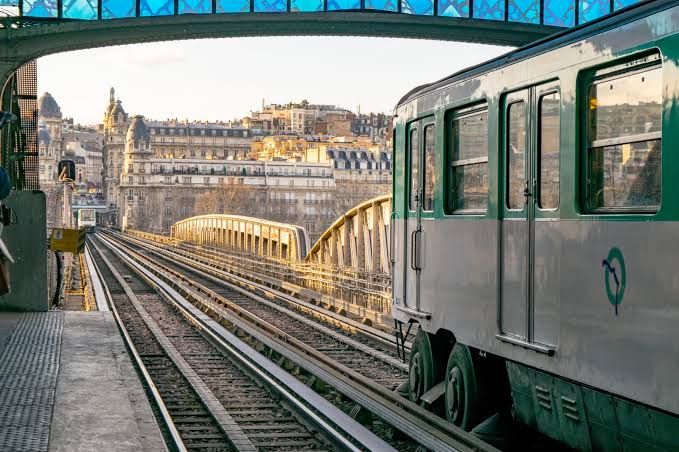
The Paris Metro is usually the backbone of getting around. Its extensive network connects large parts of the city and makes it possible to cross neighborhoods without having to deal with road traffic. Stations are often close to the places visitors want to reach, which means the journey does not necessarily end when the train does. A short walk is often part of the trip.
That combination of metro and walking is one of the easiest ways to experience Paris. Instead of treating the city as a collection of isolated attractions, visitors can move through it at street level, passing cafes, markets, residential streets, shops and small squares along the way. Some of the most memorable parts of a Paris trip happen between major landmarks rather than at them.
The RER network adds another layer to the system. These suburban and regional trains are particularly useful when a journey goes beyond the central city. For visitors staying in Paris but planning trips farther out, understanding the difference between the Metro and RER can make travel considerably easier. The Metro is primarily associated with movement within the city, while RER services connect Paris with surrounding areas and major destinations outside the central network.
Buses offer another useful option, particularly for travelers who would rather see the city while moving through it. A bus journey can take longer than a Metro trip depending on traffic, but it also provides something an underground train cannot: a view of Paris. Streets, buildings and neighborhoods become part of the journey rather than something seen only after reaching the destination.
For short distances, walking remains one of the most effective ways to get around Paris. The city is made up of districts that can feel very different from one another, and walking allows those changes to emerge gradually. A visitor moving from one neighborhood to another on foot may discover a bakery, courtyard, bookshop or quiet street that would be invisible from inside a vehicle.
This is also where having a rough sense of distance becomes useful. Paris is compact in its central areas compared with many major world capitals, but that does not mean every attraction is within an easy walk of every other one. A sensible approach is to group places that are relatively close together and use public transport when crossing longer stretches of the city.
Cycling has also become an increasingly visible part of Paris life. Public bicycle services and dedicated cycling infrastructure give visitors another option for covering distances that may be too long for a comfortable walk but do not justify taking a train. For travelers who are comfortable cycling in an urban environment, a bicycle can provide more flexibility than following a fixed public transport route.
There is, however, a difference between cycling through Paris and simply riding a bicycle somewhere quiet. Traffic, intersections and busy streets require attention. Visitors who are unfamiliar with cycling in a large European capital should take time to understand the local road environment before setting off.
Taxis and ride-hailing services remain useful when public transport is inconvenient, particularly late at night, with heavy luggage or when a journey involves several people. They are best treated as part of the transport mix rather than the default way of seeing the city. Using them selectively can provide convenience without turning a trip to Paris into a series of journeys from one address to another.
For travelers arriving at one of the city’s airports, the first transport decision is often more important than any decision made afterward. Airport connections can involve rail services, buses, taxis or other transfers depending on the airport and the final destination. Checking the current route before leaving for Paris is worthwhile because airport transport arrangements, fares and service conditions can change.
The same principle applies to public transport tickets and passes. Paris has changed its fare structure over time, and visitors should check the current ticket options before relying on advice from an old travel guide or social media post. The most suitable option depends on how often a traveler expects to use public transport, where they are staying and whether they plan to travel beyond central Paris.
One mistake visitors can make is trying to optimize every journey. Paris does not always reward the fastest possible route. A Metro journey may save time, but a walk through a neighborhood can provide a better sense of the city. On another occasion, a bus may be slower but more interesting. The best approach depends on the distance, weather, luggage and how much of Paris the traveler actually wants to see along the way.
Navigation apps can make this easier, but travelers should still pay attention to the transport information around them. Metro stations can have multiple entrances, and the correct platform may depend on the direction of travel. Large stations can also involve more walking underground than a visitor might expect. Allowing a little extra time for unfamiliar stations can prevent unnecessary stress.
Traveling without a car also changes the rhythm of a Paris visit. Instead of constantly looking for somewhere to park or worrying about returning to a vehicle, travelers can move between neighborhoods more freely. The city becomes something to move through rather than simply a backdrop between driving destinations.
There are situations in which having a car may make sense, particularly for journeys outside Paris where public transport is less convenient or when a traveler has specific mobility or logistical needs. But for a visitor whose plans are concentrated around central Paris, the city’s public transport network, walking routes and cycling options provide a broad range of alternatives.
Learning how to get around Paris without a car therefore begins with accepting that the city does not need to be experienced from behind a windshield. The Metro can take you across town, the RER can carry you beyond it, buses reveal the streets as you travel, bicycles offer flexibility and walking fills in the spaces between them.
For many visitors, that combination is not simply a practical way to move around. It is a better way to understand Paris. The city is found not only at the Eiffel Tower, the Louvre or Notre-Dame, but in the streets connecting them. Leaving the car behind makes those streets part of the journey.